Expanded metal mesh is defined by both opening size and material dimensions. If even one item is measured the wrong way, the final specification can point to a different mesh pattern, sheet weight, or open area.
Calculate Weight and Open Area After Measuring
Once you have recorded SWD, LWD, strand width, thickness, and sheet dimensions, use our expanded metal weight calculator to estimate weight per m虏, total sheet weight, and open area before sending an inquiry.
Measurement Diagram
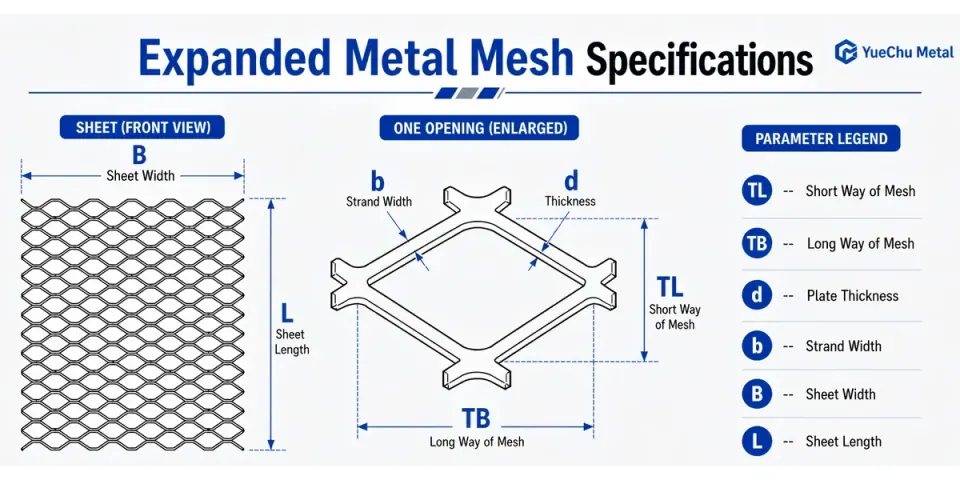
How to Measure Step by Step
Measure SWD
Measure the clear opening across the short direction of the diamond. This is normally the smaller opening value.
Measure LWD
Measure the clear opening across the long direction of the diamond. This is the longer dimension of the mesh opening.
Measure Strand Width
Measure one strand from edge to edge, not including the opening. This value directly affects strength and weight.
Measure Thickness and Sheet Size
Confirm the base material thickness, then record overall sheet width and length. Also note whether the mesh is raised or flattened.
Specification Checklist
| Item | What to confirm |
|---|---|
| Material | Steel, aluminum, stainless steel, titanium, or other alloy. |
| Mesh Type | Raised expanded metal or flattened expanded metal. |
| SWD | Short way of diamond opening. |
| LWD | Long way of diamond opening. |
| Strand Width | Width of the strand between the openings. |
| Thickness | Base sheet thickness before expansion. |
| Sheet Size | Overall sheet width and overall sheet length. |
| Finish | Mill finish, galvanized, anodized, powder coated, or custom finish. |
Common Mistakes to Avoid
- Mixing inside opening size with center-to-center pitch.
- Using overall thickness when the supplier needs base metal thickness.
- Not stating whether the mesh is raised or flattened.
- Sending only SWD and LWD without strand width or thickness.
FAQ
What is SWD in expanded metal mesh?
What is LWD in expanded metal mesh?
Should thickness be measured on raised mesh or flattened mesh?
What should I send for an accurate quotation?
Need help confirming your mesh specification?
Share your drawing, sample, or target dimensions and YueChu Metal can help check the correct expanded metal mesh specification before quotation.