
Material guide / stainless steel wire mesh
304 vs 316 Stainless Steel Wire Mesh: What’s the Difference?
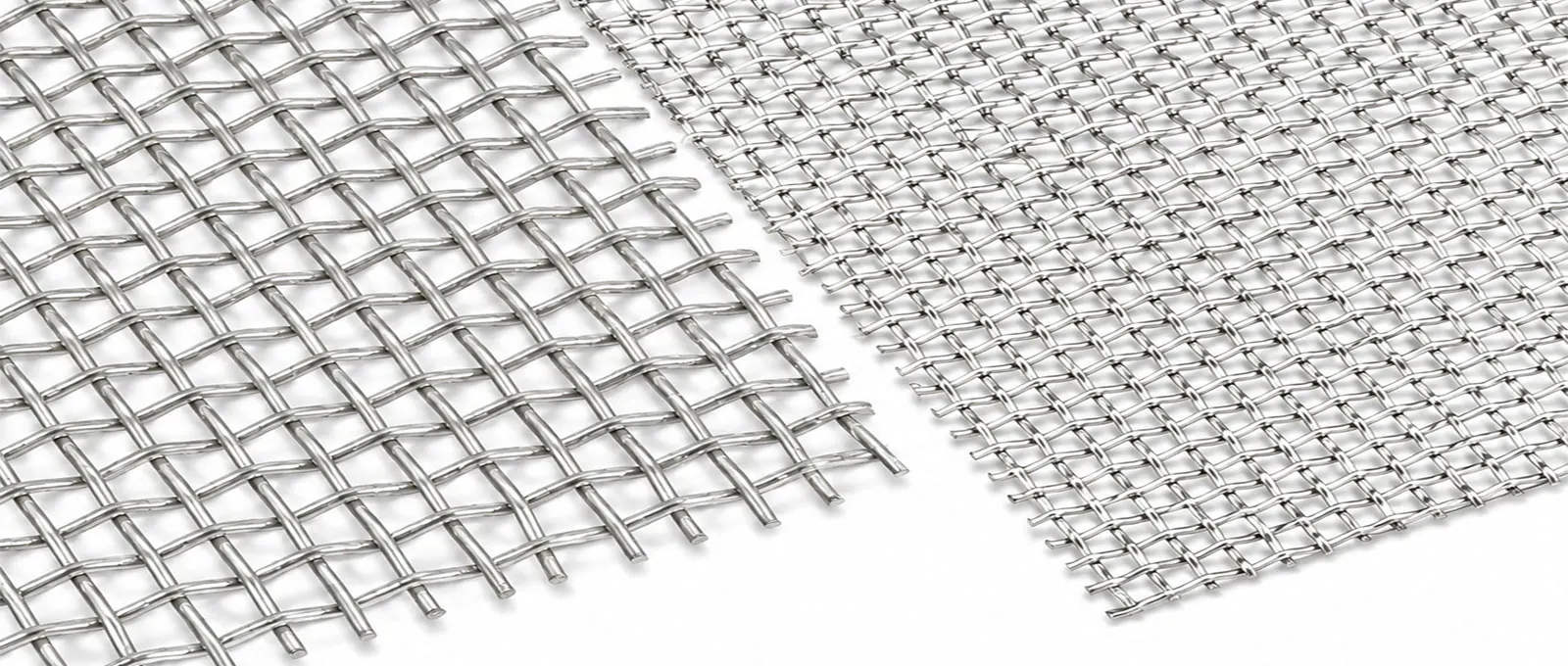
They can look almost identical, and the same mesh specification can be made in either grade. The difference shows up in service—especially when salt, chlorides or aggressive chemicals are involved.
No significant chloride exposure? 304 is often enough. Salt, chlorides or a more corrosive process? Consider 316.
At a glance
304 vs 316 — quick comparison
| Property | 304 stainless steel | 316 stainless steel |
|---|---|---|
| Chromium (Cr) | 18–20% | 16–18% |
| Nickel (Ni) | 8–10.5% | 10–14% |
| Molybdenum (Mo) | Not normally added | 2–3% |
| General corrosion resistance | Good | Very good |
| Chloride resistance | Moderate | Better |
| Marine use | Limited; depends on conditions | Better suited |
| Typical purchase price | Lower | Higher |
| Common applications | Screening, food processing, general filtration | Marine, chemical, pharmaceutical and corrosive filtration |
The Cr, Ni and Mo entries are mass-percent limits for UNS S30400 (304) and UNS S31600 (316), as tabulated in Ulbrich’s alloy reference. They are composition limits, not typical batch readings. Specify the applicable wire standard, such as ASTM A580/A580M, and confirm the order’s material certificate. EN and other standards may use different limits. Composition sources checked .
The material difference
It comes down to molybdenum
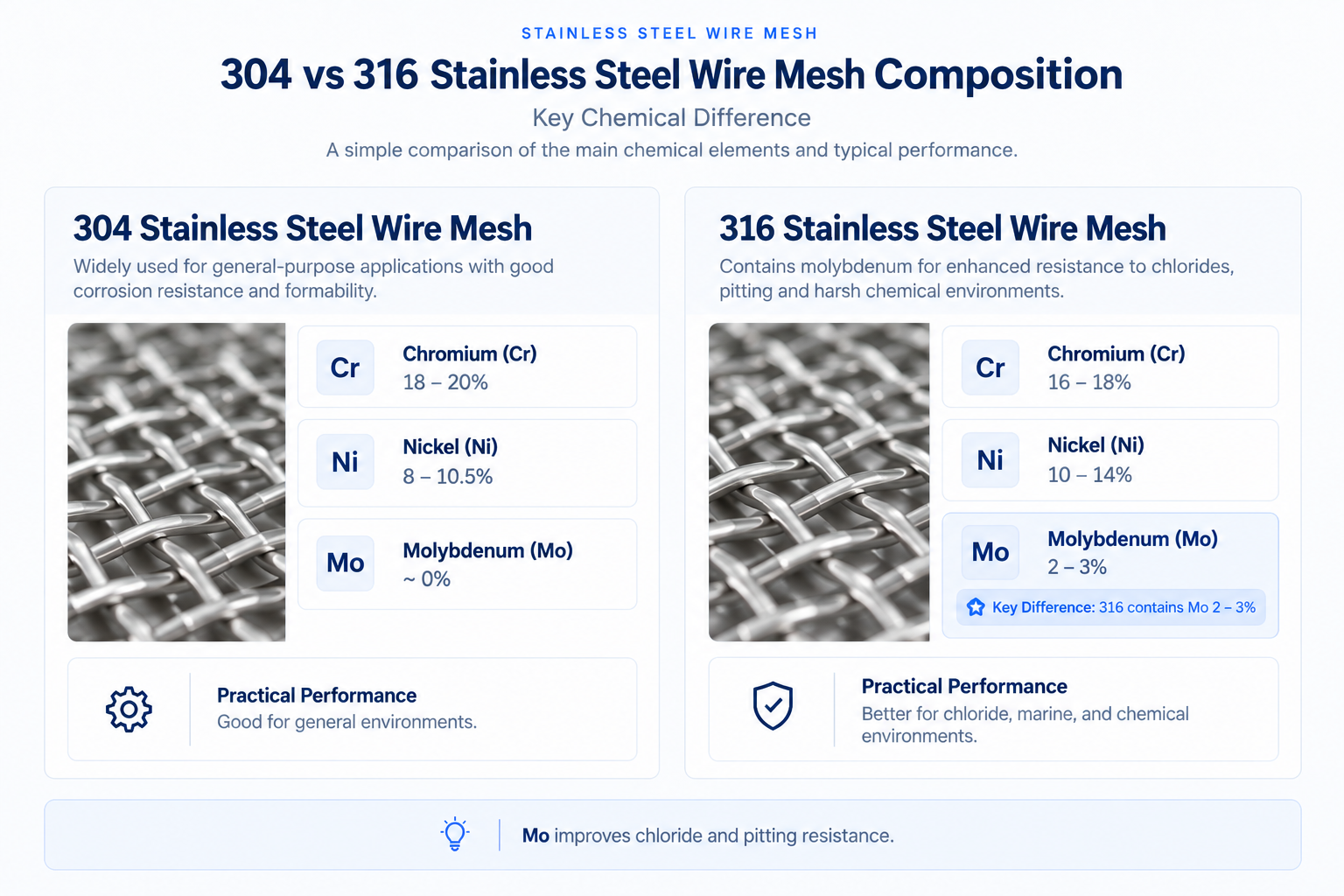
General-purpose grade
Typically 18–20% chromium and 8–10.5% nickel. No molybdenum is normally added.
Added chloride resistance
Normally contains 2–3% molybdenum, improving resistance to pitting and crevice corrosion where chlorides are present.
316 is not corrosion-proof. Chloride concentration, temperature, exposure time and cleaning conditions still affect performance.
Choose by service environment
A simple way to choose
Start with what the mesh will contact—not just the name of the industry.
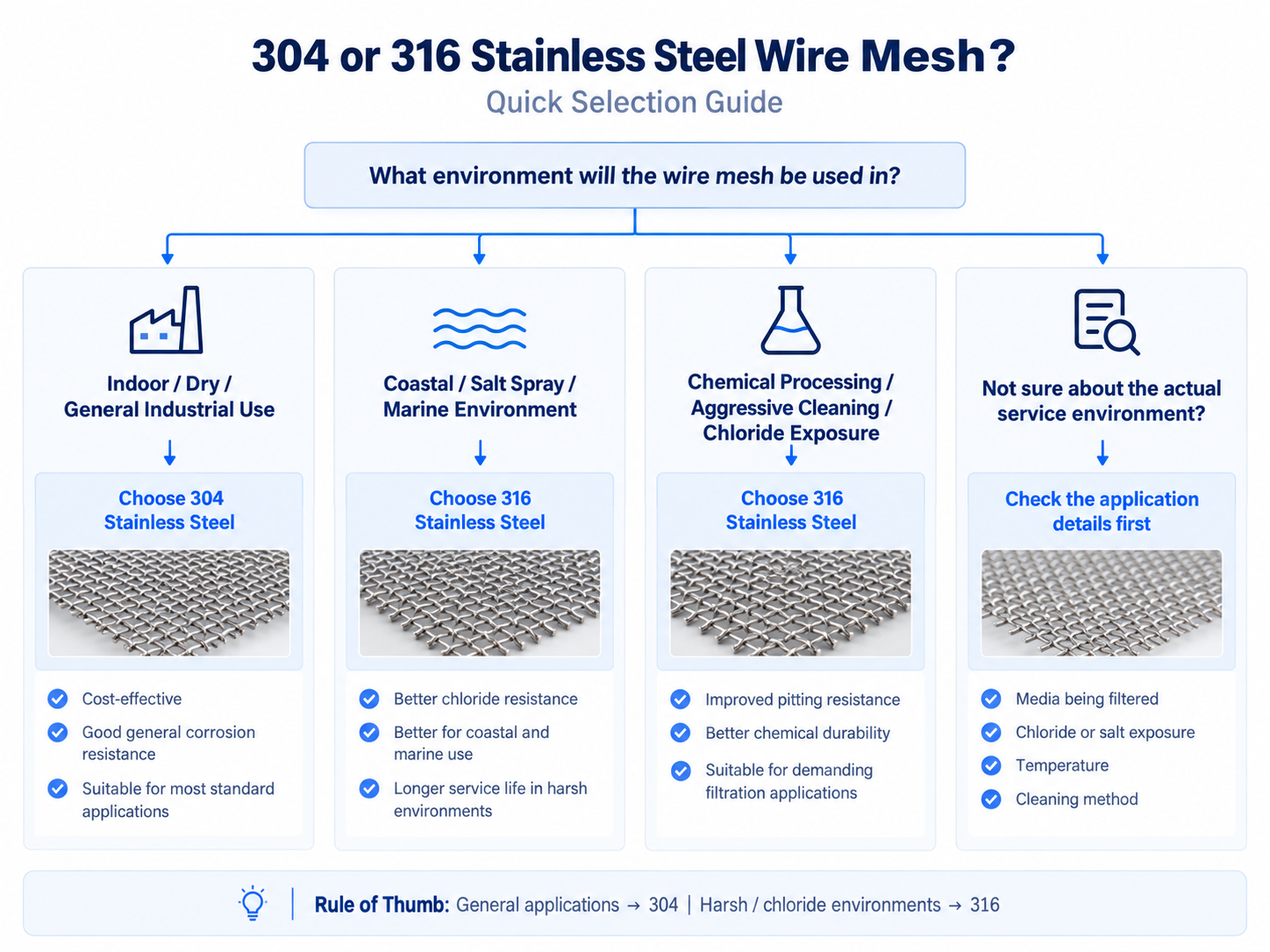
Indoor or mild industrial use
Clean process water, routine screening and non-corrosive service.
Start with 304Coastal, salt spray or marine
Regular salt exposure raises the risk of staining and pitting in 304.
Start with 316Chemicals or aggressive cleaning
Check fluid concentration, temperature, contact time and cleaning method.
Review 316 and compatibilityConditions between these cases?
Share the actual operating environment before fixing the grade.
Discuss the application →Rule of thumb: General applications → 304 Harsh or chloride-rich environments → 316
Typical applications
Where each grade makes sense
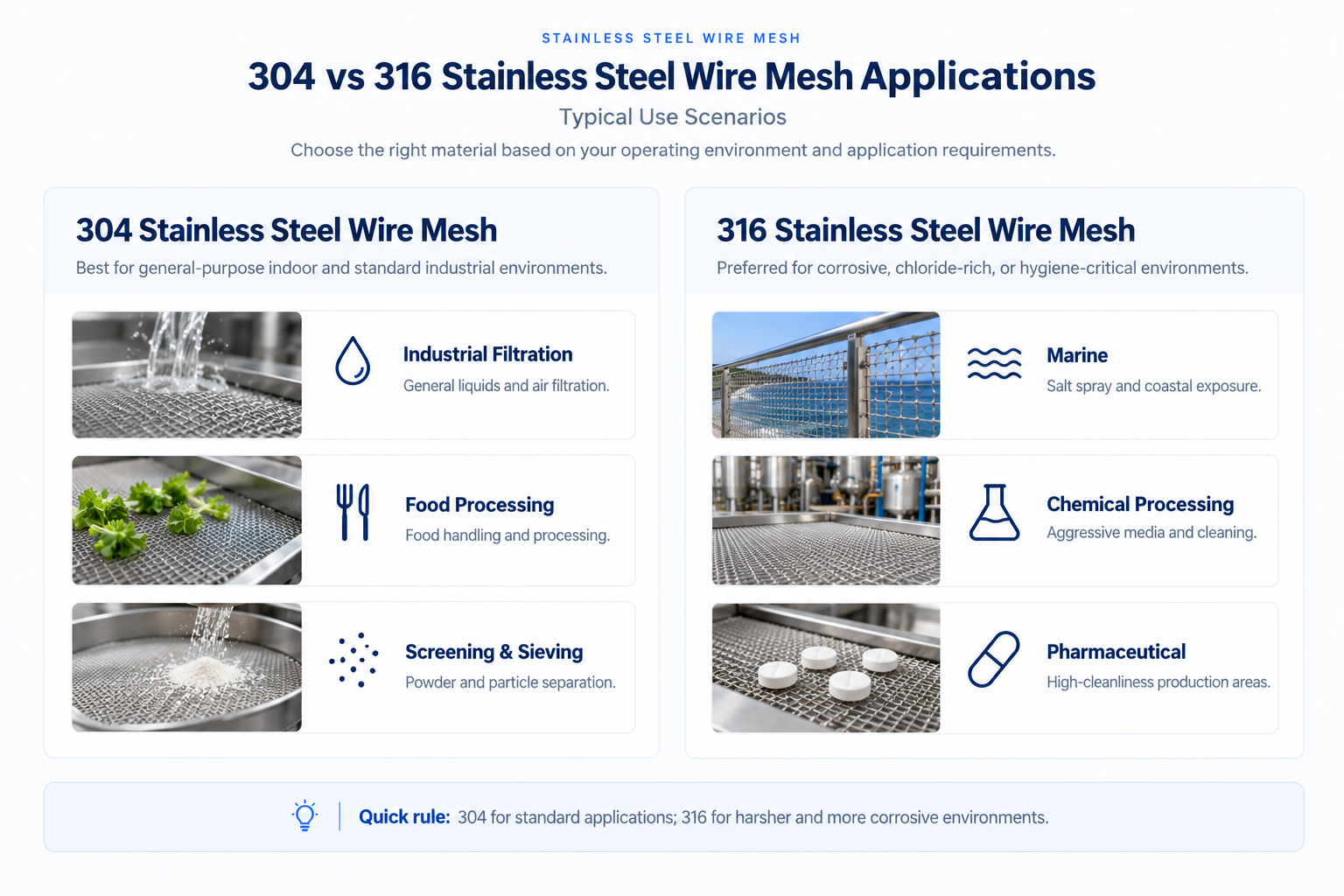
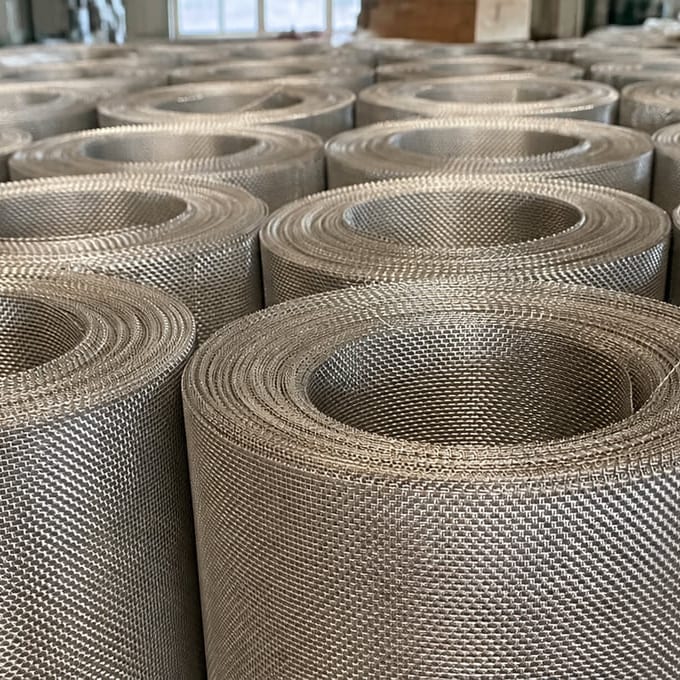
When 304 makes sense
A practical default for indoor equipment, normal outdoor exposure and many non-corrosive industrial processes.
- General industrial filtration
- Screening and sieving
- Food processing equipment
- Ventilation screens and machine guards
- Architectural mesh and laboratory sieves
- General separation work
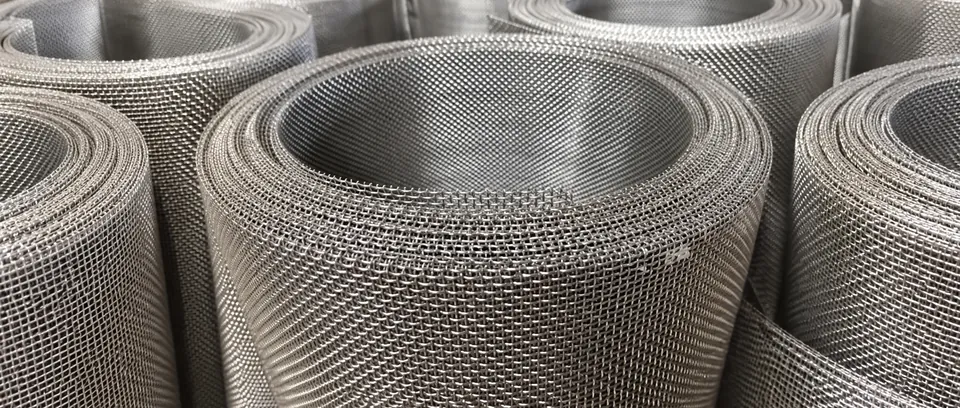
When 316 is the better choice
Consider it when chloride exposure, aggressive cleaning or a more corrosive process makes replacement costly.
- Coastal installations and salt spray
- Marine and seawater-related equipment
- Chemical processing and filtration
- Pharmaceutical equipment
- Chloride-containing liquids
- Aggressive cleaning processes
Food processing
Both grades are used. 304 is common for screening, drying and general handling; 316 is worth considering for salty products, acidic ingredients or more corrosive wash-downs.
Chemical filtration
304 may be sufficient for air, water and mild fluids. For salts or corrosive liquids, review 316 first. Very aggressive service may need a higher-alloy material.
Beyond corrosion
Two questions buyers often ask
Is 316 stronger?
Not necessarily in a way that matters for most mesh projects. Wire diameter, mesh count, aperture, weave and manufacturing process also determine mechanical performance. A heavy-wire 304 mesh can be stronger than a very fine 316 mesh.
Does 316 cost more?
Normally yes, because it contains more nickel and molybdenum. If 304 performs well, the extra cost may bring little benefit. If 304 needs frequent replacement in chloride-rich service, 316 may lower lifetime cost.
Quality control
How to identify 304 or 316 mesh
Looks and magnet response are not reliable grade identifiers. Request material certificates and use PMI or handheld XRF when verification matters.
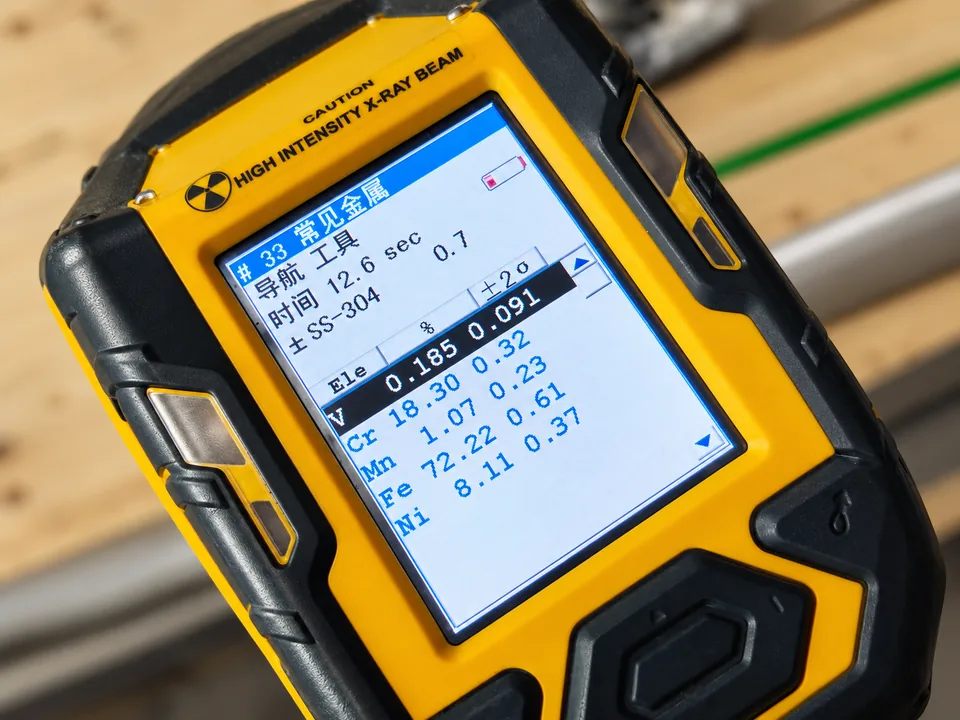
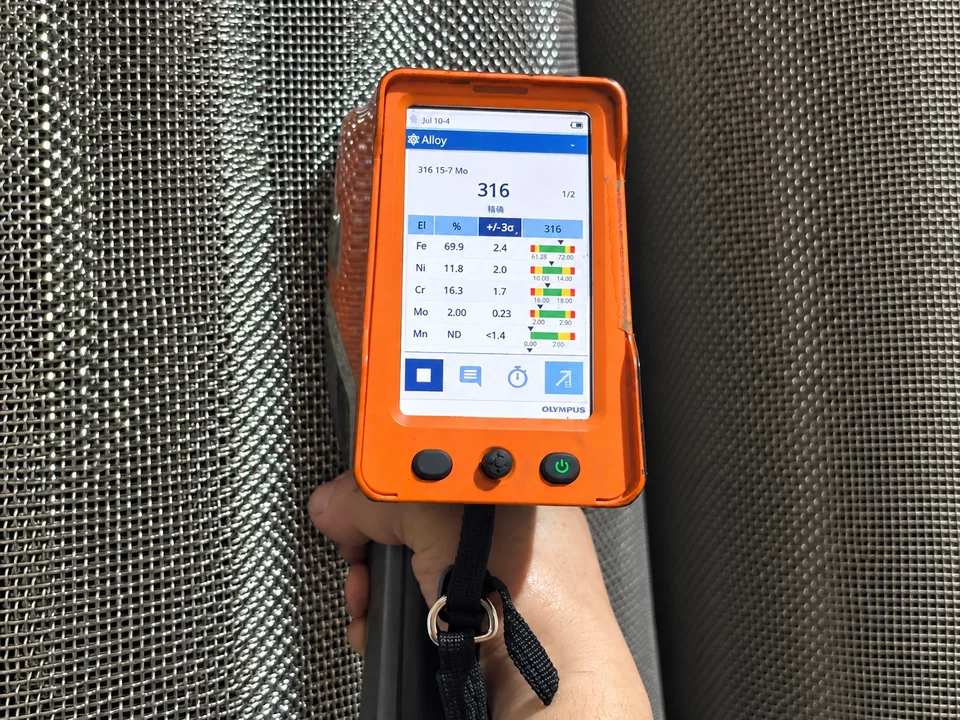
These are sample readings, not certificates for a new order. Handheld XRF does not verify carbon; confirm the required material documentation and standard.
For an accurate quotation
Material grade is only part of the specification
“304 stainless steel mesh” alone is not enough to quote the correct product. Include the geometry, supply dimensions and quantity.
- 01Material304 or 316
- 02Weave typee.g. plain, twill
- 03Mesh counte.g. 20 mesh
- 04Wire diametere.g. 0.4 mm
- 05Aperturee.g. 0.87 mm
- 06Widthe.g. 1 m
- 07Roll lengthe.g. 30 m
- 08Quantityrolls or pieces
Same mesh count, different environment
Two buyers need a 20-mesh woven screen. One filters clean process water inside a factory; 304 may be adequate. The other uses it at a coastal facility with regular salt exposure; 316 is normally the better starting point. The mesh geometry is the same—the environment changes the material choice.
Buyer questions
304 vs 316 Wire Mesh FAQ
Is 316 stainless steel wire mesh better than 304?
316 has better resistance to chlorides and many corrosive environments, but it is not the better choice for every project. For general industrial use, 304 is often more economical.
Can 304 stainless steel mesh be used outdoors?
Yes. 304 is widely used outdoors under normal atmospheric conditions. Coastal and salt-rich environments are different and may justify 316.
Is 316 better for seawater?
Between 304 and 316, 316 is normally the better starting point for marine and chloride exposure. More severe seawater conditions may require additional material evaluation; 316 is not immune to corrosion.
Can 304 and 316 use the same mesh count?
Yes. Grade and mesh specification are separate decisions. The same mesh count, wire diameter and weave can often be produced in either material.
How do you verify 304 or 316 stainless steel wire mesh?
For important orders, request material certificates and consider PMI or handheld XRF testing. Appearance and a magnet test are not reliable ways to distinguish the grades. XRF helps identify molybdenum, but it does not verify carbon or certify full specification compliance on its own.