
What Is Expanded Metal Mesh?
Expanded metal mesh is a one-piece metal sheet with openings formed by slitting and stretching the material. The process creates connected strands and bonds, usually in a diamond pattern, without weaving separate wires or welding their intersections.
It is available in raised and flattened forms and is used for guards, screens, fencing, architectural panels and suitably specified walkways.
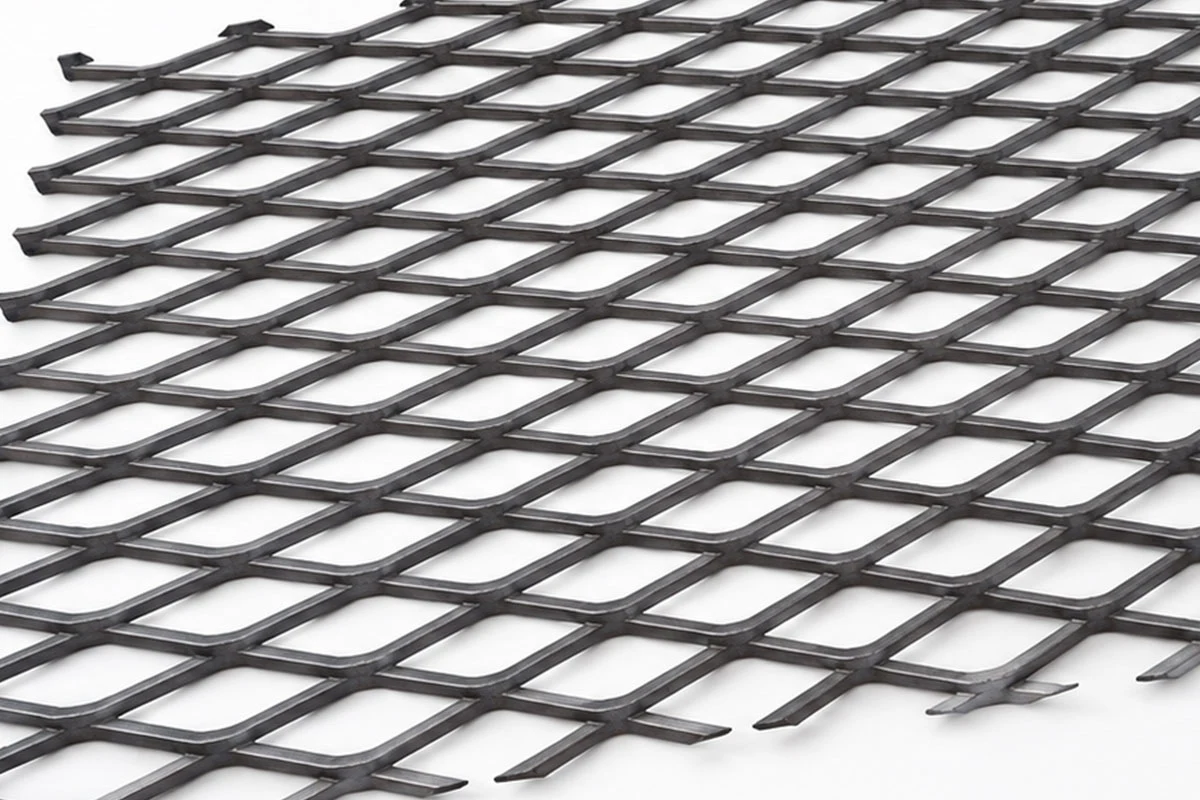
Raised vs. Flattened Expanded Metal
The two main surface profiles are raised and flattened. Both start with the same expanding process; flattened mesh receives an additional rolling operation.
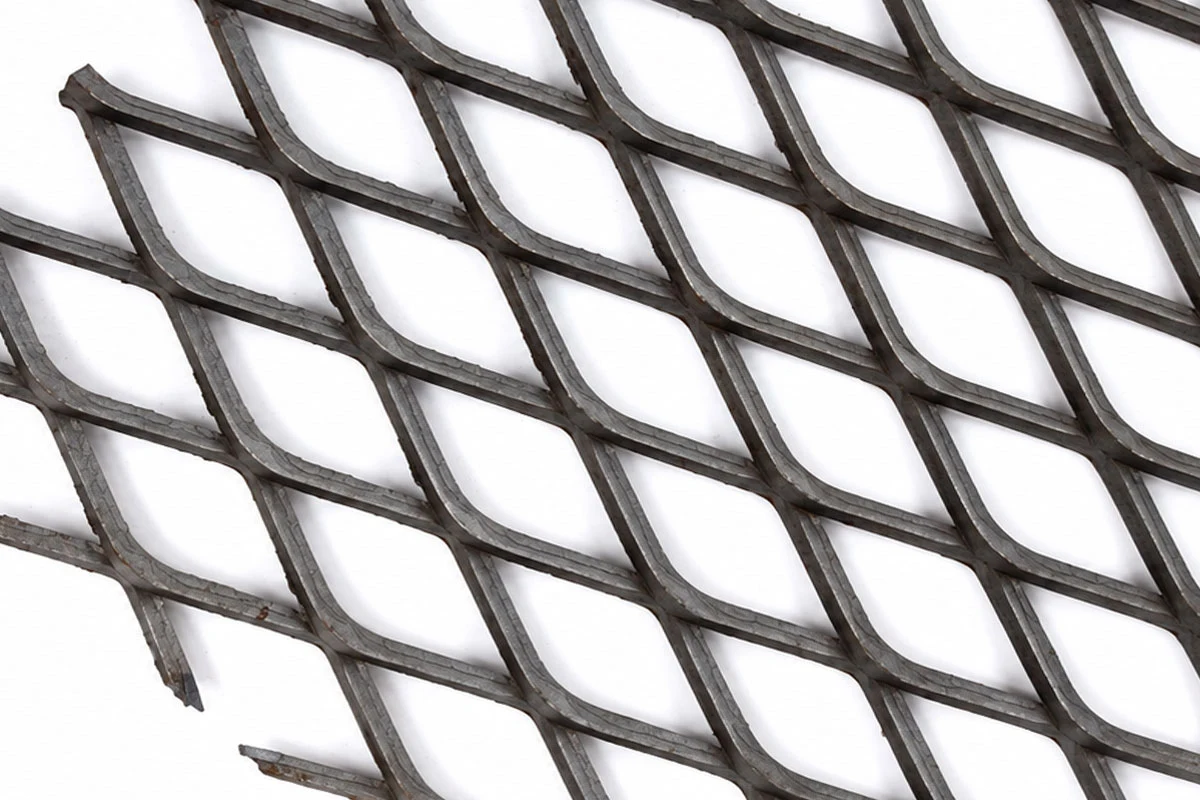
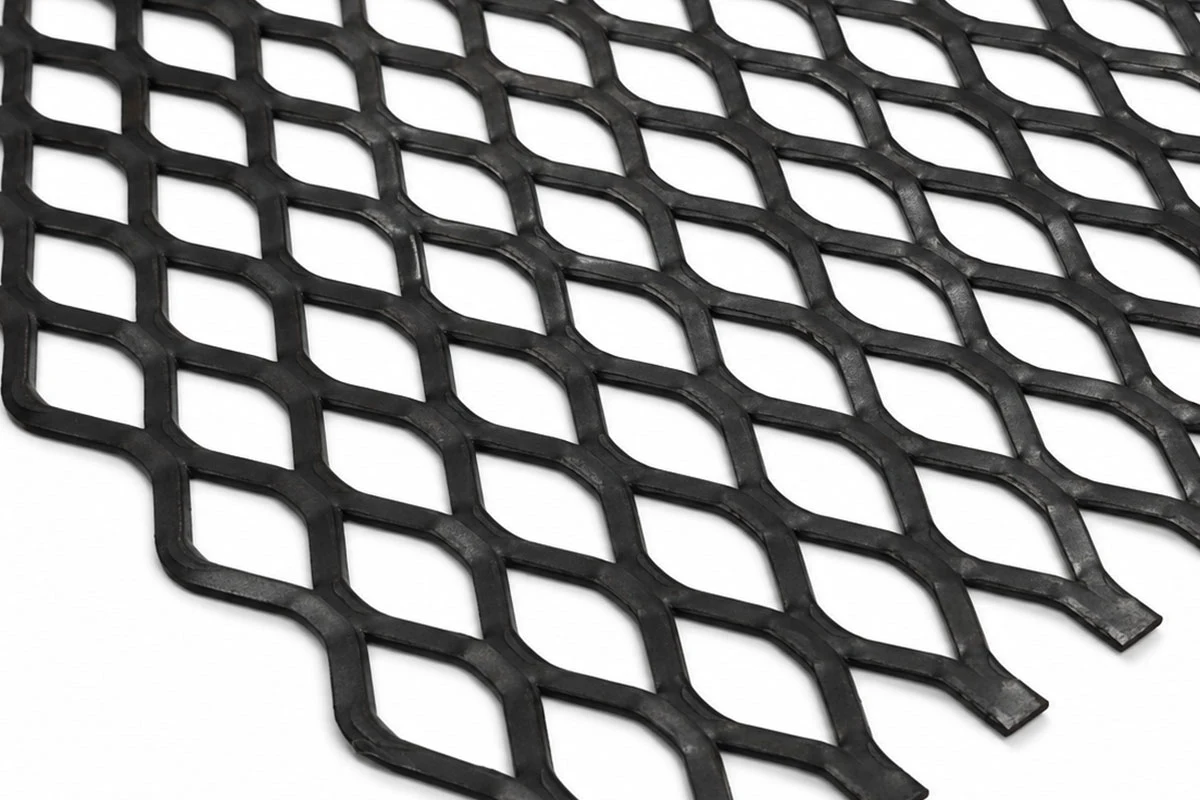
| Feature | Raised Expanded Metal | Flattened Expanded Metal |
|---|---|---|
| Surface profile | Angled strands form a three-dimensional surface | Strands and bonds are rolled into a flatter profile |
| Processing | Supplied without the additional flattening operation | Passed through flattening rolls after expanding |
| Selection focus | Surface profile, rigidity and directional grip | A flatter surface for contact, framing or fabrication |
| Typical uses | Guards, fencing, screens and appropriately specified walking surfaces | Screens, guards, infill panels and fabricated components |
Choose the profile to suit the application. Load capacity and slip resistance must be checked against the actual mesh specification, orientation, support arrangement and service conditions.
Explore Raised Expanded Metal and Flattened Expanded Metal for product selection.
How Is Expanded Metal Made?
A metal sheet or coil is fed into an expanding press, where tooling slits and stretches it to form a connected mesh. The mesh may then be flattened, cut to size or given a surface finish.
Unlike conventional perforating, expanding does not punch out a separate slug for every opening. Edge trimming and later fabrication can still produce scrap.
For process illustrations and a closer look at expanding and flattening, read our guide to how expanded metal is made.
Key Dimensions Explained
Opening size alone does not fully describe expanded metal. A useful specification also identifies the strand dimensions, surface profile and overall sheet size.
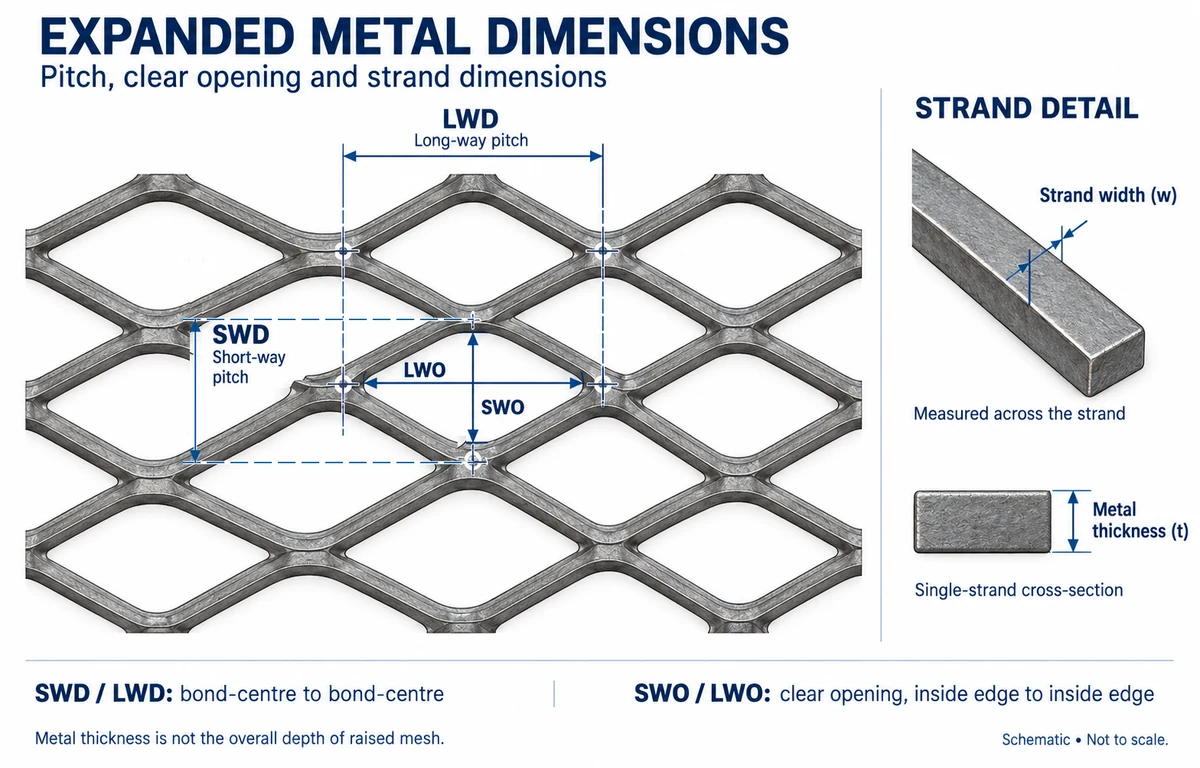
| Term | Meaning |
|---|---|
| SWD | Short-way mesh pitch, measured between corresponding bond centres on adjacent diamonds |
| LWD | Long-way mesh pitch, measured between corresponding bond centres on adjacent diamonds |
| SWO | Clear opening measured in the short direction |
| LWO | Clear opening measured in the long direction |
| Strand width | Width of the metal strip forming the side of an opening |
| Metal thickness | Thickness of the metal strand; distinguish this from the overall depth of raised mesh |
| Sheet size | Overall panel dimensions, with the diamond direction identified |
Confirm whether a quoted mesh size refers to pitch or clear opening. When ordering raised mesh, also clarify whether “thickness” means metal thickness or overall mesh depth.
See our expanded metal measurement guide for photos and measurement videos. Use the expanded metal calculator for preliminary weight and open-area estimates.
Common Materials and Finishes
Select the base material and surface treatment separately. Galvanizing and powder coating are finishes; they do not replace the need to specify the underlying metal.
| Material or finish | Typical reason for selection | What to confirm |
|---|---|---|
| Carbon steel | General fabrication, guards and industrial panels | Steel grade and the required corrosion protection |
| Stainless steel | Applications requiring corrosion resistance | Grade, exposure conditions and fabrication requirements |
| Aluminum | Weight-sensitive screens and architectural panels | Alloy, thickness, stiffness and finish |
| Galvanized steel | Steel mesh with a zinc coating for corrosion protection | Coating process, coverage and treatment of cut edges |
| Powder-coated metal | A specified colour and coated appearance | Base metal, pretreatment, coating system and service environment |
Material selection depends on the exposure, required performance and fabrication method. Confirm the grade and finish before comparing quotations.
Expanded Metal vs. Other Metal Meshes
These products can serve similar purposes, but they are made differently and should be compared using the requirements of the actual application.
| Product | How it is made | Main selection considerations |
|---|---|---|
| Expanded metal | A sheet is slit and stretched into connected openings | Profile, mesh direction, strand dimensions and open area |
| Perforated metal | Holes are punched or otherwise cut into a sheet | Hole shape, pitch, open area and sheet thickness |
| Welded wire mesh | Separate wires are joined at their intersections | Wire diameter, spacing and weld requirements |
| Woven wire mesh | Wires are interlaced in a selected weave | Aperture, wire diameter, weave and filtration requirements |
Expanded metal is not automatically stronger, cheaper or more suitable than every alternative. Compare equivalent materials, dimensions, support conditions and performance requirements.
Common Uses and Selection Tips
The same mesh is not suitable for every application. Start with the function, then confirm the material, profile and dimensions.
| Application | What to check first |
|---|---|
| Machine guards | Opening size, access to hazards, mounting and applicable guarding requirements |
| Fencing and infill panels | Mesh geometry, panel dimensions, framing and exposure |
| Screens and ventilation panels | Clear opening, open area, visibility and airflow requirements |
| Architectural panels | Viewing direction, appearance, fixing details and finish |
| Walkways and platforms | Suitable load-rated specification, span, supports, deflection and slip resistance |
| Filtration support | Opening, material compatibility and support for the primary filter medium |
For walking surfaces, specify an appropriate load-rated product. General-purpose expanded mesh should not be assumed suitable for pedestrian or vehicle loads. See also expanded metal stair treads for related access applications.
What to Specify Before Ordering
To help a supplier identify the correct mesh, provide:
- Intended application;
- Material and grade;
- Raised or flattened profile;
- SWD and LWD, and clear openings where required;
- Strand width and metal thickness;
- Sheet dimensions and diamond direction;
- Surface finish;
- Quantity and delivery destination;
- Drawing or sample photo, if available.
For cut-to-size panels, also confirm dimensional tolerances, edge condition and squareness requirements.
For further planning, review expanded metal sheet specifications, mesh patterns and our expanded metal pricing guide.
Need Help Identifying a Mesh?
Send a drawing or clear sample photos with the dimensions you know. YueChu Metal can review the details with you before quotation.