
Woven & welded wire mesh · Custom manufacturing
Stainless Steel Wire Mesh Manufacturer & Supplier in China
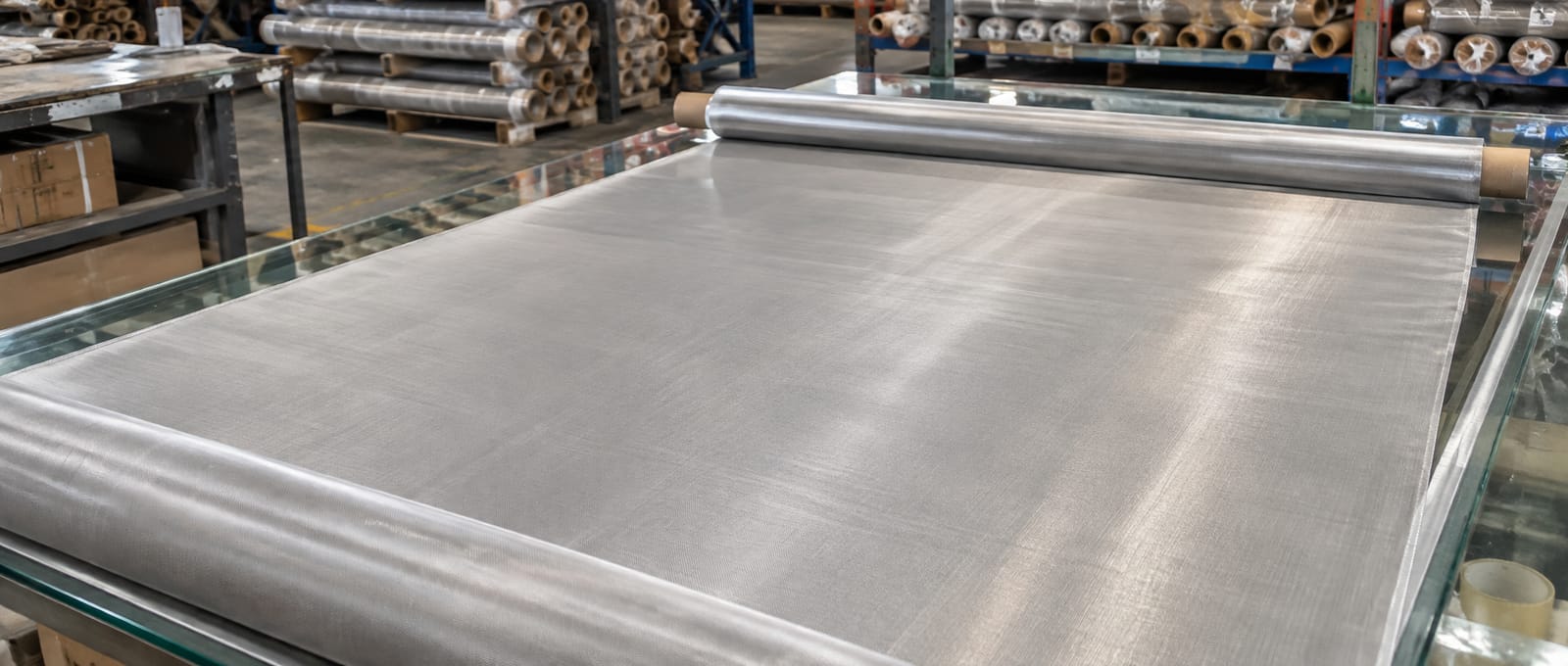
Stainless steel wire mesh is available in woven and welded constructions for filtration, screening, guarding and fabrication. YueChu supplies mesh in rolls, sheets and panels, with material grades and dimensions selected for each application. Choose a product type first, then continue to its dedicated page for detailed specifications and purchasing guidance.
- Woven and welded constructions
- SS304, SS316, SS310S and low-carbon variants
- Rolls, sheets, panels and custom parts
- B2B and export supply
- Construction
- Woven & welded
- Material grades
- 304 / 316 / 310S
- Supply forms
- Rolls, sheets & panels
- Custom options
- Cut pieces & parts
Share your application. We’ll help confirm the specification.
Product range
Choose a Stainless Steel Wire Mesh Product
Start with the construction required by the application. Dedicated product pages provide the relevant dimensions, specifications and purchasing guidance.Select the mesh type that fits your application.
 01
01Stainless Steel Filter Mesh
Compare woven filtration media by opening, retention requirement, material and supply form for industrial filter applications.
 02
02Stainless Steel Woven Wire Mesh
General-purpose woven mesh supplied in rolls, sheets or cut pieces for screening, guarding and separation.
 03
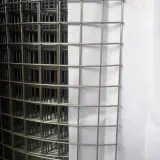
03Stainless Steel Welded Wire Mesh
Wires joined at their intersections to form mesh for guards, enclosures and fabricated panels, supplied in rolls or panels.
 04
04Stainless Steel Dutch Weave Filter Mesh
Dense woven structures designed for fine filtration, pressure resistance and controlled particle retention.
 05
05Stainless Steel Crimped Wire Mesh
Pre-crimped wires woven into a stable structure for screening and separation, with openings and wire diameters selected for the application.
Technical DataConstruction, grades & supply
- Page type
- Stainless steel wire mesh product family
- Constructions
- Woven and welded wire mesh
- Materials
- SS304, SS304L, SS316, SS316L, SS310S
- Supply forms
- Rolls, sheets, panels, cut pieces and fabricated parts
- Selection basis
- Construction, grade, opening, wire diameter, dimensions and application
Construction comparison
Woven vs. Welded Wire Mesh
Compare how each construction behaves before selecting a material grade or finished form.| Selection factor | Woven wire mesh | Welded wire mesh |
|---|---|---|
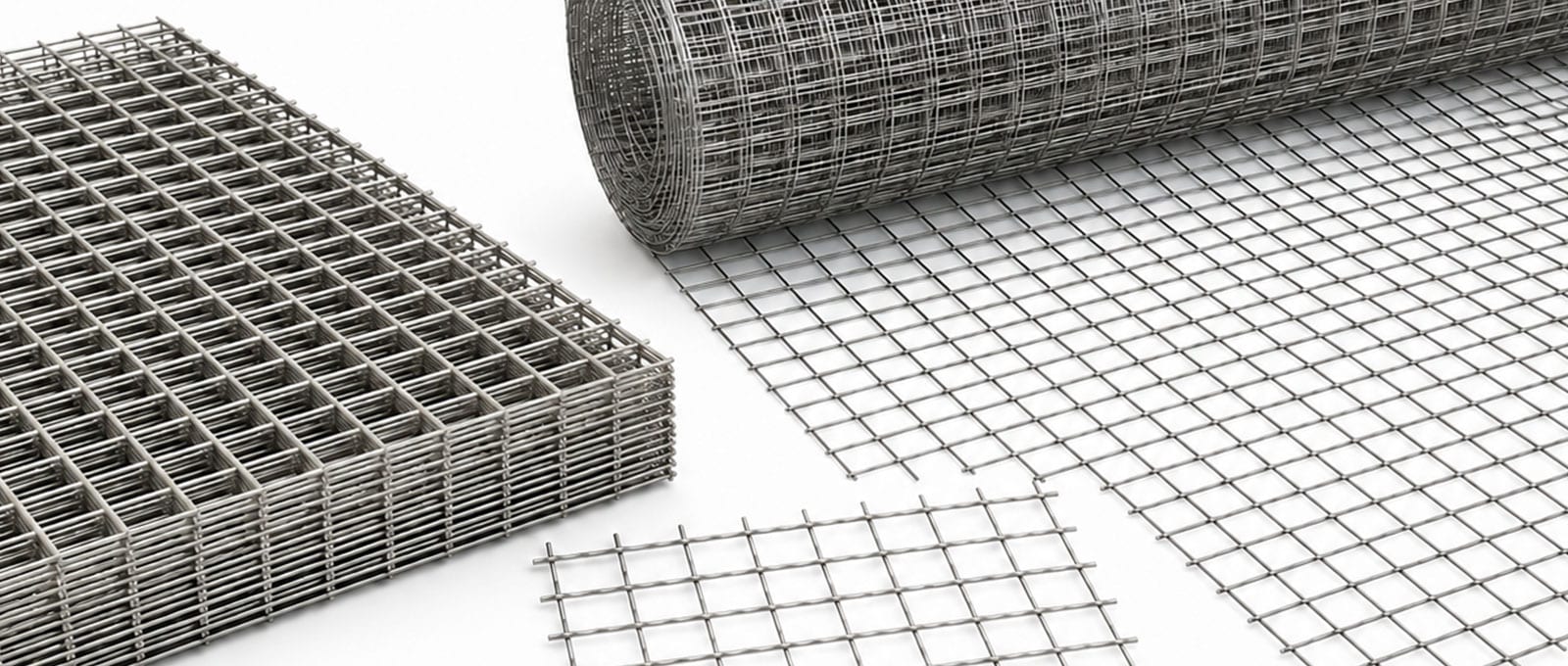
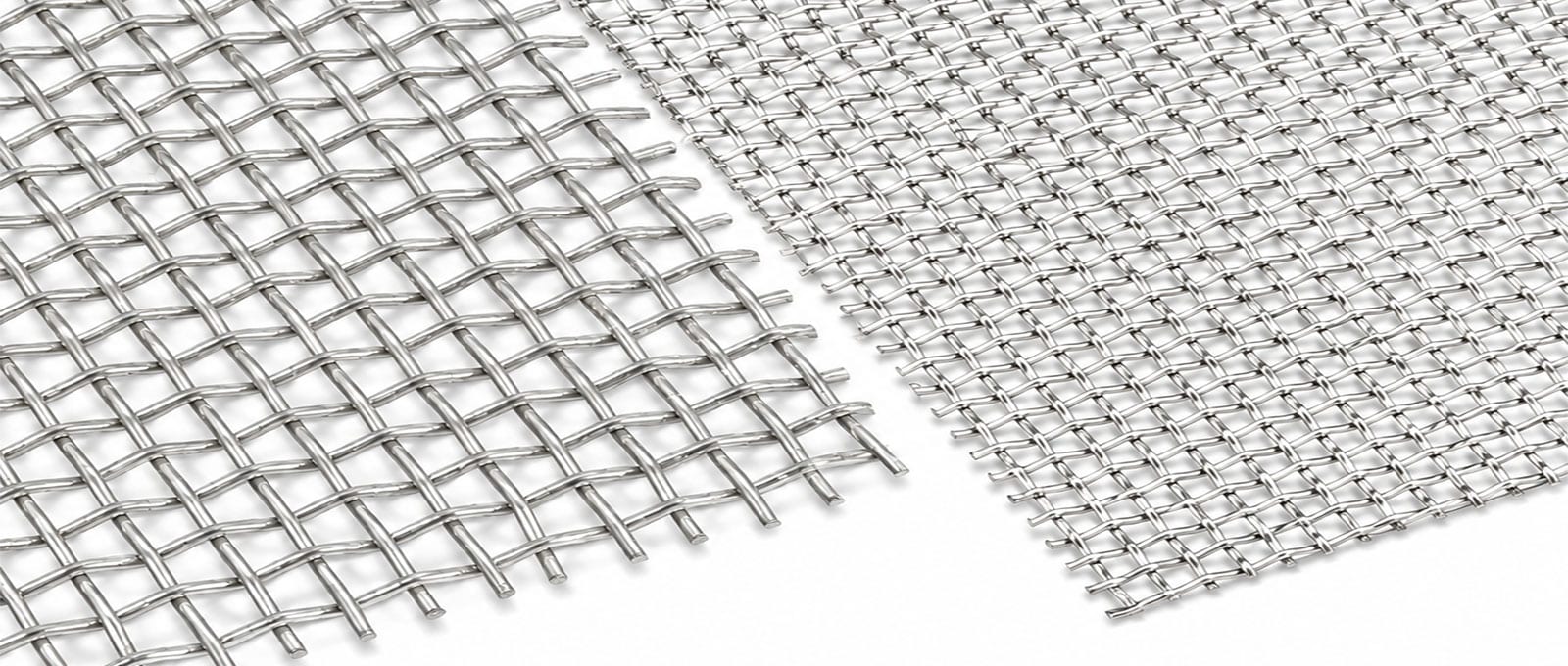
| How it is made | Warp and weft wires are interlaced in a selected weave without welding the intersections. | Longitudinal and cross wires are resistance-welded where they intersect to create a fixed grid. |
| Typical selection goal | Controlled openings for filtration, screening, sieving and particle separation. | Rigidity and shape retention for guards, enclosures, partitions and fabricated panels. |
| How dimensions are specified | Mesh count or opening, wire diameter, weave type, width and roll or cut length. | Clear opening or wire pitch, wire diameter, panel or roll size and edge treatment. |
| Common supply forms | Full rolls, slit rolls, sheets, cut pieces, discs and fabricated filter components. | Rolls, flat sheets, panels, guards, baskets and drawing-based assemblies. |
| Structure | Generally flexible in roll form; behavior varies with weave and wire diameter. | Intersections remain fixed, giving the grid greater rigidity and dimensional stability. |
Sourcing workflow
How to Select Stainless Steel Wire Mesh
Use these six decisions to turn an application requirement into a comparable RFQ.- 01
Define the function
State whether the mesh must filter, screen, guard, separate, support or become a fabricated component.
- 02
Choose the construction
Use woven mesh when aperture control or filtration is central; use welded mesh when rigidity and fixed intersections are central.
- 03
Select the stainless steel grade
Compare SS304 and SS316 against corrosion exposure, chlorides, cleaning conditions and fabrication requirements, and review SS310S when elevated-temperature service affects material selection.
- 04
Define the mesh geometry
For woven mesh, provide mesh count or opening and wire diameter. For welded mesh, provide clear opening or pitch and wire diameter.
- 05
Confirm dimensions and form
Specify roll width and length, sheet or panel size, cut-part dimensions, edge condition and quantity.
- 06
Add commercial and quality requirements
Include destination, required delivery date, packing, tolerances, material documents and any inspection requirements.
Technical foundation
What Is Stainless Steel Wire Mesh?
Stainless steel wire mesh is a network of stainless steel wires formed into a mesh structure. Woven mesh is made by interlacing wires, while welded mesh is made by joining intersecting wires at their contact points. The construction, material grade and dimensions determine which mesh is suitable for an application.
Woven wire mesh is commonly selected for filtration, screening and separation. Welded wire mesh is commonly used for guards, enclosures and fabricated panels. Dutch weave filter mesh and crimped wire mesh are woven constructions designed for different filtration or screening requirements.
This page compares the main construction types and directs buyers to dedicated woven and welded product pages for detailed specifications and purchasing guidance.
Material selection
Stainless Steel Grade Options
SS304
A widely used grade balancing corrosion resistance, formability and procurement cost for general industrial service.
Explore SS304 →SS304L
A low-carbon 304 variant often selected when welding or post-fabrication corrosion performance is important.
Explore SS304L →SS316
Contains molybdenum for improved resistance to chlorides and many chemical processing environments.
Explore SS316 →SS316L
Low-carbon 316 grade suited to welded filter components and demanding corrosion-resistant assemblies.
Explore SS316L →SS310S
A high-chromium, high-nickel grade considered for elevated-temperature service; confirm the applicable specification and required material documentation for the order.
Construction library
Common Wire Mesh Structures
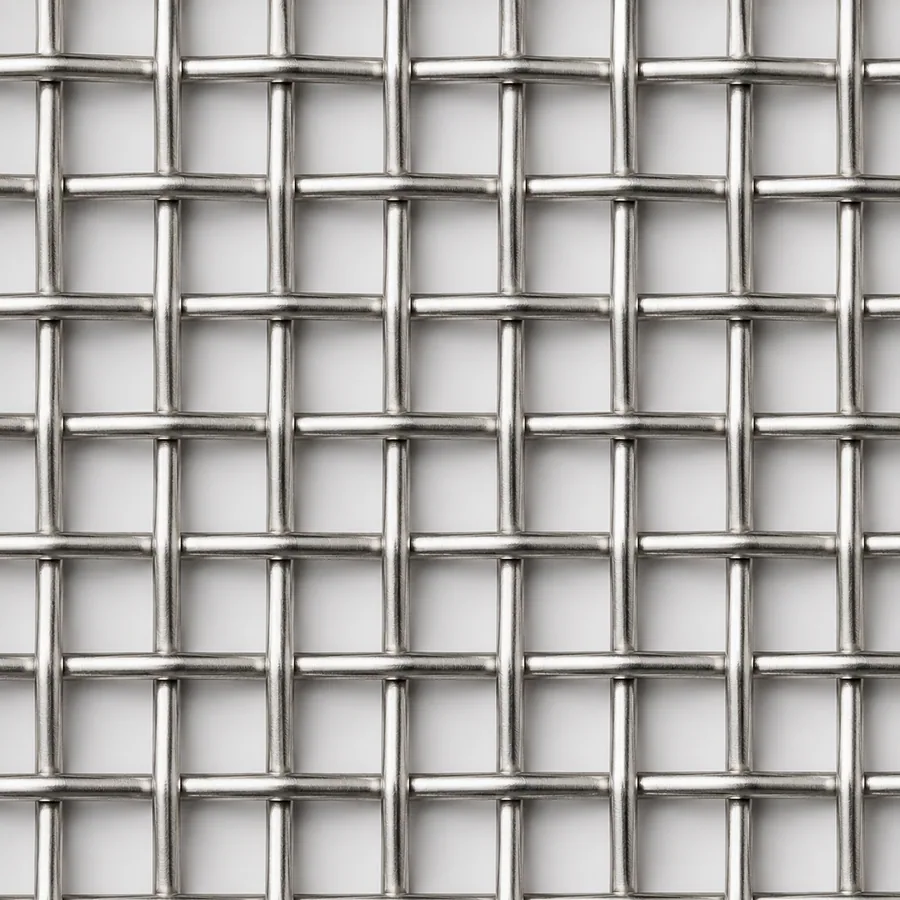
Plain Weave
Each wire passes alternately over and under the next wire, producing stable square openings for broad industrial use.
Explore Plain Weave →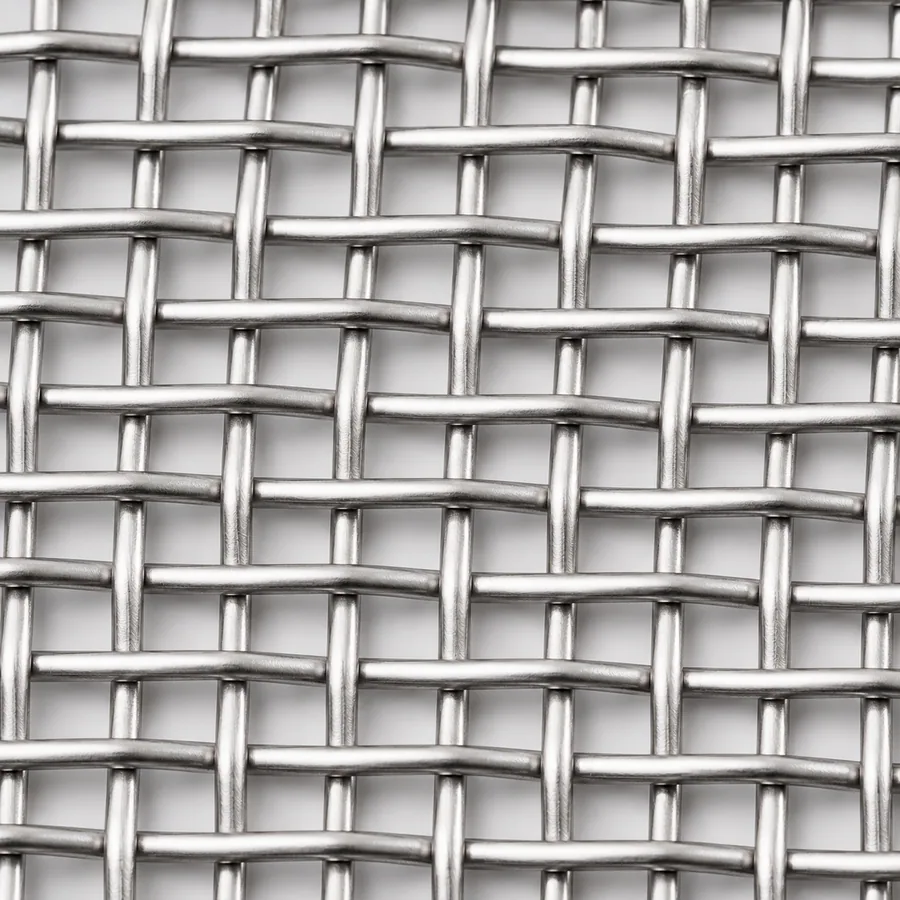
Twill Weave
Wires pass over and under two adjacent wires, allowing comparatively heavier wire at finer mesh counts.
Explore Twill Weave →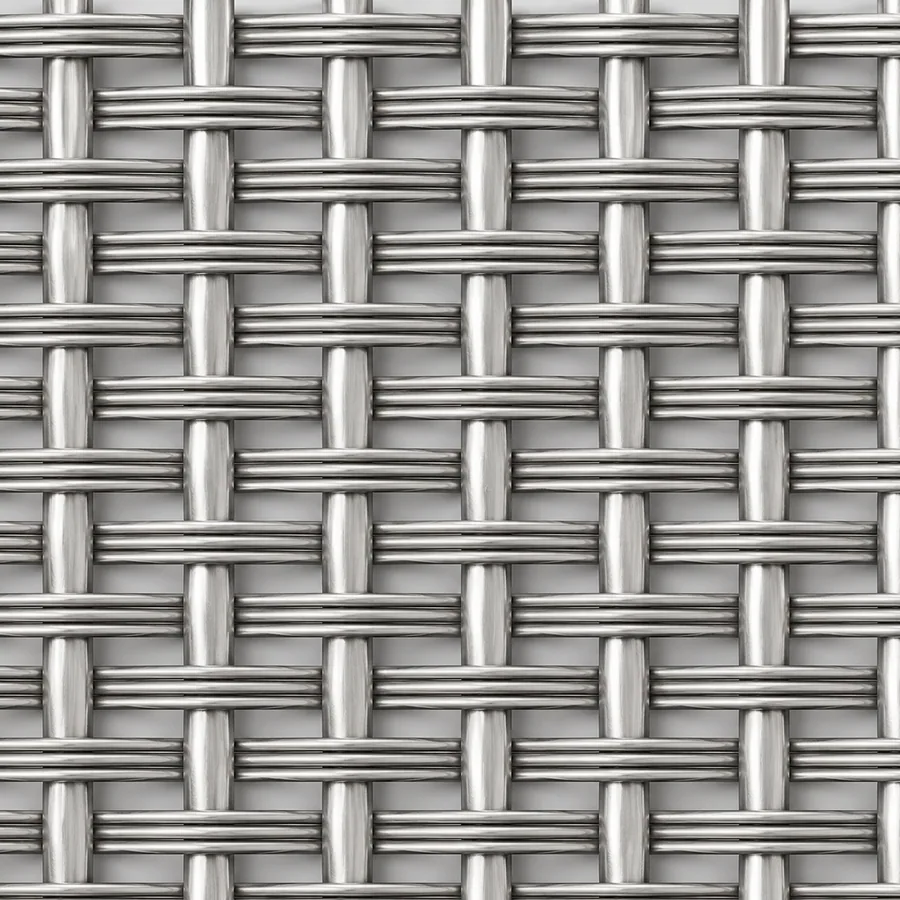
Dutch Weave
Different warp and weft wire arrangements create a dense filtration structure with high mechanical stability.
Explore Dutch Weave →
Reverse Dutch Weave
A reversed wire arrangement combines high flow capacity with fine particle retention for continuous filtration.
Explore Reverse Dutch Weave →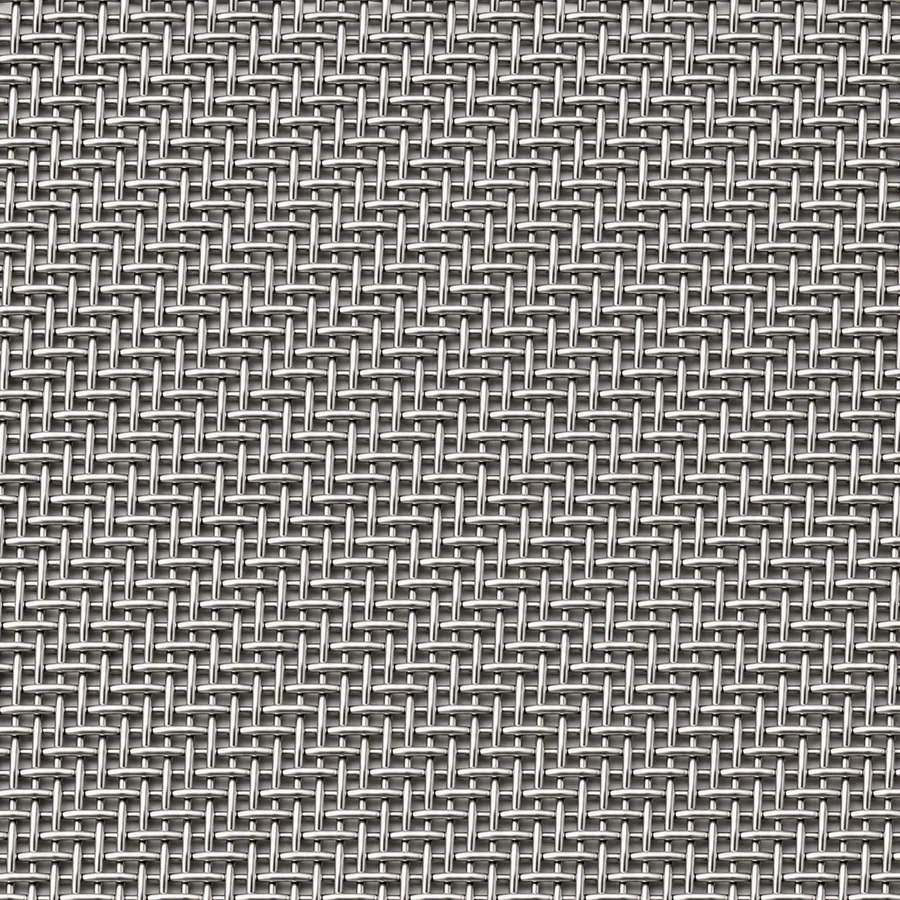
Twilled Dutch Weave
A tightly packed twill structure provides very fine particle retention with a smooth, mechanically stable surface.
Explore Twilled Dutch Weave →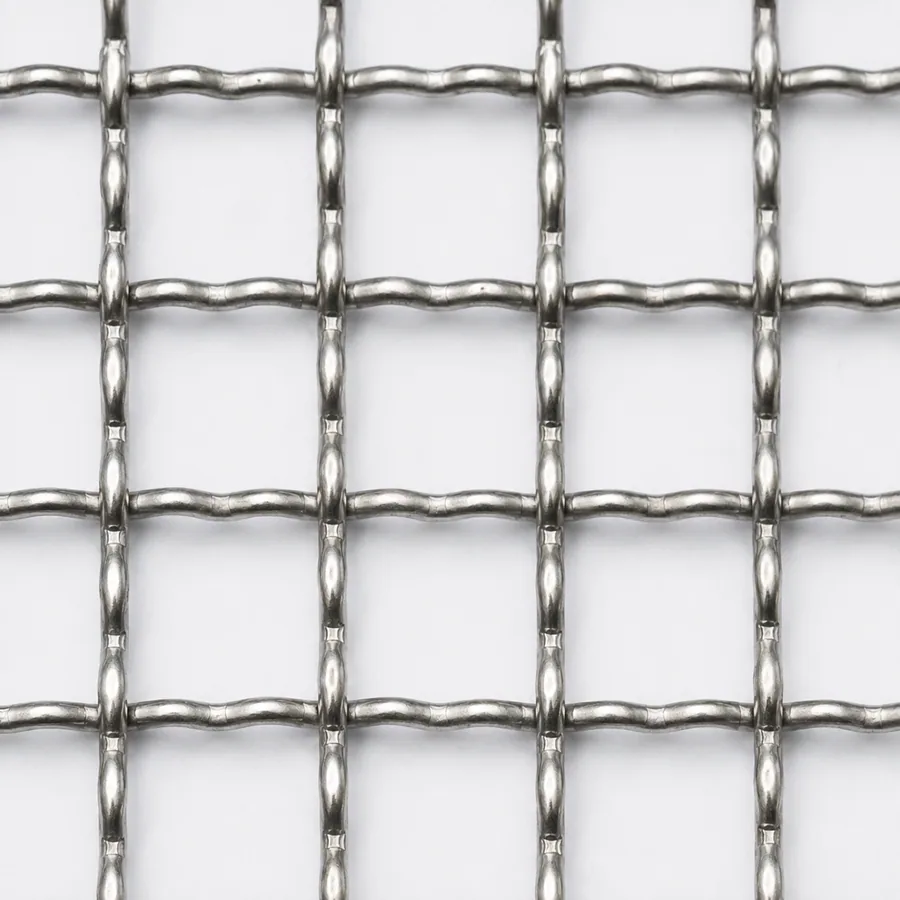
Crimped Wire Mesh
Pre-crimped wires lock together at each intersection to provide rigid, dimensionally stable openings for screening and separation.
Explore Crimped Wire Mesh →Industrial use
Applications
Industrial filtration
Liquid, gas and process filtration elements, screens and support layers.
Polymer processing
Screen packs and filtration media for plastic extrusion and melt filtration.
Chemical processing
Separation and screening where material compatibility and aperture control matter.
Food & pharmaceutical
Screening and filtration components subject to project-specific hygiene requirements.
Mining & screening
Classification, dewatering, screening and equipment protection.
Fabrication & OEM
Cut discs, cylinders, baskets, guards, panels and drawing-based mesh components.
Finished format
Available Supply Forms
Rolls
Full-width or slit rolls for downstream cutting, screening, filtration and general fabrication.
Sheets & cut pieces
Flat sheets, rectangles, strips and other cut formats prepared to agreed dimensions and tolerances.
Panels
Rigid welded mesh panels for guards, enclosures and assemblies where shape retention is required.
Fabricated parts
Discs, cylinders, baskets, screens, guards and drawing-based components reviewed for manufacturability.
Buyer questions
Stainless Steel Wire Mesh FAQ
What is stainless steel wire mesh?
Stainless steel wire mesh is a product family made from stainless steel wires arranged as a woven or welded grid. Woven mesh interlaces the wires, while welded mesh joins them at each intersection. The correct product type depends on the required function, opening, rigidity, material grade and supply form.
How do I choose between woven and welded wire mesh?
Choose woven wire mesh when controlled openings, screening, sieving or filtration are the main requirements. Choose welded wire mesh when fixed intersections, rigidity and shape retention are more important, such as for guards, enclosures and panels.
How do I choose between 304 and 316 stainless steel wire mesh?
SS304 is commonly selected for general industrial conditions. SS316 contains molybdenum and is generally considered where chloride exposure or a more demanding chemical environment requires improved corrosion resistance. The actual operating environment should determine the final grade.
Which wire mesh construction is used for filtration, screening or guarding?
Woven square mesh and Dutch weave constructions are normally evaluated for filtration, sieving and controlled screening. Crimped woven mesh is used for heavier screening and separation. Welded mesh is normally selected for guards, cages, partitions and rigid fabricated panels.
Should I choose wire mesh rolls, sheets, panels or fabricated parts?
Choose rolls for continuous material and downstream cutting, sheets or cut pieces for defined flat sizes, rigid welded panels when shape retention is required, and fabricated parts when the mesh must be formed into discs, cylinders, baskets, guards or drawing-based components.
What information is needed to select the right wire mesh product family?
Start with the application, service environment, required opening or filtration target, preferred rigidity and finished form. Then continue to the woven product page for mesh count, wire diameter and weave details, or the welded product page for pitch, clear opening, wire diameter and panel or roll details.