
Industrial filter cloth · B2B enquiries
Stainless Steel Reverse Dutch Weave Wire Mesh
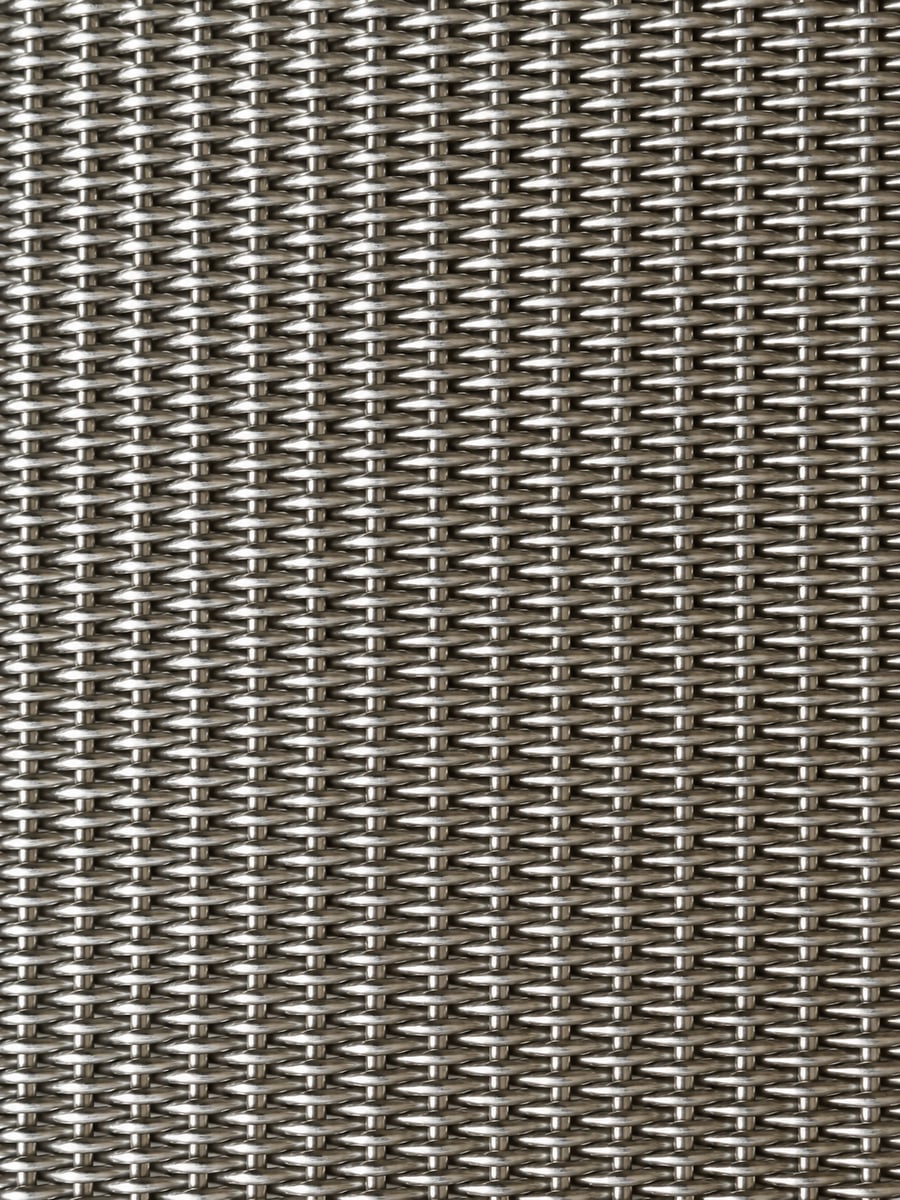
Reverse Dutch weave wire mesh is a dense stainless steel filter cloth with closely packed finer warp wires and coarser weft wires—the reverse of the usual Dutch arrangement. Send your filtration target, operating conditions and roll or belt drawing for a specification-based quotation.
- RPDW reference constructions
- Warp × weft specification review
- Filter belt and equipment requirements
- Specification-based wholesale & OEM enquiries
How it is woven
Dense warp wires, coarser weft wires
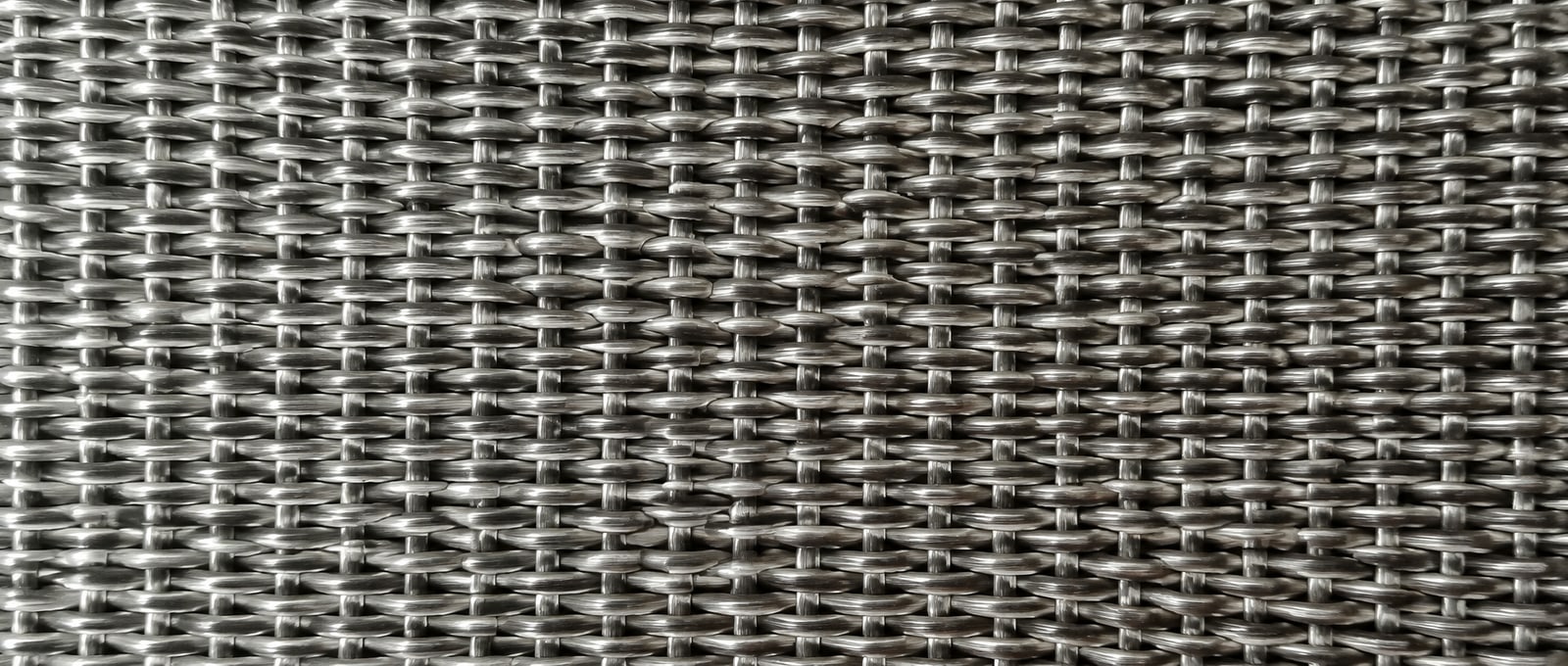
In reverse Dutch weave, closely packed finer wires run in the warp direction and coarser wires cross them in the weft direction. The dense structure forms a filtration path through the cloth rather than the open square apertures of plain or twill square mesh.
- Reverse plain Dutch
- One-over, one-under interlacing with the reversed warp and weft arrangement.
- Reverse twill Dutch
- Typically two-over, two-under interlacing with staggered intersections.
YueChu Metal can manufacture reverse Dutch cloth to an agreed weave and wire geometry. Confirm suitability for your application at quotation.
Stainless steel grade selection
304 / EN 1.4301 and low-carbon 304L / EN 1.4307 are starting points for milder environments. Molybdenum-alloyed 316L / EN 1.4404 can be considered for more demanding process media and welded filter components. Chlorides, pH, temperature and cleaning chemicals still require a material review; 316L is not a universal seawater or corrosion guarantee. Grade availability is confirmed at quotation.
Choose the construction
Reverse Dutch vs standard Dutch weave
| Construction | Warp direction | Weft direction |
|---|---|---|
| Standard Dutch | Fewer, coarser wires | Densely packed finer wires |
| Reverse Dutch | Densely packed finer wires | Fewer, coarser wires |
Reference specifications
Reverse Dutch weave specifications
Use these reverse plain Dutch weave (RPDW) constructions to shortlist an enquiry. Counts are warp × weft wires per 25.4 mm (one inch); wire diameters and thickness are in mm. The values are published industry references for selecting a construction. YueChu Metal can manufacture reverse Dutch weave cloth to an agreed specification; final dimensions, tolerances and filtration acceptance criteria are confirmed for each order.
Reverse plain Dutch weave reference sizes
Scroll horizontally to see all columns on smaller screens.
| Mesh count warp × weft / inch | Wire diameter warp × weft · mm | Thickness approx. · mm | Nominal retention reference · µm | Absolute retention published range · µm |
|---|---|---|---|---|
| 66 × 18 | 0.300 × 0.400 | 1.07 | 200 | 210–230 |
| 84 × 25 | 0.320 × 0.400 | 1.09 | 150 | 150–180 |
| 130 × 30 | 0.200 × 0.450 | 0.82 | 100 | 100–108 |
| 130 × 35 | 0.200 × 0.400 | 0.75 | 80 | 83–90 |
| 175 × 40 | 0.150 × 0.350 | 0.55 | 104 / 108* | 100–112 |
| 175 × 45 | 0.150 × 0.320 | 0.62 | 100 | 90–102 |
| 175 × 50 | 0.150 × 0.300 | 0.56 | 60 | 62–68 |
| 290 × 60 | 0.090 × 0.230 | 0.40 | 50 | 43–51 |
| 290 × 74 | 0.090 × 0.200 | 0.36 | 40 | 38–45 |
| 625 × 104 | 0.042 × 0.150 | 0.24 | 30 | 25–32 |
| 625 × 106 | 0.042–0.043 × 0.140 | 0.23 | 25 | 23–28 |
| 625 × 132 | 0.042 × 0.130 | 0.20 | 17 | — |
| 720 × 150 L | 0.035 × 0.100 | 0.16 | 14 | — |
| 912 × 154 L | 0.028 × 0.090 | 0.16 | 13 | — |
| 1005 × 200 L | 0.025 × 0.050 | 0.10 | 10 | — |
Reference sources: Gerard Daniel RPD data sheet(geometry and nominal values) and Dorstener Wire Tech RPD/RDTW data sheet(absolute ranges and the 175 × 40 comparison).
Confirm these details before ordering
- Weave construction
- Specify reverse plain Dutch or reverse twill Dutch if known, or provide a sample reference. Availability is confirmed for the requested construction.
- Warp × weft geometry
- Provide separate mesh counts per linear inch and wire diameters in mm for warp and weft. Do not use a single square-mesh count.
- Material & operating conditions
- State the required stainless steel grade, process medium, temperature, flow and allowable pressure drop.
- Filtration requirement
- Specify the retention target in µm, rating basis, agreed test procedure and acceptance criterion. A weave name is not a measured micron rating.
- Roll, strip or belt dimensions
- Include width and length, tolerances, weave direction, edge condition and any joint or end requirements. Belt enquiries also need an equipment drawing.
- Quantity & delivery
- State quantity, packing requirements, destination country, postal code or port, delivery terms and requested date.
Application review
Filter belts & equipment compatibility
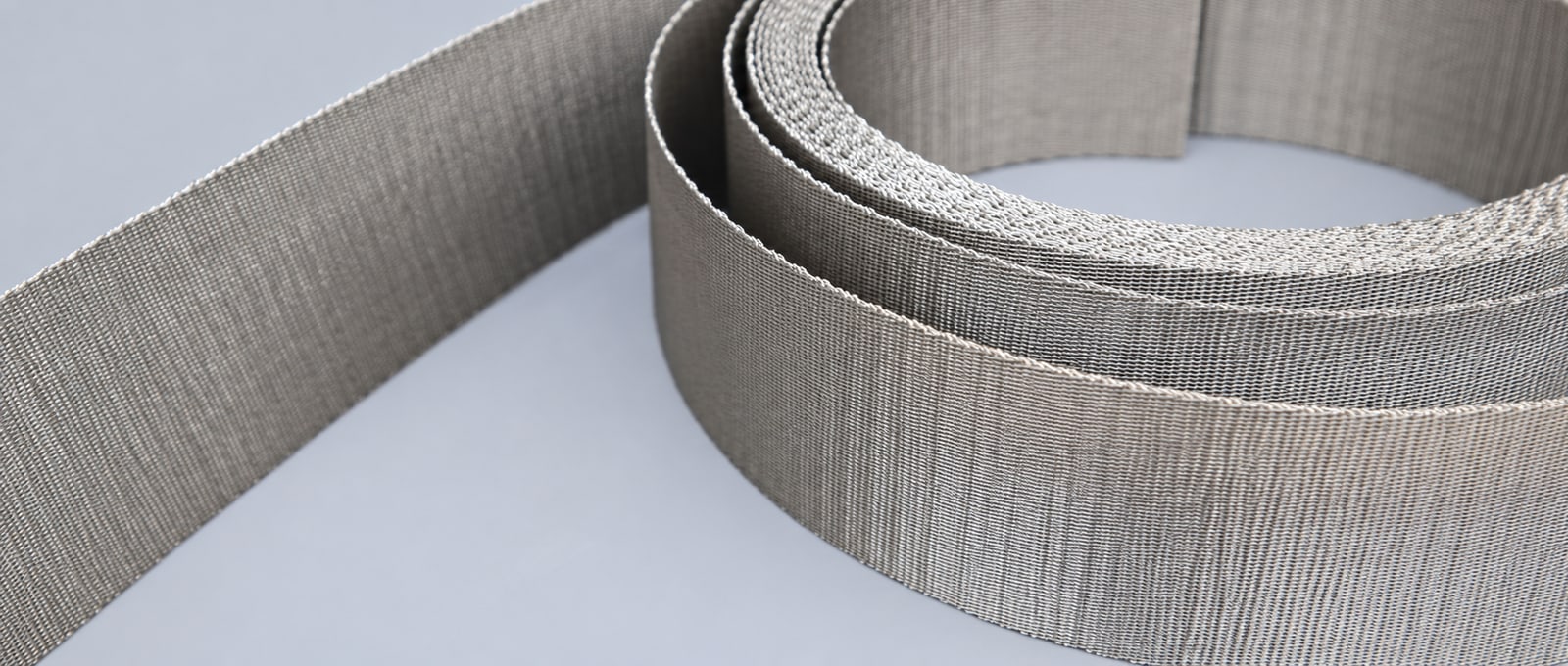
Reverse Dutch cloth is used in some industrial filter belts and continuous screen-changing applications, including polymer melt filtration. The weave name alone does not establish compatibility with a machine or process.
- Belt geometry: working width, length, tolerances and travel direction.
- Edge & end details: edge condition, joint or end design, and the equipment drawing.
- Mechanical conditions: belt path, supports, tension and loading requirements.
- Process conditions: medium, operating temperature, pressure drop and filtration target.
Filtration performance
Confirm retention and the test basis
Filtration depends on the full weave construction, pore structure and operating conditions. A nominal or calculated micron value is not automatically a measured particle-retention rating. Agree the test basis and acceptance criteria for the chosen cloth.
- Bubble point pressure · ASTM E3278
- Measures the pressure needed to pass a bubble through wetted flat filter cloth. Pore-size interpretation needs an agreed conversion factor; it is not a direct retention test or validation of a finished filter assembly.
- Particle-retention challenge
- Discuss a particle or glass-bead procedure with defined particle sizes, challenge conditions and pass criteria. A result applies to the tested construction and conditions.
- Filter-cloth specification · ASTM E2814
- Covers industrial woven filter-cloth terminology, considerations and alternative acceptance criteria. It is not a standalone theoretical micron test or product certification.
For critical filtration, define retention, allowable pressure drop, sampling and acceptance criteria before production. Any requested report should identify the sample construction, method, conditions and measured result. Report availability is confirmed at quotation.
ISO 9044:2016 applies to square-aperture industrial woven wire cloth; its aperture tolerances do not establish reverse Dutch retention limits. Specify filtration acceptance separately. If porosity or open area is requested, state the definition and measurement or calculation method—porosity is not automatically the projected open area.
Method references: ASTM E3278 and ASTM E2814.
Wholesale & OEM enquiries
Custom supply & quotation checklist
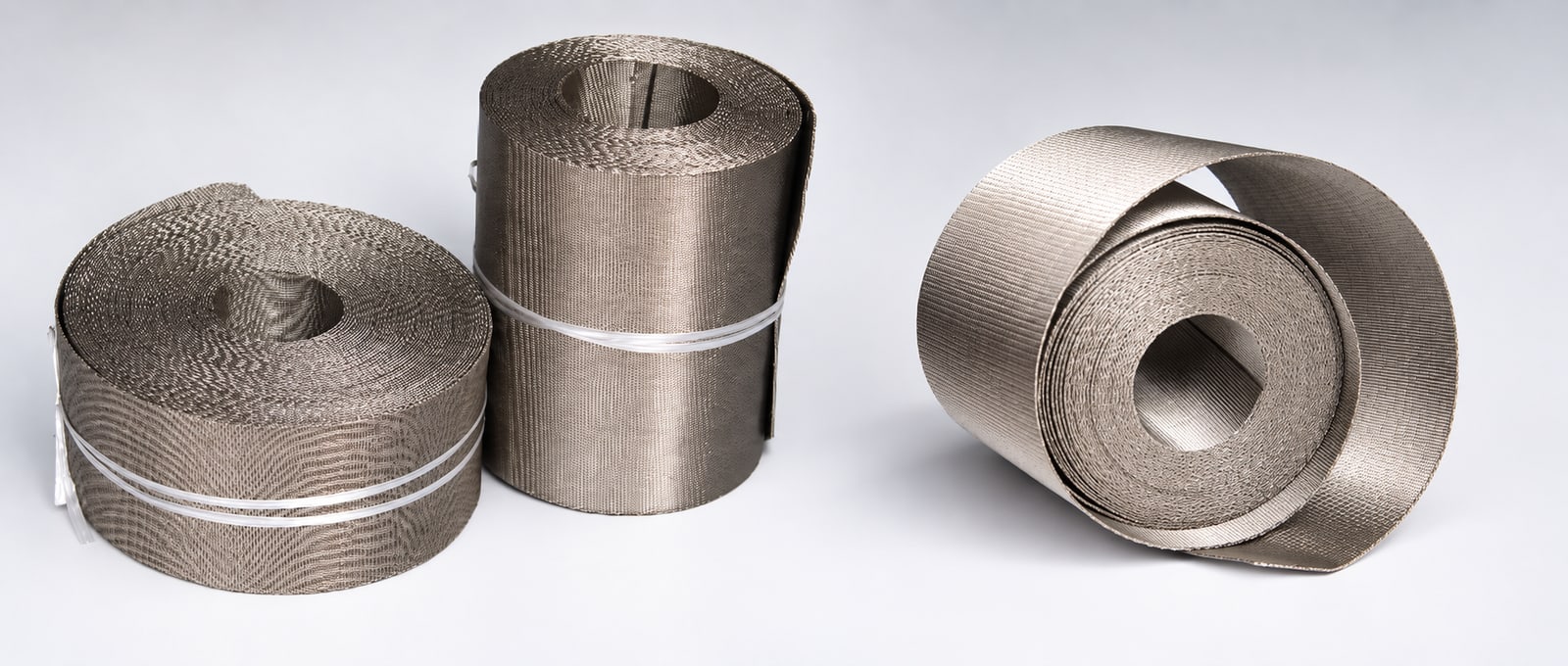
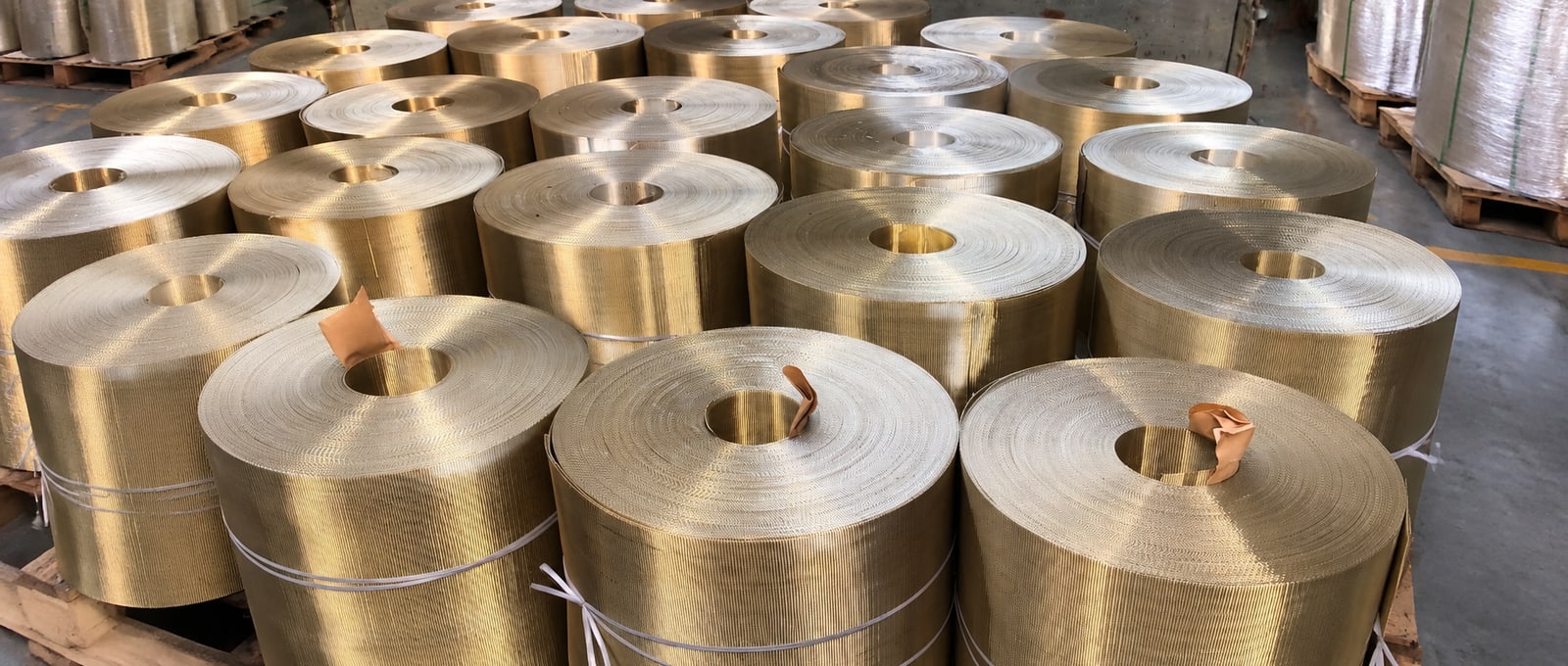
YueChu Metal manufactures reverse Dutch stainless steel filter cloth to customer requirements in rolls, slit strips and cut pieces, with drawing-based filter belts reviewed for equipment fit. Send the construction and application details to confirm the production specification.
- Define the cloth: weave, warp × weft geometry and stainless steel grade, or an existing specification.
- Describe the process: retention target, medium, flow, temperature, allowable pressure drop and mechanical conditions.
- Send dimensions: roll or strip size, cut-piece drawing or equipment belt requirements, including edges and tolerances.
- Agree acceptance: inspection, test procedure, material documents, quantity and packing.
- Confirm delivery: destination country and postal code or port, delivery terms and required date.
Buyers in North America, Europe and Australia can include their destination and document requirements in the enquiry. Feasibility, MOQ, lead time and delivery terms are confirmed for each quotation; no universal price or unverified certification is listed.
For cross-market RFQs, use the full RPDW or RDTW designation and warp × weft counts. State mm and metres as the primary dimension units, adding inch equivalents if needed. Specify net width, roll length, edge condition, cleanliness and batch traceability separately; a construction code does not define standard roll dimensions.
Buyer questions
Reverse Dutch Weave Wire Mesh FAQ
What is reverse Dutch weave wire mesh?
It is a dense woven filter cloth with a greater number of finer warp wires and fewer, coarser weft wires. The arrangement reverses the usual Dutch construction; it does not mean turning the cloth over.
How does reverse Dutch differ from standard Dutch weave?
Standard Dutch usually has coarser warp wires and densely packed finer weft wires. Reverse Dutch places the densely packed finer wires in the warp direction. Select by the complete construction, filtration requirement and mechanical conditions, not the name alone.
What is the difference between reverse plain and reverse twill Dutch weave?
Reverse plain Dutch uses one-over, one-under interlacing. Reverse twill Dutch typically uses two-over, two-under interlacing. They describe different constructions, not interchangeable performance ratings. Availability is confirmed for the requested specification.
Can reverse Dutch cloth be used in a continuous filter belt?
Some reverse Dutch constructions are used for filter belts and continuous screen-changing applications. Compatibility is not universal: belt dimensions, weave direction, edge and joint details, equipment support, tension and process conditions must be reviewed.
Which reverse Dutch specifications can I use as a starting point?
The RPDW table includes published reference constructions such as 625 × 106 at a nominal 25 µm, 290 × 74 at 40 µm and 175 × 50 at 60 µm. YueChu Metal can manufacture reverse Dutch weave cloth to an agreed specification. Confirm geometry, material, retention definition and test method for your order.
Are nominal retention, absolute retention and square aperture the same?
No. Nominal and absolute retention depend on the stated definition and test procedure; a nominal value is not a universal particle-size cutoff. Reverse Dutch cloth has a three-dimensional filtration path, so square-mesh aperture formulas do not determine its micron rating. Agree the retention criterion and operating conditions separately.
Which filtration tests should be agreed before ordering?
Discuss bubble point testing under ASTM E3278 for wetted flat filter cloth or a particle-retention challenge under an agreed procedure. ASTM E2814 is an industrial woven filter-cloth specification, not a standalone micron test. Confirm test conditions, sampling, acceptance criteria and report availability with the quotation.
What do you need for a wholesale or OEM quotation?
Provide the weave construction, warp × weft counts and wire diameters if known, stainless steel grade, filtration target, operating conditions, roll or belt drawing, quantity and destination. Feasibility, MOQ, lead time and requested documentation are confirmed against the final specification.
- Construction
- Dense warp with coarser weft wires
- Mesh count
- Warp × weft; confirm the full construction
- Filtration rating
- Agree the target, test method and acceptance criteria
- Belt dimensions
- Drawing and equipment review required
Made to your specification · Request a quotation
Technical DataProduct parameters & construction details
- Construction
- Dense warp with coarser weft wires
- Mesh count
- Warp × weft; confirm the full construction
- Filtration rating
- Agree the target, test method and acceptance criteria
- Belt dimensions
- Drawing and equipment review required
- Material
- Stainless steel grade confirmed at quotation