
Expanded metal manufacturing guide
How Is Expanded Metal Made? Manufacturing Process Explained
Expanded metal is manufactured by slitting and stretching a solid metal sheet into a continuous mesh pattern. The process creates diamond-shaped openings without punching out metal from each opening. The strands and bonds remain connected as one piece.
Step 1: Slitting and Stretching
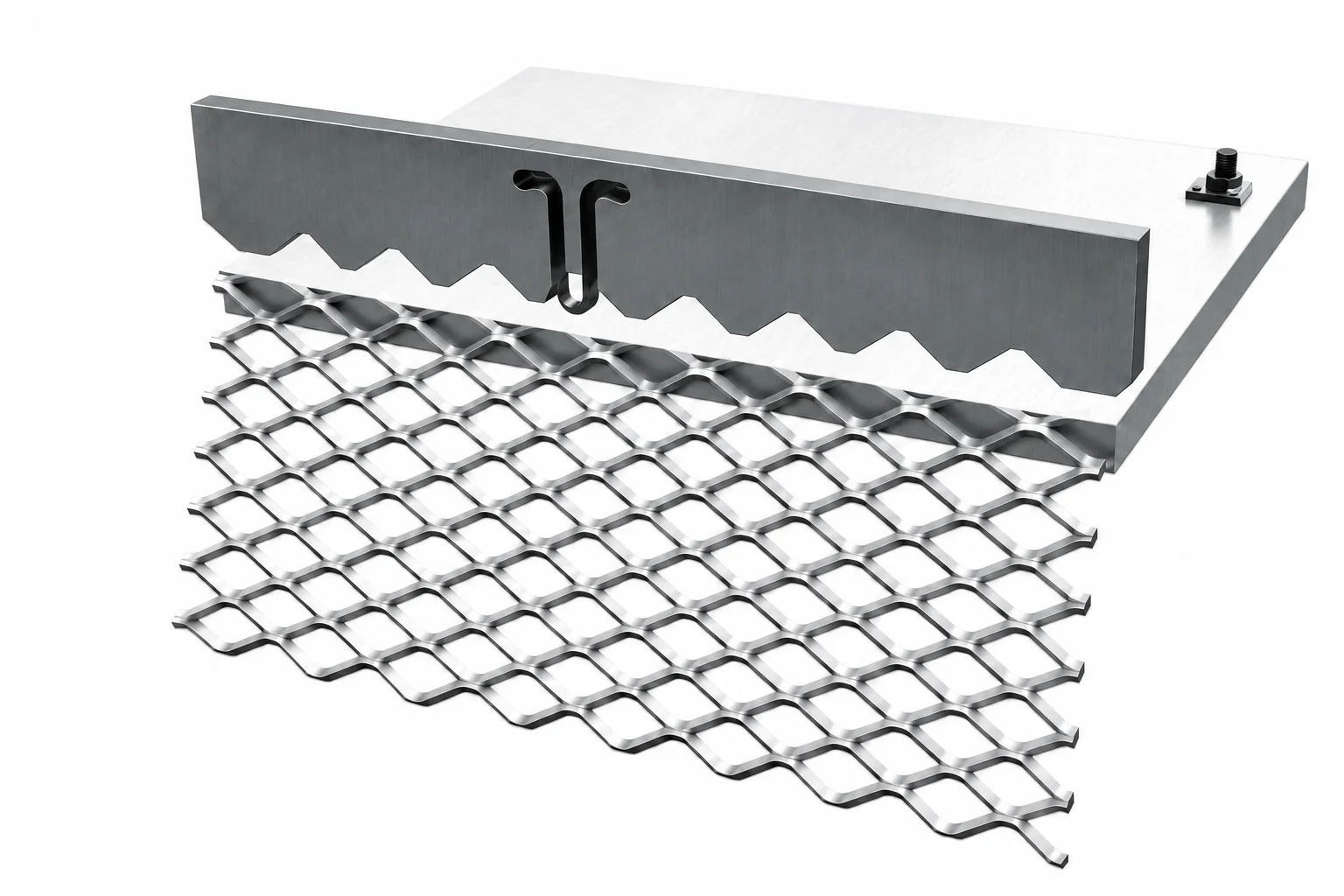
A metal sheet is fed into an expanding machine equipped with a cutting and forming die.
As the die operates, the sheet is progressively slit and stretched. Each cycle forms another row of interconnected diamond openings.
The resulting product is raised expanded metal, which has angled strands and a three-dimensional surface profile.
Step 2: Roll Flattening (Optional)
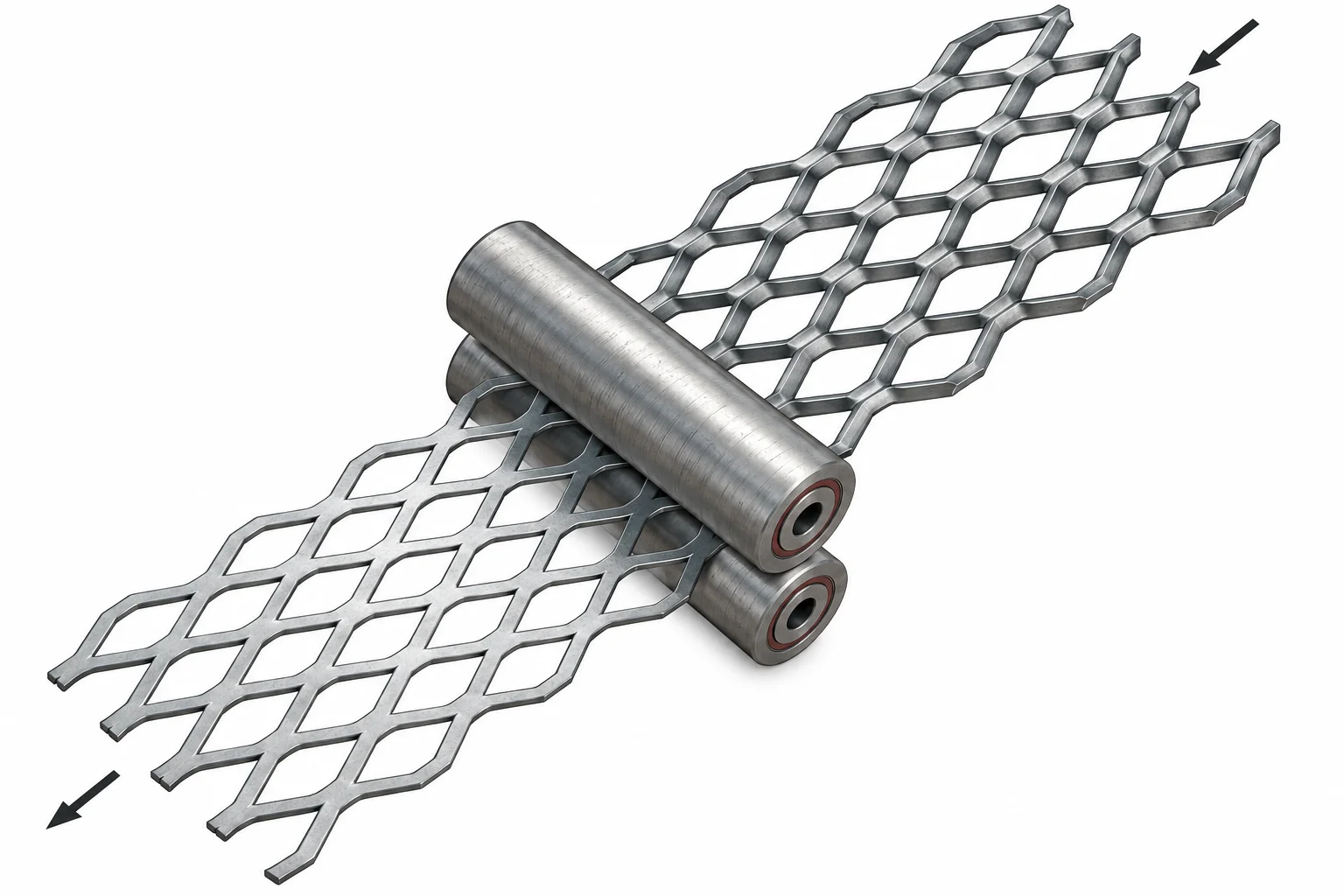
Raised expanded metal can be passed through flattening rolls to produce flattened expanded metal.
The rolling process reduces the raised profile, creating a smoother and flatter surface. The mesh remains a continuous, one-piece metal structure.
Not all expanded metal is flattened. Raised and flattened profiles are supplied according to the intended application and specification.
Raised or Flattened — Which Should You Choose?
| Feature | Raised Expanded Metal | Flattened Expanded Metal |
|---|---|---|
| Process | Slitting and stretching | Slitting and stretching, followed by roll flattening |
| Surface | Original raised strand profile and textured surface | Lower-profile, smoother surface |
| Selection | For applications requiring a raised profile | For applications requiring a flatter finish |
| Structure | Continuous, one-piece metal mesh with connected strands and bonds | |
Both types can be manufactured in different materials, mesh patterns and sheet dimensions according to the confirmed specification.
Key Specifications to Confirm
Mesh pitch and clear opening
SWD and LWD are the short-way and long-way bond-center pitches used in this guide. SWO and LWO are the corresponding clear openings; they are not interchangeable with pitch dimensions.
Material, profile and sheet dimensions
Confirm material and grade, raised or flattened profile, sheet thickness, strand width, sheet size and finish. Use the expanded metal measurement guide to define the dimensions before requesting a quotation.
Frequently Asked Questions
How is expanded metal manufactured?
Expanded metal is made by progressively slitting and stretching a solid metal sheet into interconnected openings. The strands and bonds remain connected as one piece.
Is metal punched out of each opening?
No. The openings are formed by slitting and stretching, rather than punching out a separate piece of metal from each opening. Cutting the sheet to size or trimming edges can still produce offcuts.
Does all expanded metal go through flattening rolls?
No. Slitting and stretching produce raised expanded metal. Roll flattening is an optional additional process used when a lower-profile, smoother surface is required.
What is the difference between mesh pitch and clear opening?
In this guide, SWD and LWD describe short-way and long-way bond-center pitches. SWO and LWO describe the corresponding clear openings. Confirm the measurement convention before ordering.
Related Expanded Metal Resources
- Expanded Metal Products — materials, profiles and customization.
- How to Measure Expanded Metal — pitches, clear openings and strand dimensions.
- Expanded Metal Mesh — compare mesh patterns and specifications.
For a quotation, send the material, mesh dimensions, sheet size and quantity. Request a quote.