
Type 310 · Type 310S · High-temperature woven mesh
310 / 310S Stainless Steel Wire Mesh – High Temperature Resistant Woven Mesh
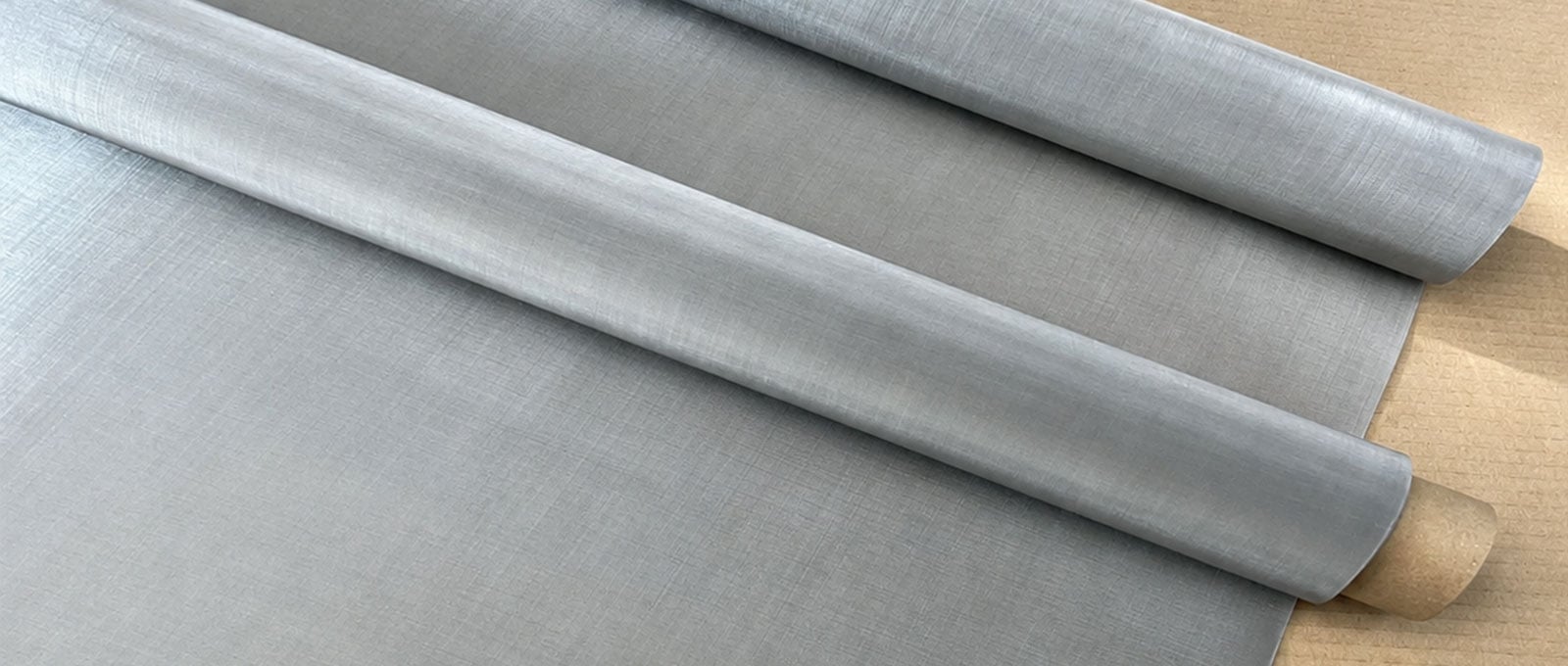
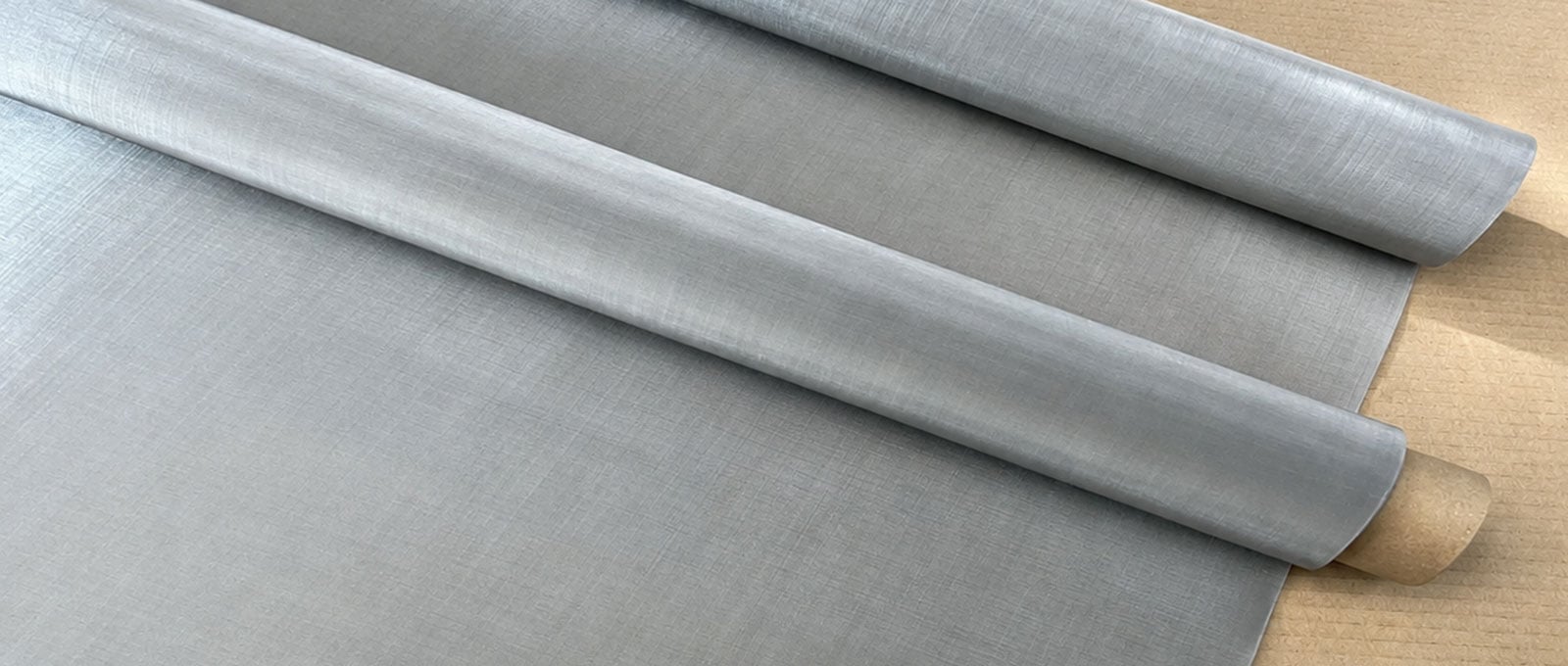
We weave 310 and 310S stainless steel mesh in Anping for furnaces, kilns and thermal processing. We supply rolls, cut screens and parts made to drawings. Share the heat cycle and atmosphere so we can check the wire and support for your application.
- High Cr / Ni Alloy24–26% chromium and 19–22% nickel support high-temperature oxidation resistance.
- Welding? Consider 310SLower-carbon option for welded frames and fabricated mesh assemblies.
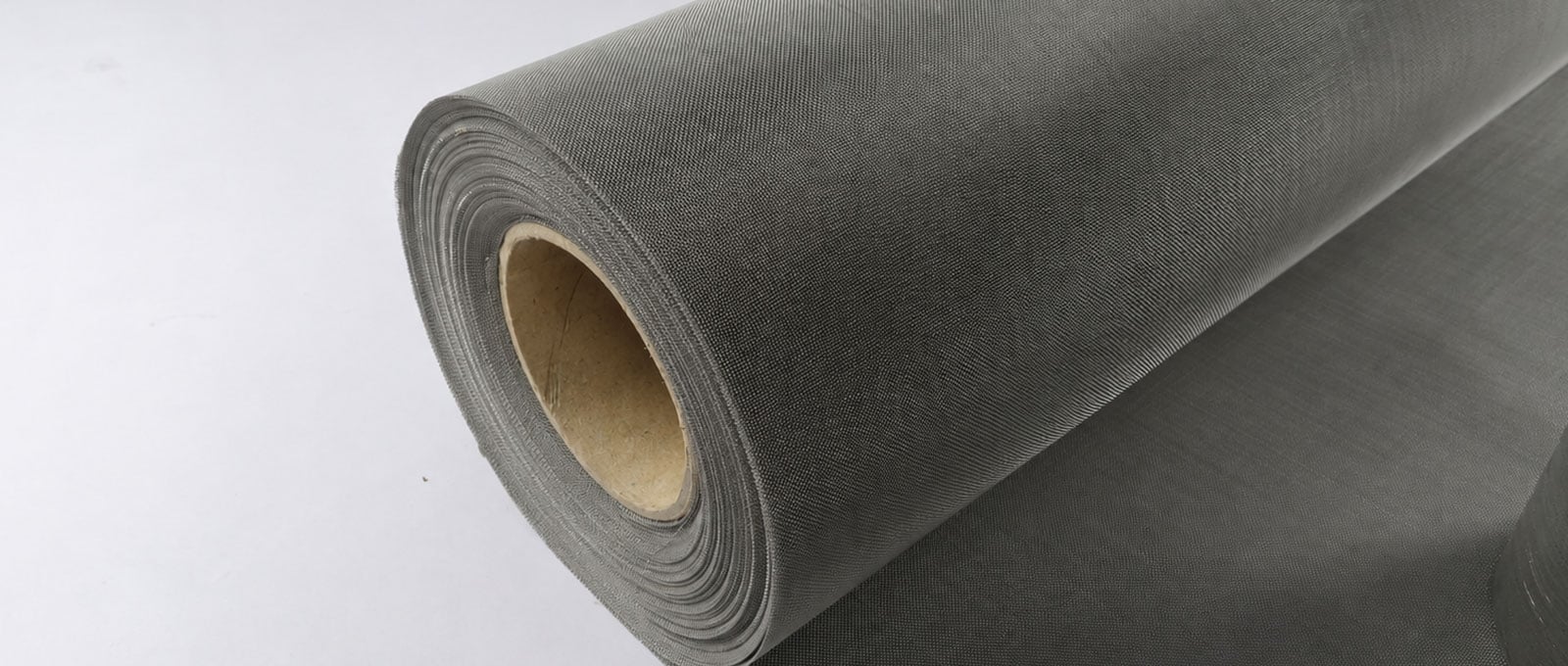
- Woven Rolls & Cut ScreensFull rolls, slit widths and cut pieces to the agreed specification.
- Application-Based QuotationTechnical and price review based on your specification and service conditions.
Technical foundation
What Is 310 / 310S Stainless Steel Wire Mesh?
We weave 310 and 310S into square-opening screens and filter cloth. Mesh count, wire diameter and weave determine the opening, while the alloy and mounting affect how the screen behaves in service.
Fine wire has more exposed surface relative to its cross-section. We review the atmosphere, heat cycle, wire diameter, frame and load to check whether the selected screen can hold its opening in service.
Material selection
Choosing 310 or 310S for Your Wire Mesh
310 — UNS S31000
Choose when the equipment specification or replacement-part drawing calls for Type 310.
310S — UNS S31008
Choose when the drawing specifies Type 310S or requires a lower-carbon grade for fabricated mesh parts.
Grade comparison
304 vs 316 vs 310 vs 310S Stainless Steel Wire Mesh
We start with the furnace atmosphere and temperature cycle, then compare the grade and wire size for the screen.
Material identification
310 / 310S Material Verification
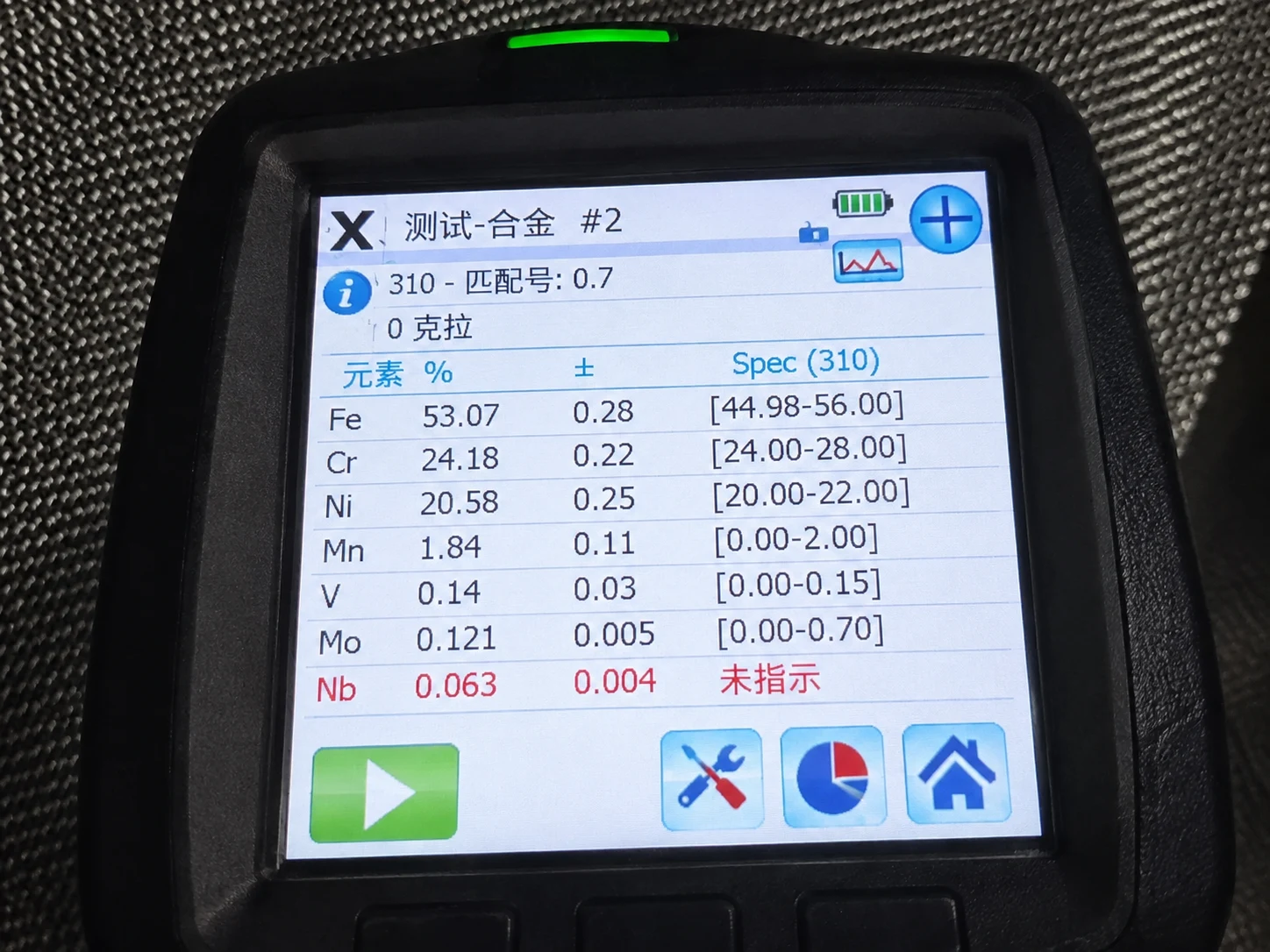
What the display shows
- Chromium (Cr)
- 24.18%
- Nickel (Ni)
- 20.58%
- Manganese (Mn)
- 1.84%
The visible Cr and Ni values fall within the grade reference ranges below. The analyzer’s own library limits are not the purchase standard.
Carbon verification: Handheld XRF cannot distinguish 310 from 310S. Verify the 310S carbon limit with traceable heat documentation or suitable carbon-capable analysis.
Batch traceability: For orders that require an EN 10204 3.1 mill test certificate (MTC), we confirm whether we can supply one traceable to the wire heat.
Chemical Composition Comparison
JIS SUS310 and SUS310S correspond to Type 310 and 310S. For European drawings, EN 1.4845 corresponds to 310S. EN 1.4841 is the higher-silicon Type 314. Send the full grade and wire standard from the drawing so we can check the order against the right chemistry limits.
| Element | 304 | 316 | 310 | 310S |
|---|---|---|---|---|
| Carbon (C) | ≤0.07 | ≤0.08 | ≤0.25 | ≤0.08 |
| Chromium (Cr) | 17.5–19.5 | 16–18 | 24–26 | 24–26 |
| Nickel (Ni) | 8–10.5 | 10–14 | 19–22 | 19–22 |
| Molybdenum (Mo) | No specified addition | 2–3 | No specified addition | No specified addition |
| Manganese (Mn) | ≤2 | ≤2 | ≤2 | ≤2 |
| Silicon (Si) | ≤0.75 | ≤0.75 | ≤1.50 | ≤1.50 |
| Phosphorus (P) | ≤0.045 | ≤0.045 | ≤0.045 | ≤0.045 |
| Sulfur (S) | ≤0.030 | ≤0.030 | ≤0.030 | ≤0.030 |
References: Atlas Steels Product Reference Manual (304, 316 and 310S) and NKS 310 / 310S alloy data (310). The cited chemistry references include flat-product data; standards and product forms can differ. Confirm the applicable wire standard, revision and heat certificate when purchasing. “No specified addition” does not mean zero trace content.
Performance Positioning of the Four Grades
| Property | 304 | 316 | 310 | 310S |
|---|---|---|---|---|
| General corrosion resistance | Good in many mild environments | Good in many process environments | Environment-dependent; selected mainly for heat resistance | Environment-dependent; selected mainly for heat resistance |
| Chloride pitting resistance | Limited in demanding chloride service | Generally improved over 304 | Not the primary selection advantage | Not the primary selection advantage |
| High-temperature oxidation resistance | Below 310 / 310S | Below 310 / 310S | High; a principal selection advantage | High; a principal selection advantage |
| Typical selection focus | General industrial screening | Chemical processing and chloride-exposed filtration | High-temperature industrial equipment | High-temperature screens and fabricated mesh parts |
Selection context: Atlas Steels grade data sheets. Qualitative guidance only; corrosion resistance depends on the actual service environment.
Woven construction
310 / 310S Wire Mesh Weave Types
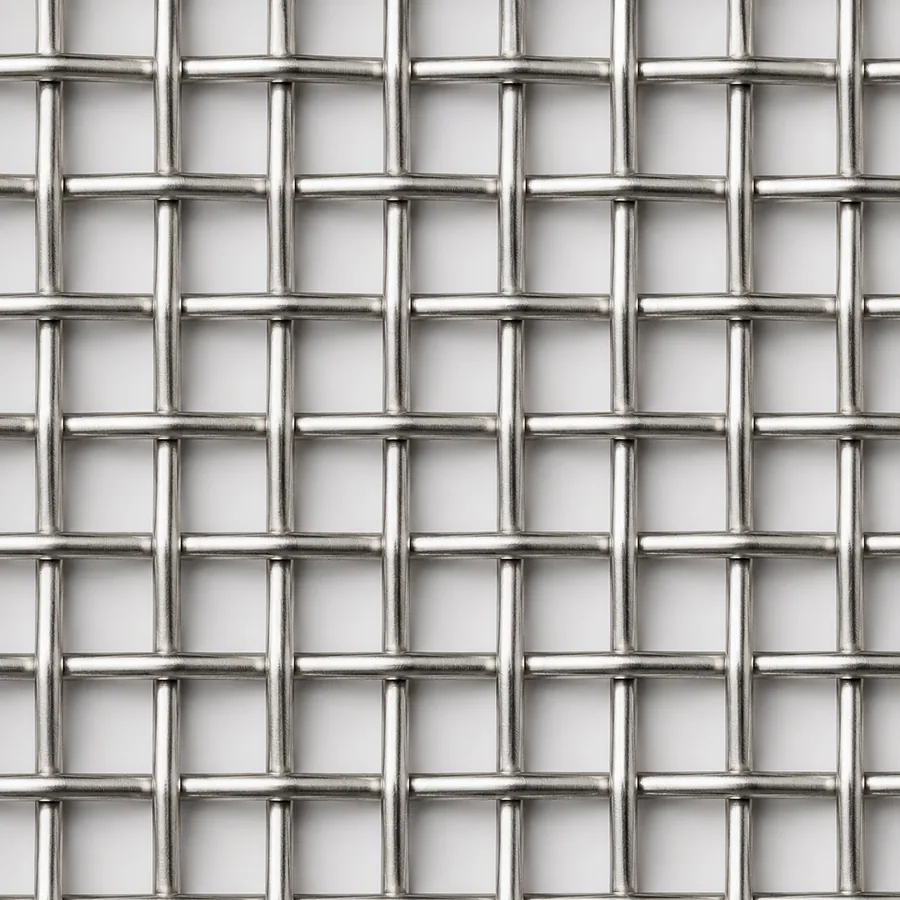
Plain Weave
Wires alternate over and under each other to form square openings. A straightforward choice for 310 / 310S screens used in general screening and separation.
Explore Plain Weave →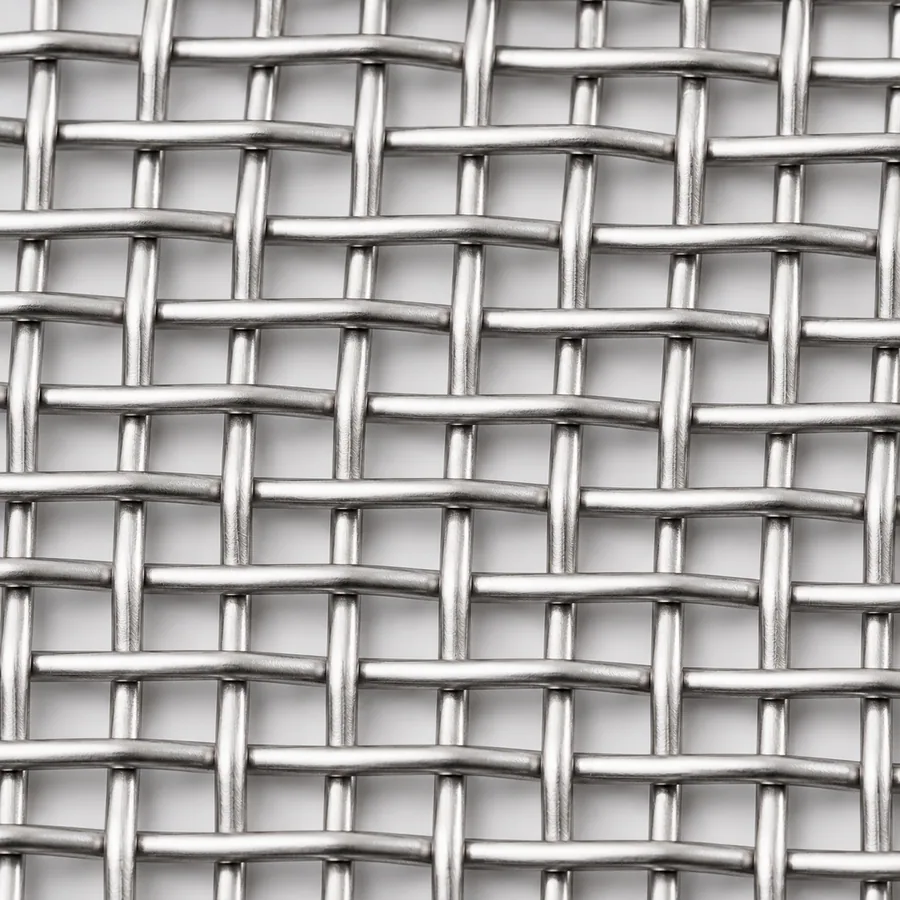
Twill Weave
Wires pass over and under two adjacent wires, accommodating heavier wire at a given mesh count. Consider this construction when wire thickness is a selection priority.
Explore Twill Weave →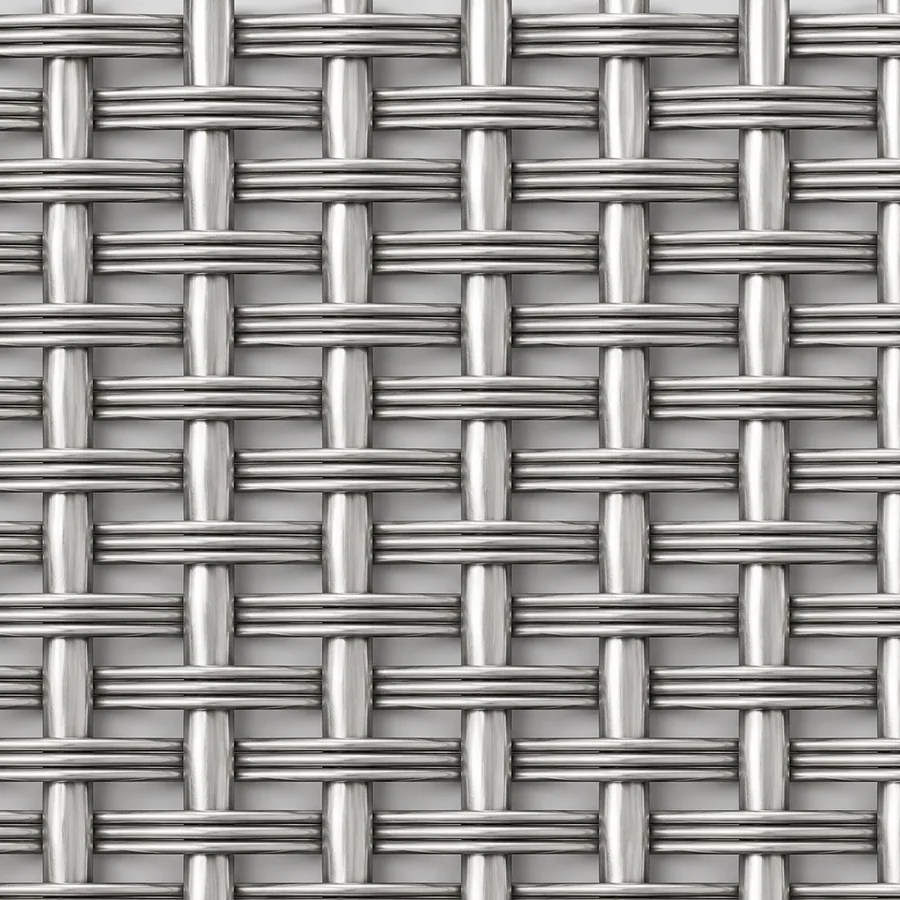
Dutch Weave
Different warp and weft wire diameters create a dense filter cloth. Consider 310 / 310S Dutch weave when filtration requirements call for a closely woven structure.
Explore Dutch Weave →
Reverse Dutch Weave
Fine warp wires and coarser weft wires form a reverse Dutch structure. Consider this construction for process filter screens with specified flow and mechanical support requirements.
Explore Reverse Dutch Weave →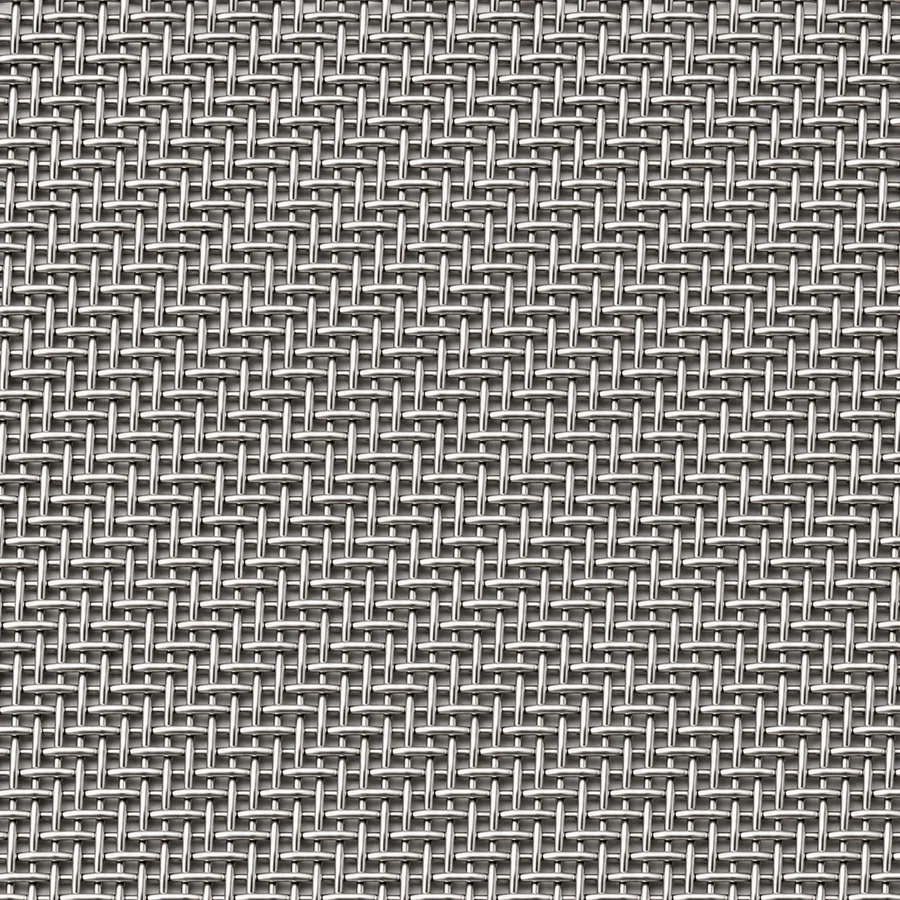
Twilled Dutch Weave
A twill interlacing pattern combines with different warp and weft wires to form dense filter cloth. Consider this construction for applications requiring a fine filtration structure.
Explore Twilled Dutch Weave →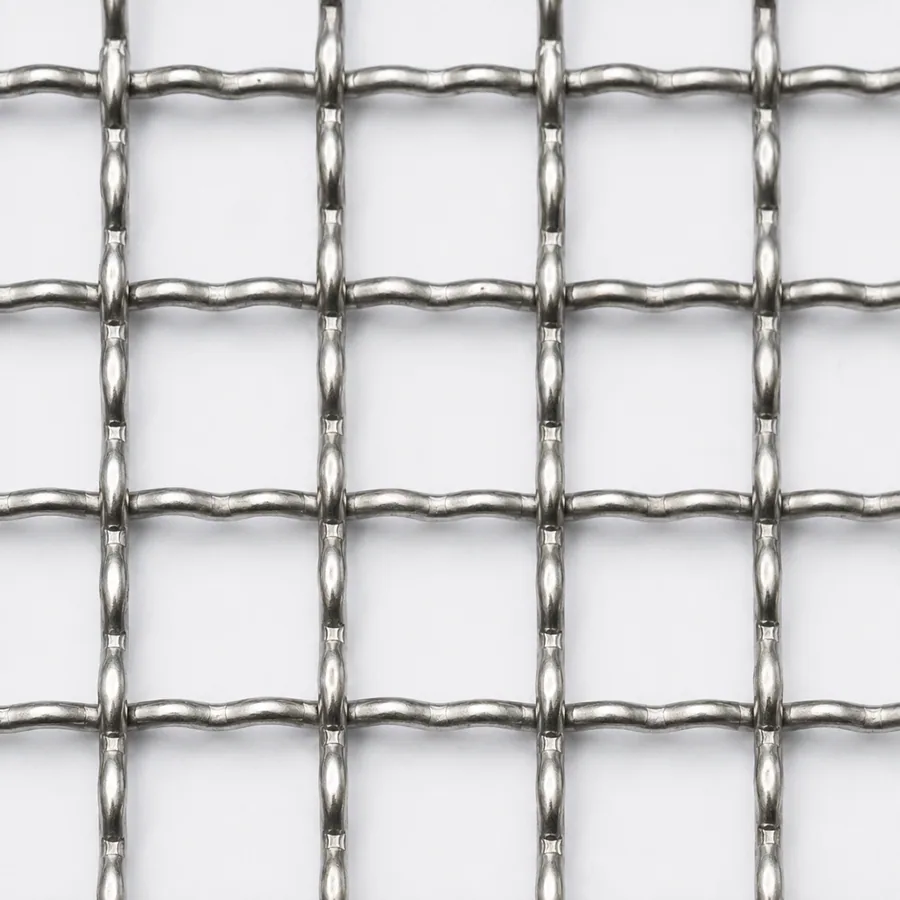
Crimped Weave
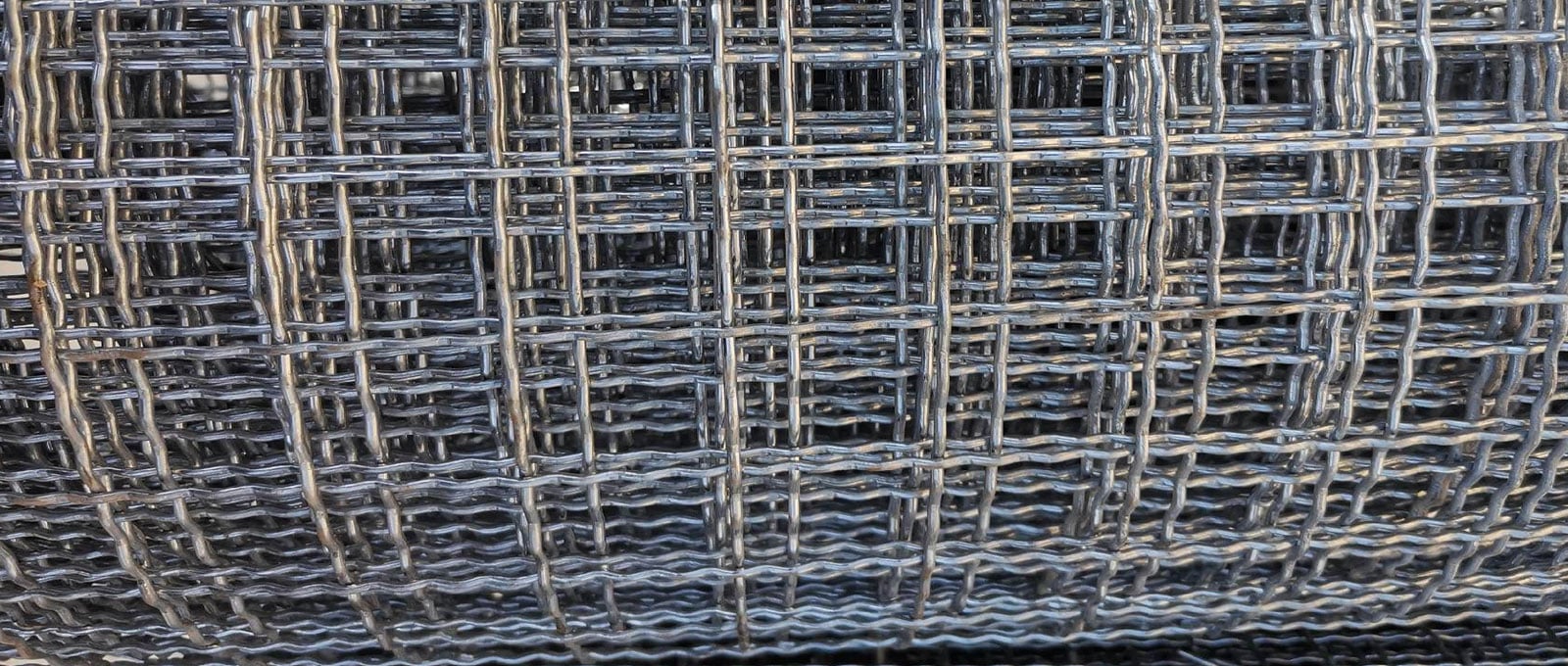
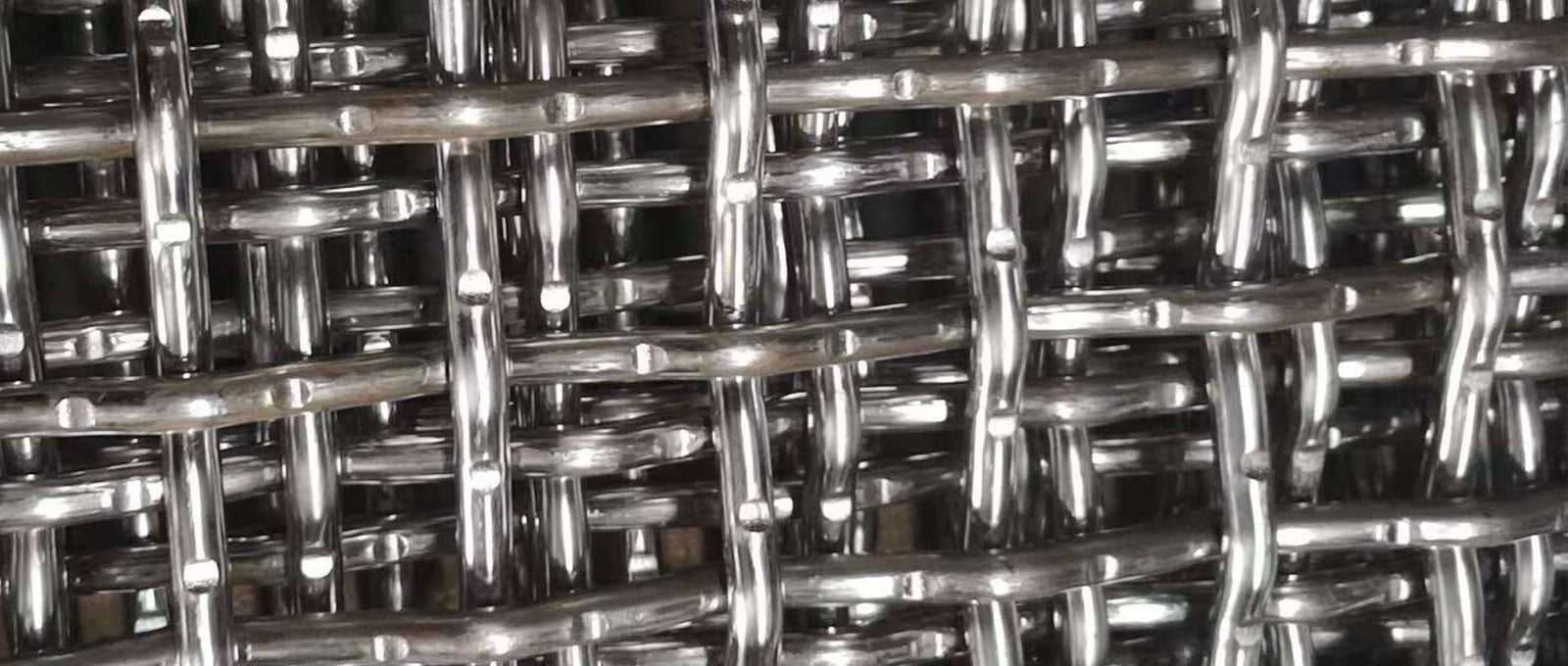
Wires are pre-crimped before weaving to maintain defined openings. Consider 310 / 310S crimped mesh for coarse screens, separation panels and supported high-temperature mesh components.
Explore Crimped Weave →Fast technical selection
310 / 310S Stainless Steel Wire Mesh Specifications
Use these square-weave references to compare nominal openings. We confirm which mesh count and wire diameter we can weave in the grade and width your application needs.
| Mesh count | Wire dia. | Opening | Material | Typical construction | |
|---|---|---|---|---|---|
| 4 × 4 Mesh | 1.194 mm | 5.156 mm | SS310 / SS310S | Plain weave / crimped | |
| 6 × 6 Mesh | 0.889 mm | 3.344 mm | SS310 / SS310S | Plain weave / crimped | |
| 8 × 8 Mesh | 0.711 mm | 2.464 mm | SS310 / SS310S | Plain weave | |
| 10 × 10 Mesh | 0.635 mm | 1.905 mm | SS310 / SS310S | Plain weave | |
| 20 × 20 Mesh | 0.406 mm | 0.864 mm | SS310 / SS310S | Plain weave | |
| 30 × 30 Mesh | 0.305 mm | 0.542 mm | SS310 / SS310S | Plain weave | |
| 40 × 40 Mesh | 0.254 mm | 0.381 mm | SS310 / SS310S | Plain weave | |
| 50 × 50 Mesh | 0.229 mm | 0.279 mm | SS310 / SS310S | Plain weave | |
| 60 × 60 Mesh | 0.191 mm | 0.232 mm | SS310 / SS310S | Plain weave | |
| 80 × 80 Mesh | 0.140 mm | 0.178 mm | SS310 / SS310S | Plain weave | |
| 100 × 100 Mesh | 0.114 mm | 0.140 mm | SS310 / SS310S | Plain weave | |
| 120 × 120 Mesh | 0.094 mm | 0.118 mm | SS310 / SS310S | Plain weave | |
| 150 × 150 Mesh | 0.066 mm | 0.103 mm | SS310 / SS310S | Plain weave | |
| 200 × 200 Mesh | 0.053 mm | 0.074 mm | SS310 / SS310S | Plain weave |
Nominal opening: calculated for square mesh as 25.4 ÷ mesh count − wire diameter. Actual dimensions and tolerances must be confirmed for each order.
Dutch weave uses different warp and weft constructions and is quoted separately.
Specify Mesh Count by Weave Construction
For equal-count square mesh, the two directions have matching counts, such as 20 × 20 mesh. Dutch and reverse Dutch filter cloth need separate warp and weft counts and wire diameters. A single mesh number does not define their construction or filtration rating.
- Square-weave references
- Selected 4 × 4 to 200 × 200 mesh references; specify warp and weft counts per inch and wire diameters. Custom combinations require confirmation. Compare square-weave sizes and photos →
- Dutch weave specification
- Specify warp × weft counts per inch and each wire diameter, such as the published 20 × 150 plain Dutch or 20 × 250 twill Dutch references. Filtration ratings require product-specific test data; availability is confirmed separately. Review Dutch weave reference combinations →
- Reverse Dutch weave specification
- Specify warp × weft counts per inch and each wire diameter, such as the published 66 × 18 reverse plain Dutch reference. Confirm the complete construction, filtration test requirements and roll or belt dimensions for an order. Review reverse Dutch weave reference combinations →
Industrial use
Applications
Furnace screens
Screening and separation components reviewed for the furnace atmosphere and support arrangement.
Heat-treatment equipment
Mesh liners and screens evaluated for repeated heating, cooling and dimensional stability.
Hot-gas screening
Woven separation and support layers where oxidation, gas chemistry and pressure conditions are defined.
Kiln & thermal processing
Screen components assessed against thermal cycling, particulate exposure and service life.
High-temperature process equipment
Mesh parts selected against the actual process medium, temperature and cleaning conditions.
Drawing-based components
Cut screens, liners or formed mesh parts reviewed from a complete drawing and application brief.
Production workflow
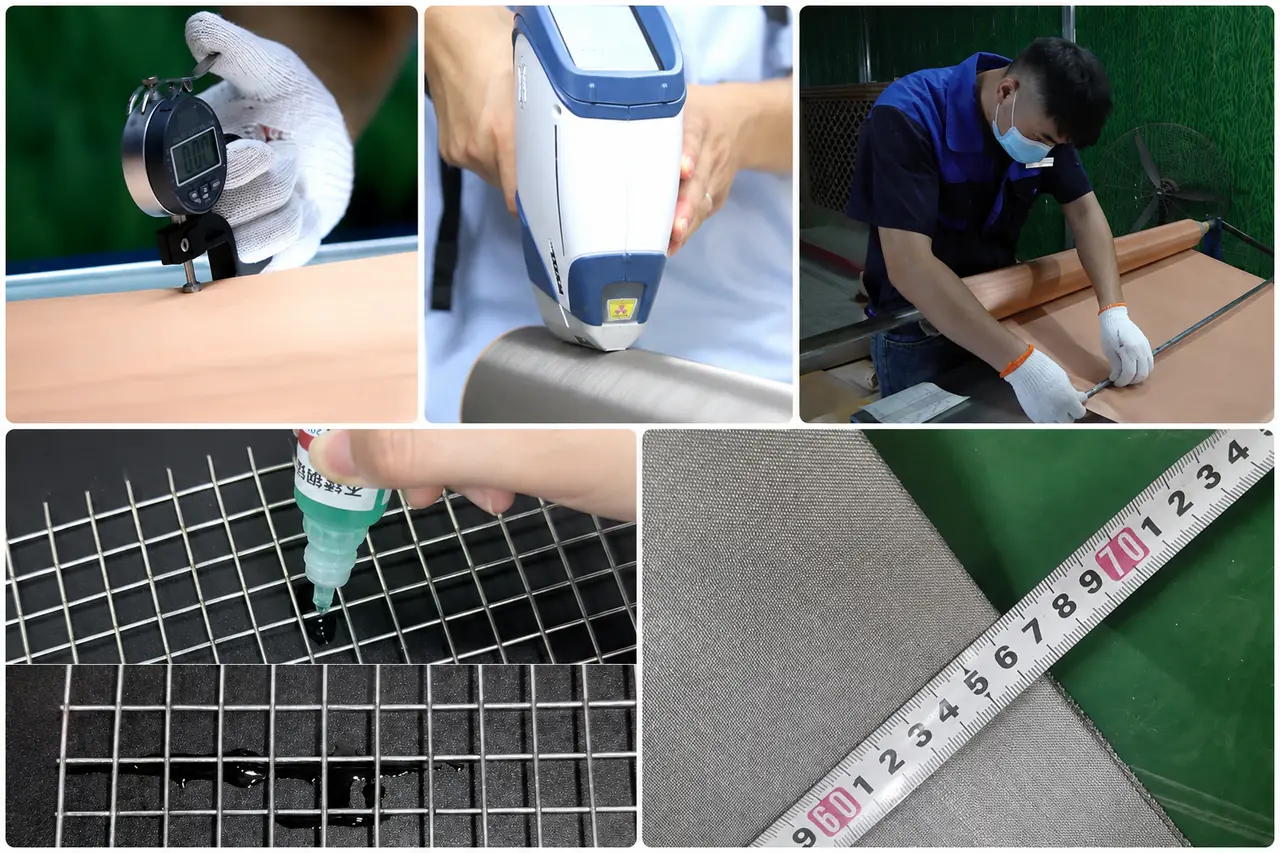
Manufacturing & Quality Control
Review grade and service
We match the incoming wire grade to the order and review any heat-traceability requirements.
Confirm the woven construction
We set the loom for the specified wire diameter, weave, opening and finished width.
Inspect mesh dimensions
We measure the wire and openings against the order. For applicable woven cloth, we can agree opening tolerances and inspection with reference to ISO 9044 or ASTM E2016.
Identify and protect the mesh
We check the cut edges or roll ends and match each packing label to the mesh on the order.
Inspection checkpoints
- Material certificate review
- Cr / Ni screening when specified
- Carbon-capable analysis when required
- Wire diameter and aperture inspection
- Finished dimensions and edge review
- Order identification and packing review
OEM flexibility
Custom Manufacturing
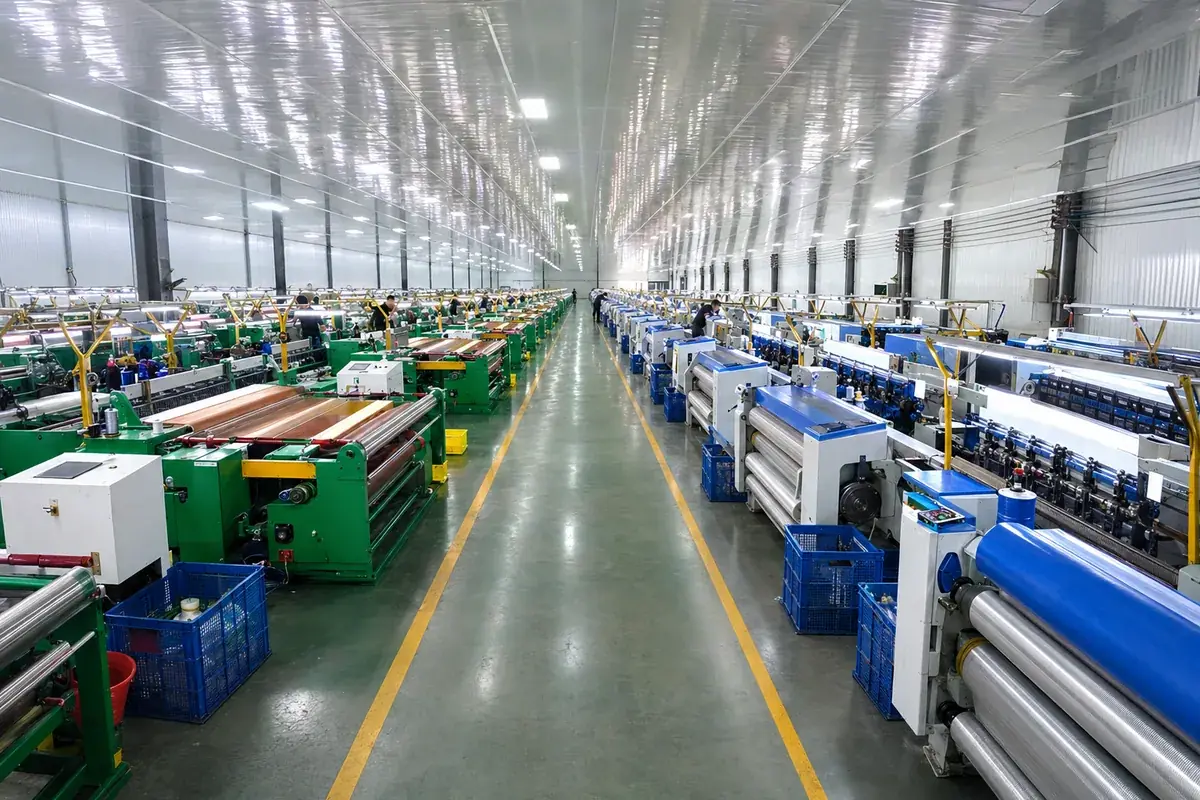
We slit rolls and cut sheets or screens to your drawing. Show us how the screen is supported so we can check edge details, clearances and tolerances.
- 310 or 310S material selection
- Plain and twill woven mesh inquiries
- Filter-weave feasibility review
- Custom roll width, length and slit rolls
- Cut sheets and drawing-based screens
- Material documentation and packing requirements
Export preparation
Packing & Export
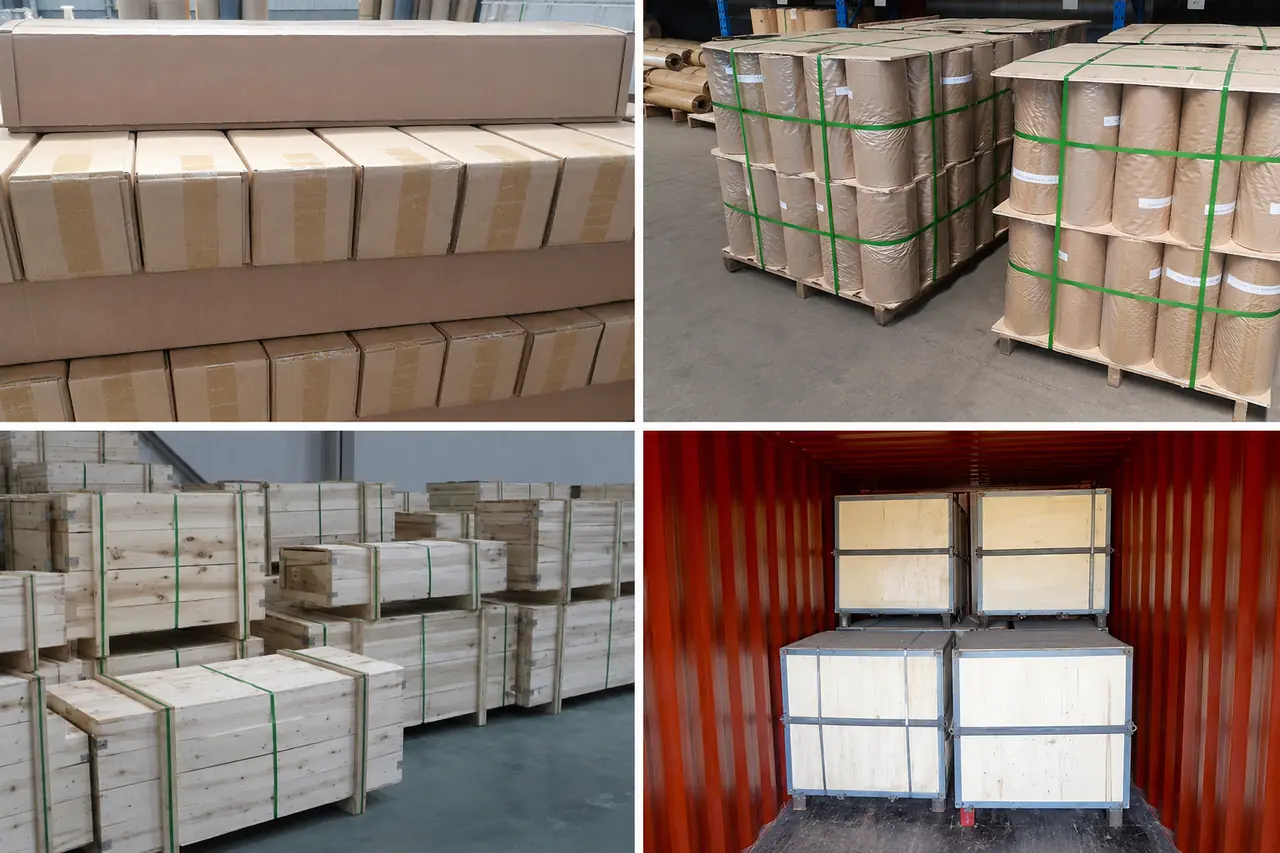
Use 1.0 m × 30 m and 1.22 m × 30 m as export roll-size references. We confirm finished dimensions on each order and can quote slit rolls, flat sheets or cut pieces. We support fine rolls and protect the edges for the chosen transport method.
- Protective inner wrapping
- Suitable roll cores and supports
- Reinforced cases or crates
- Grade and specification labels
- Destination-specific handling instructions
Procurement checklist
How to Request an Accurate Quote
- 1
Specify the alloy
Name 310 or 310S and the required wire standard, certificate and inspection scope.
- 2
Describe the service
State continuous and peak temperature, atmosphere, thermal cycling, load and target life.
- 3
Define the mesh
Give mesh count, wire diameter, opening, weave, dimensions and any cut-part drawing.
- 4
Request current pricing
Include the quantity, destination, target date and any special packing or inspection requirements.
Buyer questions
310 / 310S Stainless Steel Wire Mesh FAQ
What is the difference between 310 and 310S stainless steel wire mesh?
310S has a lower reference carbon limit: 0.08% versus 0.25% for 310. See the composition table and welding guidance above.
What temperature can 310S stainless steel wire mesh withstand?
We assess temperature together with atmosphere, exposure time, cycling and frame support. Send the continuous and peak temperatures and how the screen is mounted so we can check the application.
Is 310S mesh better than 316 or 304?
It depends on the application: 310 / 310S focus on heat resistance, while 316 is often selected for chloride exposure. Use the four-grade comparison above to narrow the choice.
Can XRF distinguish 310 from 310S?
Handheld XRF can screen chromium and nickel. It cannot measure the carbon difference between 310 and 310S. We use a traceable mill record or a carbon-capable test when the order calls for grade verification.
How do you quote 310S stainless steel wire mesh?
We quote the grade, weave, wire diameter and finished size. Send your screen drawing or roll specification and quantity so we can price the mesh and any cutting or packing.
What mesh counts and wire diameters are practical for high-temperature furnace screens?
When the opening allows it, we start with a medium mesh count and heavier wire for a furnace screen. A larger wire section leaves more metal as oxidation progresses and helps resist distortion between supports. For fine wire, we check peak temperature, atmosphere, heat cycles, span and frame support before confirming a mesh count and wire diameter.
- Material
- Type 310 / UNS S31000; Type 310S / UNS S31008
- Construction
- Woven wire mesh; weave confirmed with the specification
- Chromium / nickel
- Cr 24–26%; Ni 19–22% (grade reference)
- Supply form
- Rolls, slit rolls, cut sheets and drawing-based screens
Made to your specification · Request a quotation
Technical DataProduct parameters & construction details
- Product code
- YC-SS310-MESH-001
- Material
- Type 310 / UNS S31000; Type 310S / UNS S31008
- Construction
- Woven wire mesh; weave confirmed with the specification
- Chromium / nickel
- Cr 24–26%; Ni 19–22% (grade reference)
- Carbon maximum
- 310: 0.25%; 310S: 0.08% (grade reference)
- Service review
- Temperature, atmosphere, cycling, load and wire size
- Supply form
- Rolls, slit rolls, cut sheets and drawing-based screens