
Expanded metal buying guide
How to Order Expanded Metal: Common Sizes and Specifications
To order expanded metal, specify the material, raised or flattened profile, mesh dimensions, strand thickness, strand width, finished panel or roll size, and quantity. Add the surface finish, diamond direction, edge requirements and tolerances before confirming production.
A style name such as 3/4 inch #9 is a useful starting point, but it does not fully describe the product. Pair the designation with an agreed dimension table or drawing, especially when sourcing across countries.
This guide explains what sizes expanded metal comes in, compares selected US styles with Chinese and Japanese specifications, and provides an order checklist you can send to a supplier.
What Size Does Expanded Metal Come In?
Expanded metal has two sets of dimensions: mesh dimensions and overall supply dimensions. Mesh dimensions describe the repeating pattern and its strands. Overall dimensions describe the complete sheet, panel or roll.
For example, a 4 × 8 ft sheet describes the outside size of the sheet. It does not tell you the mesh pitch, clear opening, strand width or thickness.
Sheets and rolls in our US-style supply range
For the US-style expanded metal we supply, our usual supply forms are:
| Supply form | SWD | Usual supply dimensions |
|---|---|---|
| Rolls | 10 mm or less | 1,000 or 1,200 mm wide; 10–30 m long |
| Sheets | Greater than 10 mm | 4 × 8 ft, equivalent to 1,219.2 × 2,438.4 mm |
| Custom dimensions | Subject to the agreed pattern and material | Custom roll widths, roll lengths and sheet dimensions |
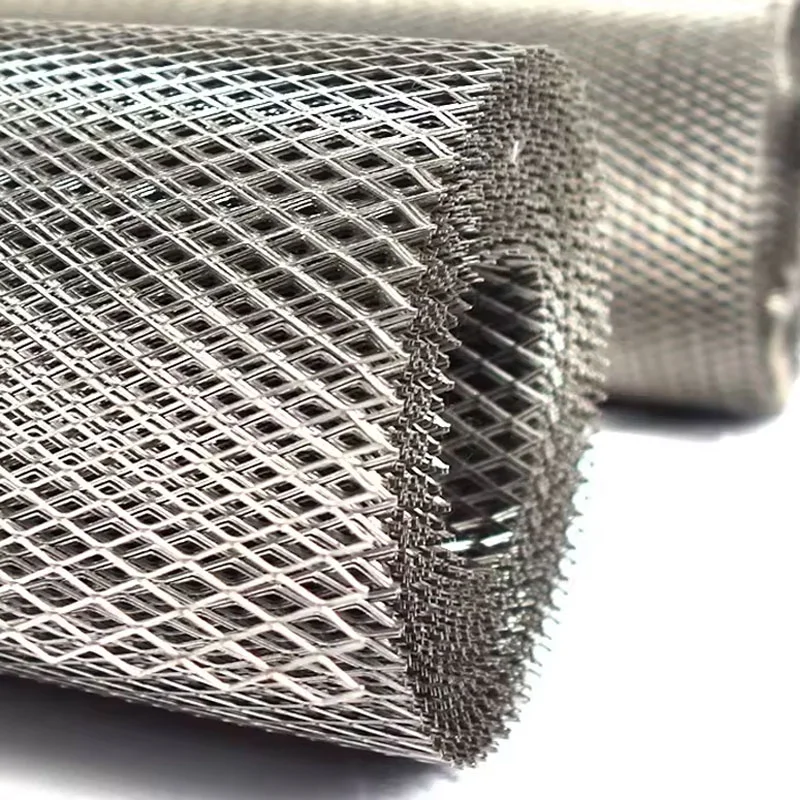
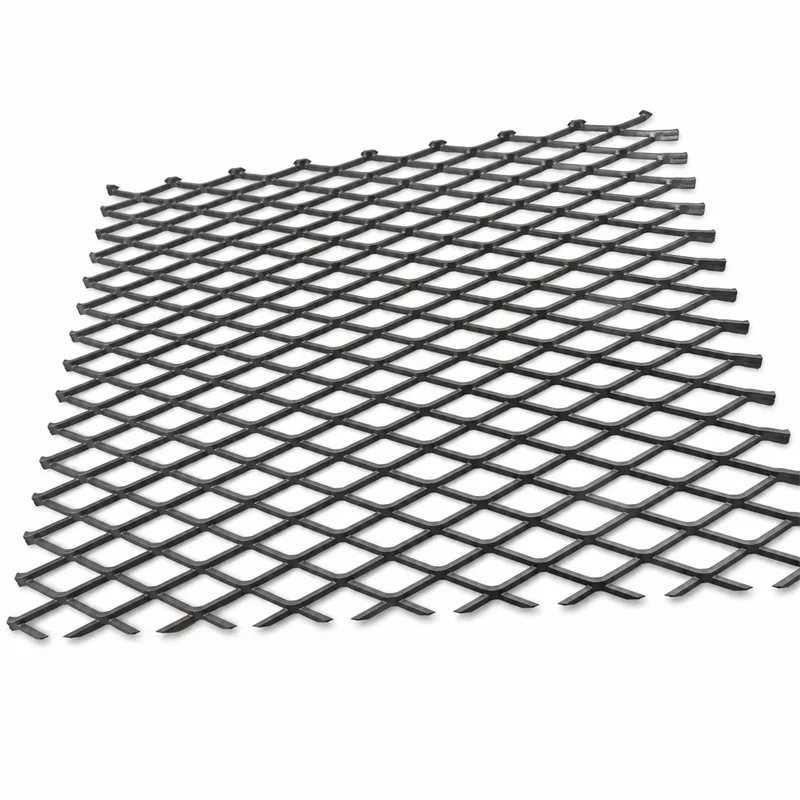
Photographs show product forms; dimensions of the pictured samples are not specified. Confirm the required roll or sheet dimensions on your order.
These are our supply arrangements, rather than a rule covering every US supplier or every material. Confirm the complete combination of thickness, strand width, mesh pattern and supply form when requesting a quotation.
A 1,220 × 2,440 mm sheet is not the exact dimensional equivalent of 4 × 8 ft. If the panel must fit an existing frame, use the required finished dimensions and tolerances on the order.
Mesh dimensions to confirm
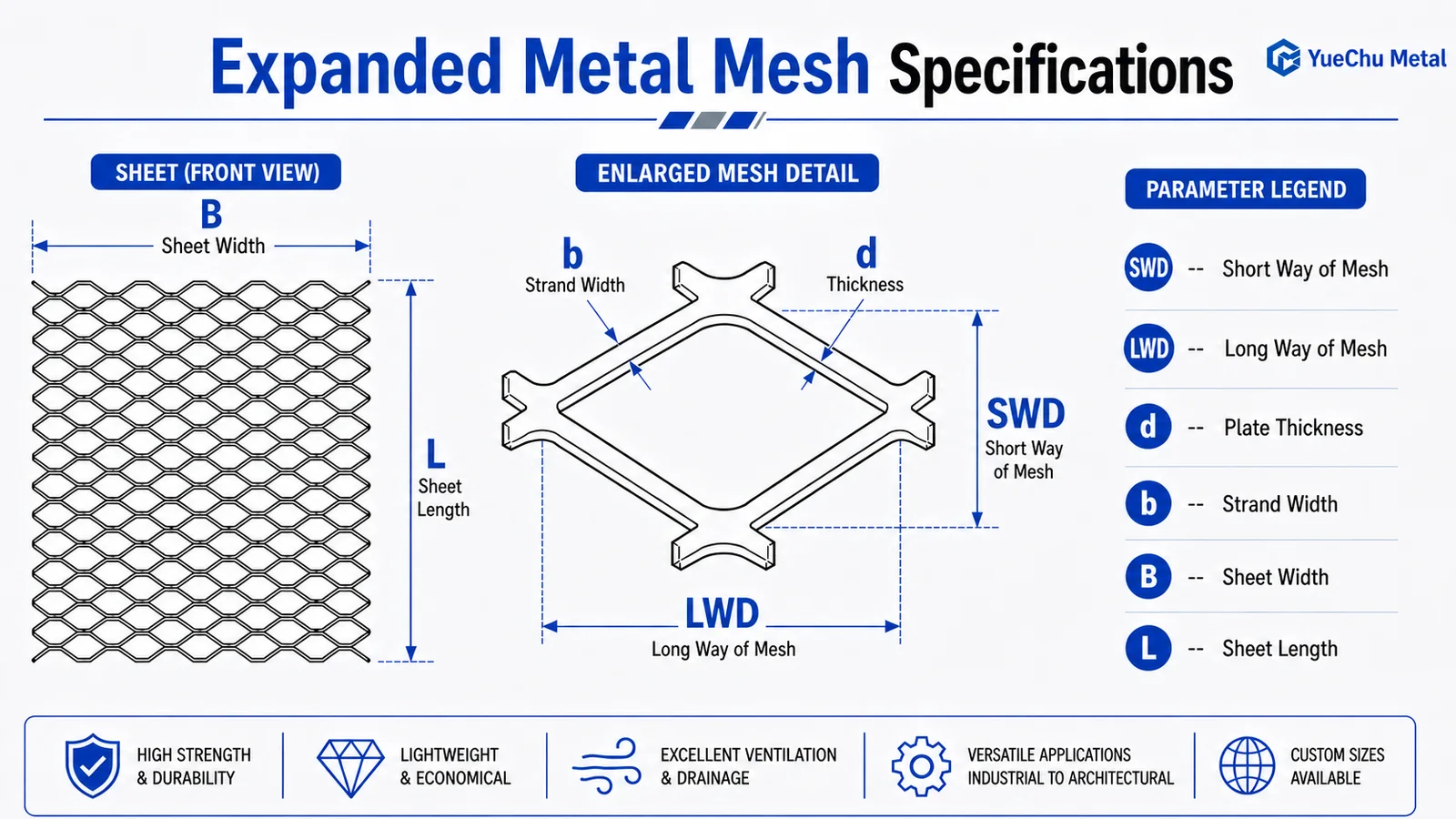
| Parameter | What it describes | What to put on the order |
|---|---|---|
| SWD | Short-way pitch of the repeating mesh pattern | Dimension in mm or inches, with measurement points on a drawing |
| LWD | Long-way pitch of the repeating mesh pattern | Dimension in the same units as SWD |
| SWO / LWO | Clear short-way and long-way openings | Required clear opening where passage, screening or access matters |
| Strand thickness | Thickness of the metal strand | Measurement location and raised or flattened condition |
| Strand width | Width of the metal forming the mesh strands | Dimension and agreed measurement method |
| Overall thickness | Total depth of the mesh profile | A separate dimension for raised mesh where fit or clearance matters |
| Sheet width and length | Finished outside panel dimensions | Width, length, diamond direction and cutting requirements |
Keep pitch and clear opening separate. Two products described informally as having the same “hole size” may have different strand widths or use different measurement definitions. For measurement steps, use our expanded metal measurement guide.
US Expanded Metal Sizes and Styles
US expanded metal is often ordered by a style designation together with its material and profile. Standard, also called raised, and flattened products need separate dimension tables.
The following carbon-steel tables cover ten selected style designations in each profile. They are reference dimensions from AMICO’s published catalog, converted using 1 inch = 25.4 mm and rounded to two decimal places. They are not a guarantee that every manufacturer uses identical dimensions or that every listed item is held in our stock.
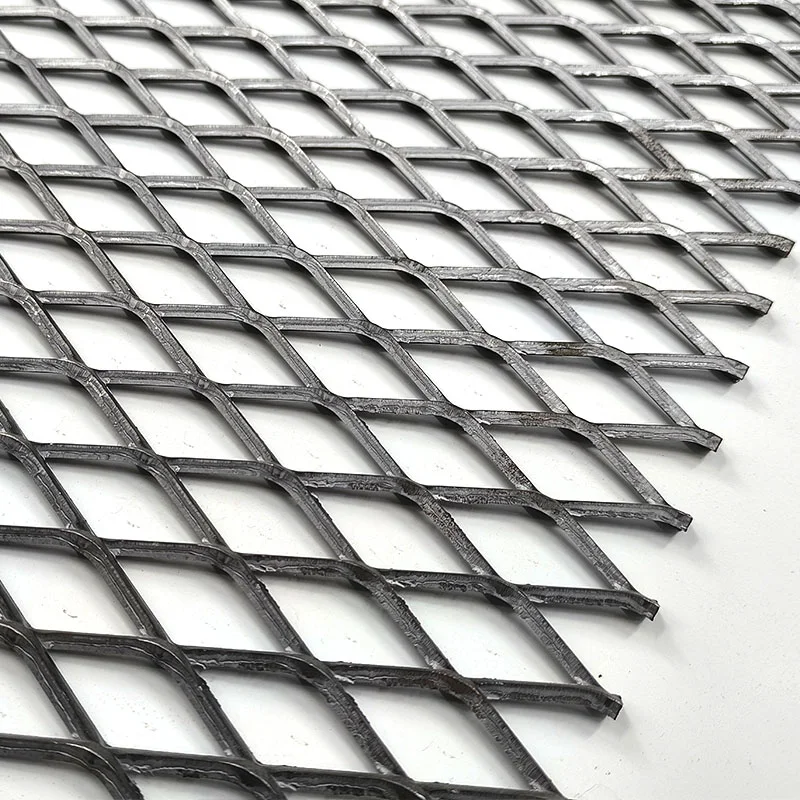
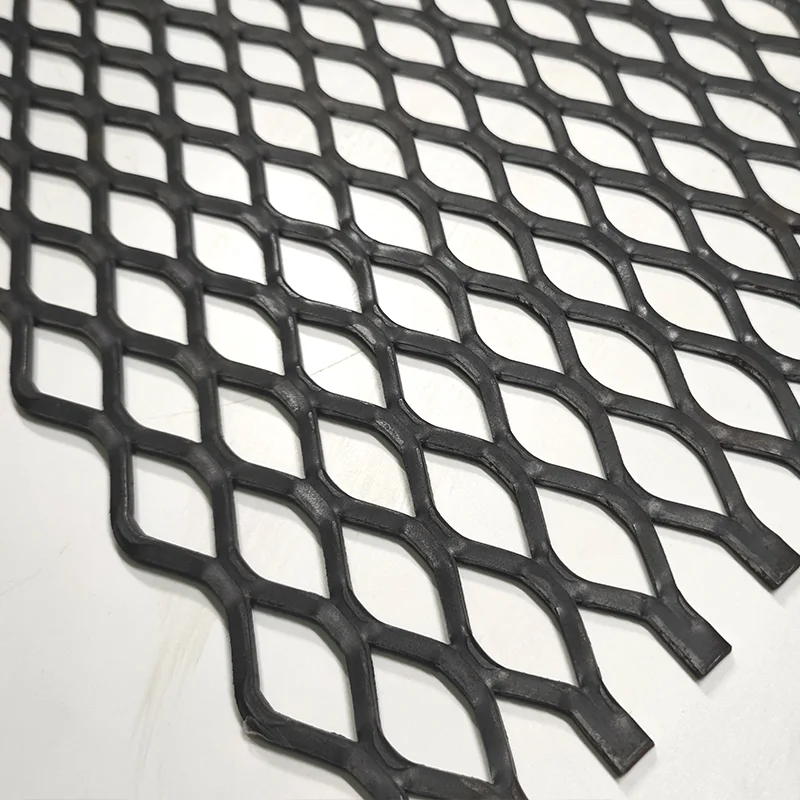
These photographs illustrate the two product conditions. They do not establish identical material grades, mesh dimensions or load performance.
Standard / raised carbon-steel expanded metal
| US style | Strand thickness (mm) | Strand width (mm) | SWD (mm) | LWD (mm) |
|---|---|---|---|---|
| 1/4” #18 | 1.22 | 1.83 | 6.35 | 25.40 |
| 1/2” #20 | 0.91 | 1.83 | 12.70 | 30.48 |
| 1/2” #18 | 1.22 | 2.24 | 12.70 | 30.48 |
| 1/2” #16 | 1.52 | 2.21 | 12.70 | 30.48 |
| 1/2” #13 | 2.29 | 2.44 | 12.70 | 30.48 |
| 3/4” #16 | 1.52 | 2.57 | 23.44 | 50.80 |
| 3/4” #13 | 2.29 | 2.44 | 23.44 | 50.80 |
| 3/4” #9 | 3.40 | 3.81 | 23.44 | 50.80 |
| 1-1/2” #13 | 2.29 | 2.67 | 33.78 | 76.20 |
| 1-1/2” #9 | 3.40 | 3.66 | 33.78 | 76.20 |
Source: AMICO standard expanded metal catalog.
Flattened carbon-steel expanded metal
| US style | Strand thickness (mm) | Strand width (mm) | SWD (mm) | LWD (mm) |
|---|---|---|---|---|
| 1/4” #18 | 0.97 | 2.03 | 6.35 | 26.67 |
| 1/2” #20 | 0.74 | 2.01 | 12.70 | 32.00 |
| 1/2” #18 | 0.97 | 2.46 | 12.70 | 32.00 |
| 1/2” #16 | 1.22 | 2.49 | 12.70 | 32.00 |
| 1/2” #13 | 1.83 | 2.72 | 12.70 | 32.00 |
| 3/4” #16 | 1.22 | 2.82 | 23.44 | 53.34 |
| 3/4” #13 | 1.83 | 2.69 | 23.44 | 53.34 |
| 3/4” #9 | 2.74 | 4.19 | 23.44 | 53.34 |
| 1-1/2” #13 | 1.83 | 2.95 | 33.78 | 80.01 |
| 1-1/2” #9 | 2.74 | 4.01 | 33.78 | 80.01 |
Source: AMICO flattened expanded metal catalog.
The thickness values above follow the catalog’s strand thickness column. For flattened products, this is the finished strand thickness, not the thickness of the sheet before flattening. The catalog also has a separate minimum-thickness column; do not mix these two columns when comparing quotations.
Why the style name is not enough
For the catalog reference above, 3/4 inch #9 raised has an SWD of 23.44 mm and an LWD of 50.80 mm. The flattened version has the same listed SWD but an LWD of 53.34 mm, with different strand thickness and width.
Consequently, converting the “3/4 inch” in the name directly to 19.05 mm does not give the actual SWD for this style. Likewise, the #9 designation should not be used alone to determine finished thickness.
Write the complete style, material and profile, then attach the dimensions you expect the supplier to match.
Common Expanded Metal Sizes Supplied in China
Chinese suppliers also quote expanded metal by its actual dimensions. The following six pattern families are common reference sizes in our supply information. They describe thickness and strand-width ranges, rather than six fixed products.
| SWD (mm) | LWD (mm) | Thickness range (mm) | Strand width range (mm) |
|---|---|---|---|
| 15 | 30 | 1–3 | 1–3 |
| 20 | 40 | 1–3 | 1–5 |
| 25 | 50 | 2–4 | 2–8 |
| 30 | 60 | 2–6 | 2–10 |
| 40 | 80 | 2–10 | 2–20 |
| 50 | 100 | 2–10 | 2–30 |
Confirm which thickness and strand-width combinations can be produced for your selected material and profile. A range in one column does not mean that every possible combination across the row is available.
Dimensions listed in GB/T 33275-2016
The following 42 combinations are transcribed from Table 3 and its continuation, “Longitudinal expanded steel net,” in GB/T 33275-2016. The original table uses d for thickness, b for strand width, TL for short pitch and TB for long pitch. SWD and LWD are included in the headings to help readers compare the tables in this guide.
| Thickness d (mm) | Strand width b (mm) | Short pitch TL / SWD (mm) | Long pitch TB / LWD (mm) |
|---|---|---|---|
| 0.3 | 0.3 | 2 | 3 |
| 0.3 | 0.4 | 3 | 4.5 |
| 0.4 | 0.4 | 2 | 3 |
| 0.4 | 0.5 | 3 | 4.5 |
| 0.5 | 0.5 | 2.5 | 4.5 |
| 0.5 | 1.11 | 5 | 12.5 |
| 0.5 | 0.96 | 10 | 25 |
| 0.8 | 0.8 | 8 | 16 |
| 0.8 | 1 | 10 | 20 |
| 0.8 | 0.96 | 10 | 25 |
| 1 | 1.1 | 10 | 25 |
| 1 | 1.68 | 15 | 40 |
| 1.2 | 1.13 | 10 | 25 |
| 1.2 | 1.35 | 15 | 30 |
| 1.2 | 1.68 | 15 | 40 |
| 1.5 | 1.69 | 15 | 40 |
| 1.5 | 2.03 | 18 | 50 |
| 1.5 | 2.47 | 24 | 60 |
| 2 | 2 | 12 | 25 |
| 2 | 2.03 | 18 | 50 |
| 2 | 2.47 | 24 | 60 |
| 3 | 3 | 24 | 60 |
| 3 | 4.05 | 40 | 100 |
| 3 | 4.95 | 46 | 120 |
| 3 | 4.99 | 55 | 150 |
| 4 | 4.5 | 24 | 60 |
| 4 | 5 | 32 | 80 |
| 4 | 6 | 40 | 100 |
| 4 | 4 | 50 | 100 |
| 5 | 6 | 24 | 60 |
| 5 | 6 | 32 | 80 |
| 5 | 6 | 40 | 100 |
| 5 | 5 | 50 | 100 |
| 5 | 6 | 56 | 150 |
| 6 | 6 | 24 | 60 |
| 6 | 7 | 32 | 80 |
| 6 | 7 | 40 | 100 |
| 6 | 7 | 56 | 150 |
| 8 | 8 | 40 | 100 |
| 8 | 9 | 40 | 100 |
| 8 | 9 | 60 | 150 |
| 10 | 10 | 45 | 100 |
The note to the original table states that 0.3–0.5 mm products are generally supplied as rolls and that mesh length and width may be adjusted to user requirements. This standard note is separate from the US-style supply arrangements described earlier.
Listing a dimension combination from the standard does not establish that a particular order meets all of its requirements. If compliance is required, identify the standard and agree on the applicable material, dimensional, inspection and acceptance requirements with the supplier.
Standard reference: GB/T 33275-2016, Expanded steel net.
Japanese Expanded Metal Sizes: XS and XG
Japanese supplier catalogs distinguish XS standard-type expanded metal from XG grating-type expanded metal. These categories are not direct equivalents of the US raised-versus-flattened distinction.
The tables below reproduce steel-product reference dimensions listed in Japanese supplier catalogs. Their SW, LW, T and W labels refer to short pitch, long pitch, thickness and strand width respectively. Confirm the actual material, finish and delivery condition before ordering.
XS standard type
| Designation | Thickness T (mm) | Strand width W (mm) | SW / SWD (mm) | LW / LWD (mm) |
|---|---|---|---|---|
| XS-31 | 1.2 | 1.5 | 12 | 30.5 |
| XS-32 | 1.6 | 2 | 12 | 30.5 |
| XS-33 | 2.3 | 3 | 12 | 30.5 |
| XS-41 | 1.6 | 2 | 22 | 50.8 |
| XS-42 | 2.3 | 2.5 | 22 | 50.8 |
| XS-43 | 3.2 | 3.5 | 22 | 50.8 |
| XS-51 | 1.6 | 2.5 | 25 | 61 |
| XS-52 | 2.3 | 3 | 25 | 61 |
| XS-53 | 3.2 | 4 | 25 | 61 |
| XS-61 | 2.3 | 3 | 34 | 76.2 |
| XS-62 | 3.2 | 4 | 34 | 76.2 |
| XS-63 | 4.5 | 5 | 34 | 76.2 |
| XS-71 | 2.3 | 3.5 | 50 | 152.4 |
| XS-72 | 3.2 | 4 | 50 | 152.4 |
| XS-73 | 4.5 | 5 | 50 | 152.4 |
XG grating type
| Designation | Thickness T (mm) | Strand width W (mm) | SW / SWD (mm) | LW / LWD (mm) |
|---|---|---|---|---|
| XG-11 | 4.5 | 7 | 34 | 135.4 |
| XG-12 | 6 | 7 | 34 | 135.4 |
| XG-13 | 6 | 9 | 34 | 135.4 |
| XG-14 | 8 | 9 | 34 | 135.4 |
| XG-21 | 4.5 | 7 | 36 | 101.6 |
| XG-22 | 6 | 7 | 36 | 101.6 |
| XG-23 | 6 | 9 | 36 | 101.6 |
| XG-24 | 8 | 9 | 36 | 101.6 |
Sources: Shoyo Sangyo expanded metal catalog and Okutani expanded metal catalog.
XG dimensions alone do not establish a permissible load. For walkways, platforms or other load-bearing uses, provide the unsupported span, support arrangement, mesh direction, loading conditions and acceptable deflection so suitability can be assessed.
How to Order Expanded Metal
Example inquiry
The following example shows how to combine the order details. The quantity is illustrative, not a minimum order requirement.
Please quote 100 sheets of carbon steel expanded metal, 3/4” #9, flattened, 4 ft SWD × 8 ft LWD (1,219.2 × 2,438.4 mm). Please confirm the material grade, finished strand dimensions, dimensional tolerances, edge condition, packing and lead time against the attached drawing.
Use the order checklist to add your finish, destination and any project-specific requirements.
1. Describe the application and material
Start with what the mesh will do and where it will be installed. State whether the order is for a guard, infill panel, screen, fabricated part or load-bearing surface. Include exposure conditions and any required project specifications.
Name the material and grade. Carbon steel, galvanized steel, stainless steel and aluminum appear in US expanded-metal supply catalogs, but the dimension tables in this guide do not apply automatically to all of them. For galvanized products, identify the steel substrate as well as the coating requirement. McNICHOLS’ material catalog provides examples of the material categories used in US ordering.
2. Choose raised or flattened mesh
Raised expanded metal retains an angled profile. Flattened expanded metal has been rolled to reduce that profile. Specify the required condition explicitly, even if you include a familiar style number.
If the product fits inside a frame or passes through a narrow clearance, confirm finished thickness and flatness. Do not assume that two profiles with a similar style designation share all their dimensions.
3. Confirm the complete mesh geometry
Provide SWD, LWD, strand thickness and strand width. Add SWO and LWO if the clear opening is important to the application.
For an existing sample, send a clear photograph with a scale, the measured dimensions and an indication of where each measurement was taken. When replacing a specified product, provide the original drawing or catalog reference as well.
An agreed drawing is particularly useful when comparing US designations, Japanese series and dimensions quoted by Chinese suppliers. Similar dimensions are a basis for comparison, not proof of full equivalence.
4. Confirm sheet or roll dimensions and diamond direction
For our US-style supply range, specify either the roll width and length or the finished sheet dimensions. If you need 4 × 8 ft sheets, write 1,219.2 × 2,438.4 mm and agree on the dimensional tolerance.
State which direction the long and short mesh pitches run relative to the panel edges. Also identify any edges that must finish at complete mesh nodes, whether open cut strands are acceptable, and whether the panel needs a frame or edging.
5. Agree on finish, tolerances and acceptance criteria
Define the finish as part of the order. Where galvanizing or another coating is required, confirm the process, relevant coating requirements, appearance and treatment of cut or fabricated areas.
Agree on the dimensions to inspect, how they will be measured and which tolerances apply. Include flatness, squareness and edge condition where they affect installation. If supporting material certificates, inspection records or tests are required, request them before order confirmation.
6. Compare quotations on the same basis
Compare the material grade, profile, mesh geometry, sheet or roll size, finish and quantity together. Make the pricing unit clear: per sheet, per square meter, per roll or by weight.
Where weight is part of acceptance, agree on the measurement basis and tolerance. An estimated weight from an expanded metal calculator can help with preliminary planning, but should not replace the agreed product specification or load assessment.
Finally, confirm packing requirements, delivery destination and the requested delivery date. Ask the supplier to confirm availability and lead time against the complete specification.
Expanded Metal Order Checklist
Copy the following checklist into your inquiry and attach a drawing where available.
| Item | Information to provide |
|---|---|
| Application | Intended use, environment and installation conditions |
| Material | Material grade and any required material standard |
| Product condition | Raised or flattened; specify XS/XG designation if applicable |
| Style / reference | US style, Japanese designation, standard-table dimensions or drawing number |
| Mesh pitch | SWD × LWD, with units and measurement definition |
| Strand dimensions | Strand thickness × strand width; identify the finished condition |
| Clear opening | SWO × LWO if required |
| Overall dimensions | Sheet width × length, or roll width × length |
| Diamond direction | SWD/LWD orientation relative to the panel edges |
| Finish | Required surface treatment and coating requirements |
| Fabrication | Cutting, edge condition, framing and other agreed work |
| Quantity | Sheets, rolls or total area, with the quotation unit |
| Acceptance | Dimensional tolerances, inspection method and required documents |
| Delivery | Packing requirements, destination and requested date |
Send YueChu Metal your material, profile, mesh dimensions, finished size and quantity, together with a drawing or sample details. We will review the complete specification and confirm the supply arrangement before production. See our expanded metal product page for related product information.
Frequently Asked Questions
What size does expanded metal come in?
Expanded metal is supplied as sheets, panels or rolls, depending on the pattern, material and supplier. In our US-style supply range, mesh with an SWD of 10 mm or less is supplied in rolls, typically 1,000 or 1,200 mm wide and 10–30 m long. Larger-SWD mesh is supplied in sheets, typically 4 × 8 ft. Custom dimensions can be requested with the complete specification.
What information do I need to order expanded metal?
Provide the material grade, raised or flattened condition, SWD, LWD, strand thickness, strand width, finished dimensions and quantity. Add the required finish, diamond direction, edge condition, tolerances and delivery details.
Is 4 × 8 ft the same as 1,220 × 2,440 mm?
The exact conversion of 4 × 8 ft is 1,219.2 × 2,438.4 mm. If an exact fit matters, specify the required finished dimensions and tolerance instead of treating the two sizes as interchangeable.
Can a US expanded metal style replace a Japanese XS designation?
A replacement needs a comparison of actual dimensions, material, profile and application requirements. A close match in SWD or thickness alone is insufficient. Confirm the proposed substitution against a drawing and any required performance criteria.