
AISI 430 · UNS S43000 · EN 1.4016 (X6Cr17) · JIS SUS430
430 Stainless Steel Wire Mesh
AISI 430 stainless steel wire mesh is a magnetic ferritic wire cloth for dry indoor screening and sheltered equipment vents. YueChu Metal in Anping, China, quotes rolls, cut sheets and OEM screens. Send your mesh count or clear opening, wire diameter, finished dimensions and quantity.
- Magnetic Ferritic GradeType 430 wire has a specified chromium range of 16.0–18.0% by mass.
- Wire Grade & Mesh TolerancesSpecify the wire standard, such as ASTM A580/A580M, and the finished-mesh opening tolerance.
- Dry Indoor & Sheltered ServiceConsider 430 for dry sieving and sheltered vents. Flag condensation, chemicals, salt or heat.
- Rolls, Cut Sheets & OEM ScreensSend roll width and length or a part drawing with edge and fit requirements.
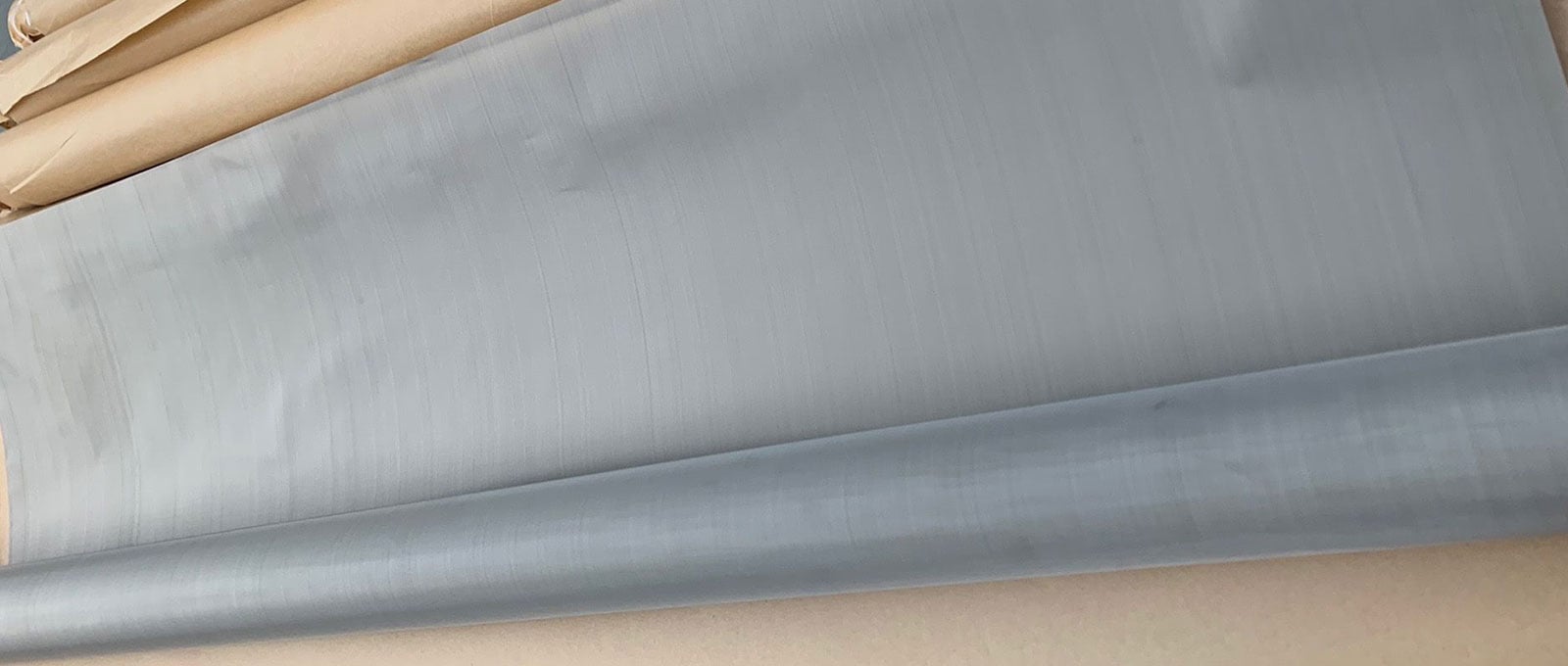
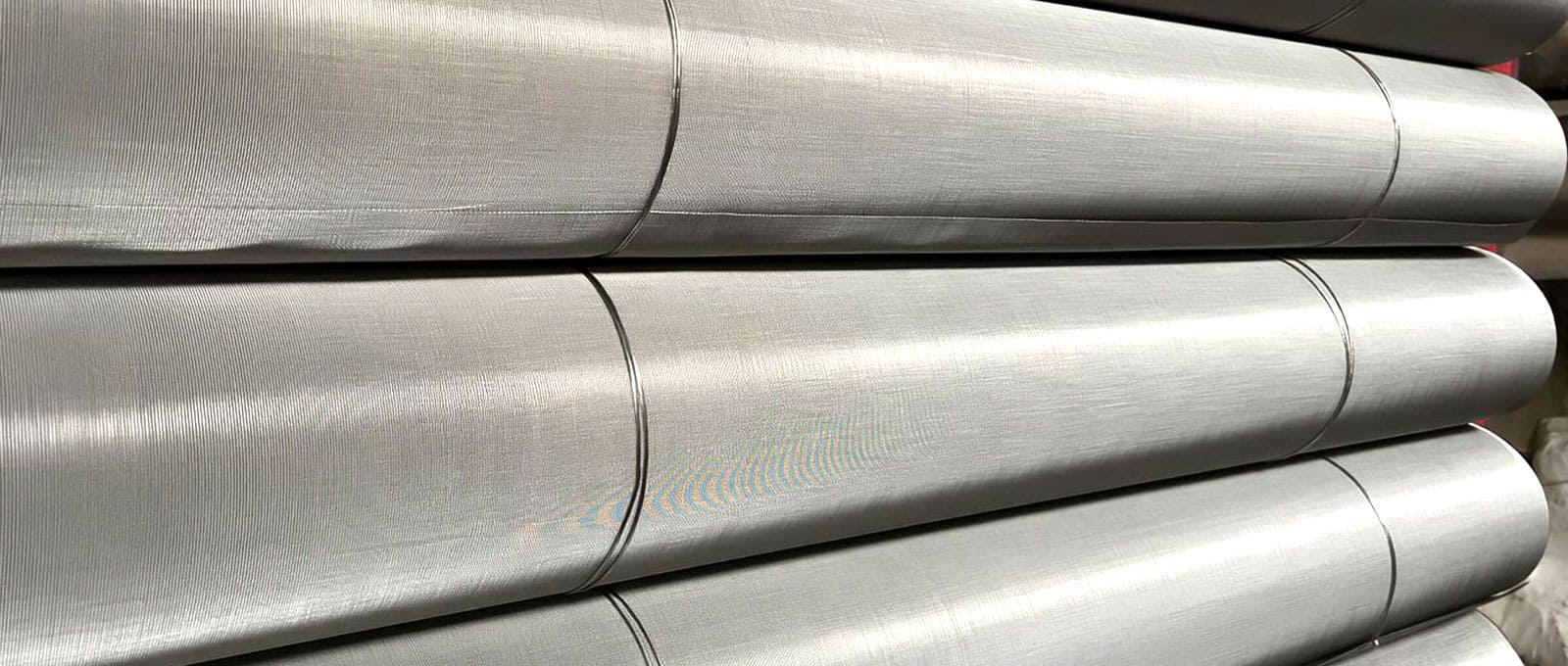
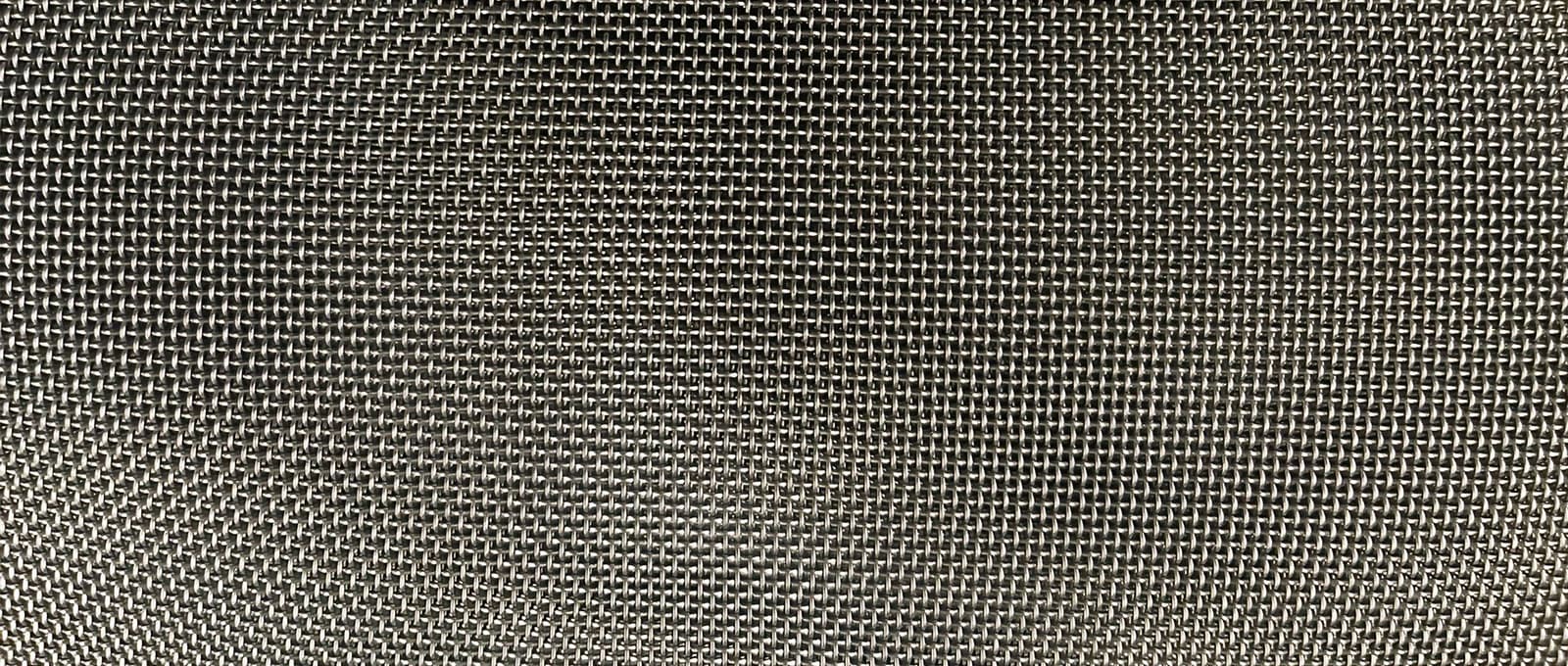
What Is 430 Stainless Steel Wire Mesh?
430 stainless steel wire mesh is woven from magnetic ferritic stainless steel wire. ASTM A580/A580M-23 specifies 16.0–18.0% chromium by mass for Type 430 wire. Type 430 contains less nickel than Type 304 and suits dry indoor screening and sheltered equipment vents. Grade references include AISI 430 / UNS S43000 / EN 1.4016 (X6Cr17) and JIS SUS430.
Lower nickel content typically gives 430 a lower alloy cost than 304. Annealed 430 also expands less than annealed 304 over 0–100 °C. Typical dry-air oxidation figures for 430 are 815 °C for continuous exposure and 870 °C for intermittent exposure. The operating temperature of a finished screen depends on wire diameter, atmosphere, thermal cycling, support and load.
YueChu Metal · Last updated
430 Stainless Steel Wire Mesh Specifications
The eight square-weave specifications below cover 10–200 mesh, 0.053–0.635 mm wire diameters and 0.074–1.905 mm nominal clear openings. The open area is listed for each wire and mesh count combination.
Scroll the table to see all columns.
| Mesh count | Wire diameter (mm) | Opening (mm) | Open area (%) |
|---|---|---|---|
| 10 × 10 Mesh | 0.635 | 1.905 | 56.3 |
| 20 × 20 Mesh | 0.406 | 0.864 | 46.3 |
| 30 × 30 Mesh | 0.305 | 0.542 | 40.9 |
| 40 × 40 Mesh | 0.254 | 0.381 | 36.0 |
| 60 × 60 Mesh | 0.191 | 0.232 | 30.1 |
| 80 × 80 Mesh | 0.140 | 0.178 | 31.3 |
| 100 × 100 Mesh | 0.114 | 0.140 | 30.4 |
| 200 × 200 Mesh | 0.053 | 0.074 | 34.0 |
For square mesh, nominal opening (mm) = 25.4 ÷ mesh count per inch − wire diameter (mm). See the full wire mesh size chart or use the woven wire mesh calculator.
For industrial square-opening screening cloth, specify the applicable edition and opening tolerance under ASTM E2016 or ISO 9044. For Dutch filter cloth, specify warp and weft counts and diameters, the particle retention target and the test method.
Material selection
430 vs 304 vs 316 Wire Mesh by Service Condition
Scroll the table to see all grades.
| Property | Type 430 | Type 304 | Type 316 |
|---|---|---|---|
| Main alloying elements (mass %) | Cr 16.0–18.0% | Cr 18.0–20.0%, Ni 8.0–10.5% | Cr 16.0–18.0%, Ni 10.0–14.0%, Mo 2.0–3.0% |
| Magnetism | Magnetic (Ferritic) | Usually nonmagnetic when annealed. Cold working can make it magnetic. | Usually nonmagnetic when annealed. Check after forming if magnetic response matters. |
| Dry-air oxidation resistance | 815 °C continuous / 870 °C intermittent | 925 °C continuous / 870 °C intermittent | 925 °C continuous / 870 °C intermittent |
| Pitting resistance (typical PRE) | 16 · Dry, sheltered service | 18 · General service with low chloride exposure | 24 · Better pitting resistance in chloride exposure |
| Relative alloy cost | Typically lower | General-purpose benchmark | Typically higher with added molybdenum and higher nickel content |
| Typical mesh uses | Dry indoor sieves and sheltered equipment screens | General-purpose screens, guards and fabricated inserts | Screens exposed to chlorides or coastal spray |
Alloy ranges follow ASTM A580/A580M-23, Table 1. Finished mesh service temperature depends on wire size, atmosphere, thermal cycles and load. See the Atlas Steels handbook for dry-air oxidation values (Figure 11) and thermal expansion of annealed grades (Appendix 3).
A higher pitting resistance equivalent (PRE) indicates greater relative resistance to chloride pitting. Typical values come from the Outokumpu grade chart. For finished mesh pricing, compare quotes for the same weave, wire diameter and dimensions.
Type 430
Consider 430 first for dry indoor screening or sheltered vents where magnetic response matters. Review the grade if the mesh will see repeated wetting, salt deposits or aggressive washdown.
Type 304
Compare 304 for general-purpose screens and parts that need forming or joining. For wet cleaning, specify the cleaner, its concentration and how the mesh is rinsed and dried.
Explore Type 304 →Type 316
Evaluate 316 when salt spray or chloride-bearing liquids raise pitting concerns. Share the concentration, temperature and exposure time so suitability can be reviewed.
Explore Type 316 →Construction selection
430 Stainless Steel Wire Mesh Weave Types
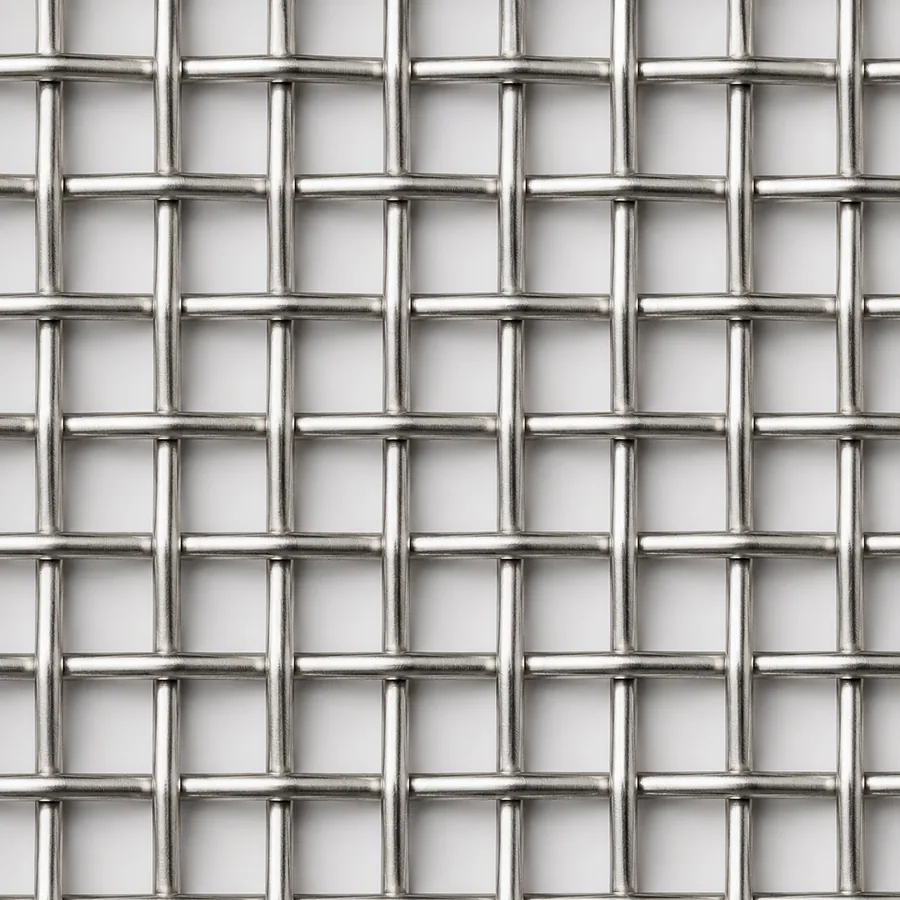
Plain Weave
Each wire passes alternately over and under the next wire, producing stable square openings for broad industrial use.
Explore Plain Weave →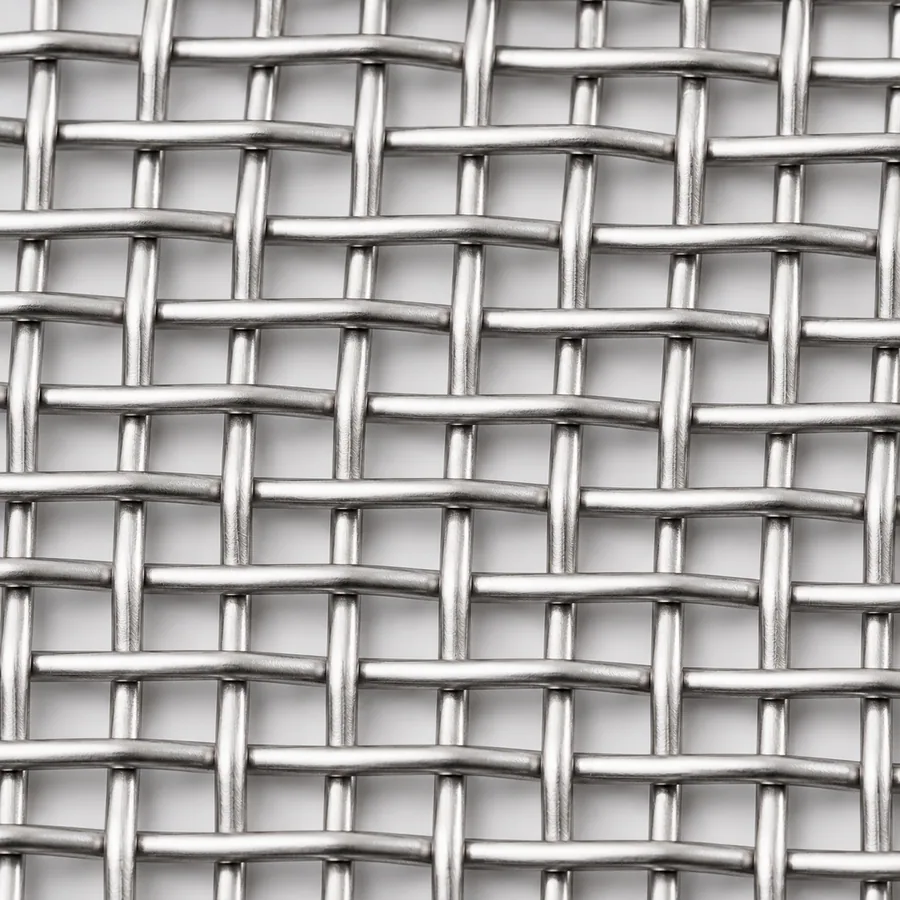
Twill Weave
Wires pass over and under two adjacent wires, allowing comparatively heavier wire at finer mesh counts.
Explore Twill Weave →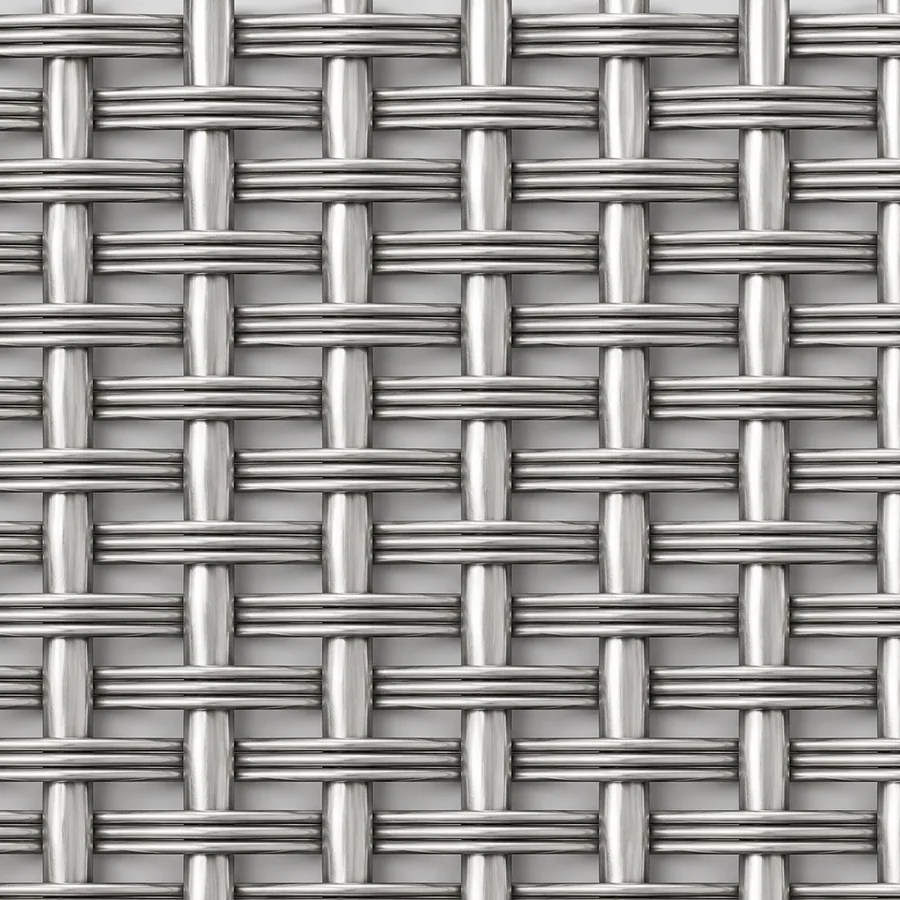
Dutch Weave
Different warp and weft wire arrangements create a dense filtration structure with high mechanical stability.
Explore Dutch Weave →
Reverse Dutch Weave
A reversed wire arrangement combines high flow capacity with fine particle retention for continuous filtration.
Explore Reverse Dutch Weave →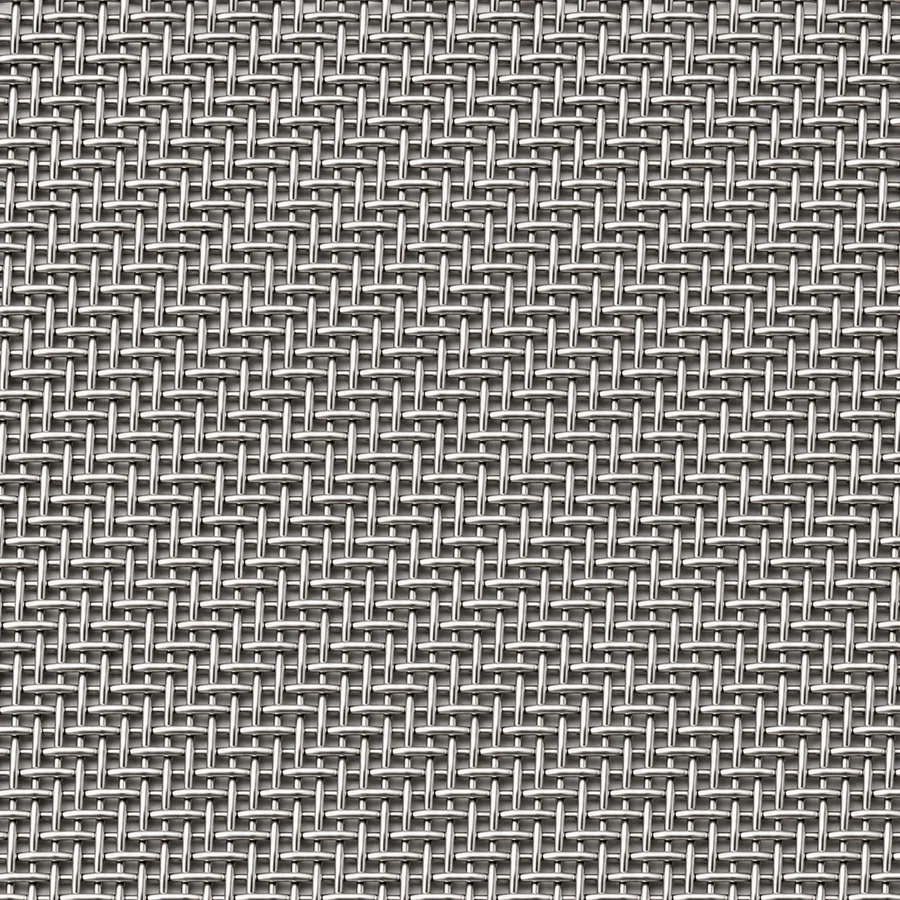
Twilled Dutch Weave
A tightly packed twill structure provides very fine particle retention with a smooth, mechanically stable surface.
Explore Twilled Dutch Weave →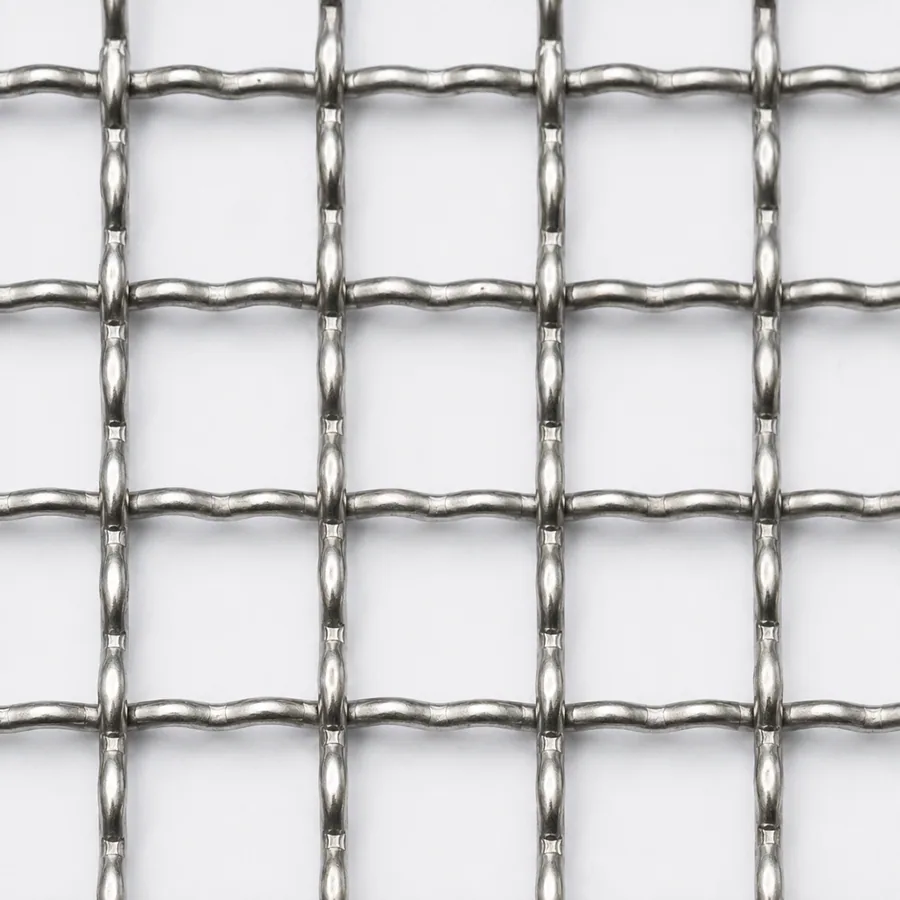
Crimped Wire Mesh
Pre-crimped wires lock together at each intersection to provide rigid, dimensionally stable openings for screening and separation.
Explore Crimped Wire Mesh →Industrial use
430 Stainless Steel Wire Mesh Applications
Dry Powder & Granule Screening
For dry sieving and grading, give the particle size to pass or retain, feed load and abrasiveness. Include the cleaning method if it affects wire size or screen life.
Sheltered HVAC & Appliance Vents
For dry intake screens or appliance lint screens, provide the opening size, airflow needs and mounting details. Flag condensation, splash or washdown chemicals.
Magnetically Mounted Screens
Consider Type 430 when a removable screen needs to engage a magnetic fixture. Check the holding force with the actual screen, magnet and mounting geometry.
OEM Discs & Cut Inserts
Send a part drawing with the profile, fit tolerances and edge requirements. Identify any bends, welds or forming steps so they can be reviewed before quotation.
Material Verification & Order Documentation
At quotation, specify the wire standard and edition and agree on finished mesh tolerances. Request a lot-traceable mill test certificate, such as EN 10204 3.1 if your order requires it, along with any dimensional inspection records for wire diameter, aperture and finished size. Confirm which documents can be supplied and how the heat or lot number will link the report to the roll or package label.
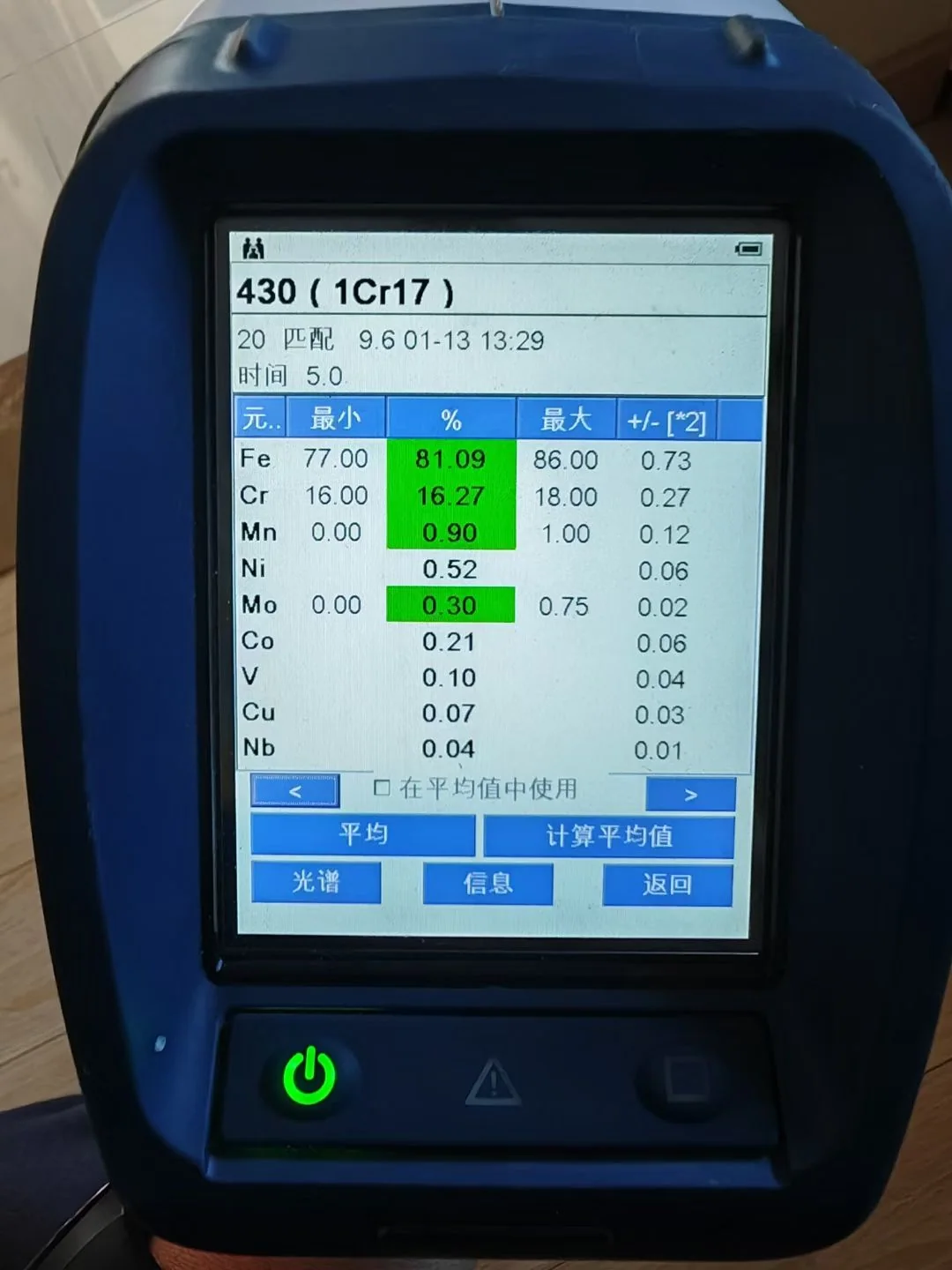
| Element | XRF reading | ASTM wire limit |
|---|---|---|
| Chromium (Cr) | 16.27% | 16.0–18.0% |
| Carbon (C) | — | ≤0.12% |
| Manganese (Mn) | 0.90% | ≤1.00% |
| Silicon (Si) | — | ≤1.00% |
| Phosphorus (P) | — | ≤0.040% |
| Sulfur (S) | — | ≤0.030% |
| Iron (Fe) | 81.09% | — |
| Nickel (Ni) | 0.52% | — |
| Molybdenum (Mo) | 0.30% | — |
| Cobalt (Co) | 0.21% | — |
| Vanadium (V) | 0.10% | — |
| Copper (Cu) | 0.07% | — |
| Niobium (Nb) | 0.04% | — |
Values are mass percentages. A dash in the XRF column means no value was reported for this sample. A dash in the ASTM column means no limit is listed for that element in Type 430 wire. Wire limits are from ASTM A580/A580M-23, Table 1.
The analyzer reported 16.27% chromium for this sample, within the 16.0–18.0% chromium range for Type 430 wire. Handheld XRF cannot measure carbon. No silicon, phosphorus or sulfur values were reported for this sample. Detection of those elements depends on the analyzer and test conditions. Use the lot-traceable material test report to confirm the grade and assess compliance with the specified wire standard.
For EU projects, check the EU guidance on CE marking for the finished product and intended use.
Production workflow
Manufacturing & Quality Control
Wire and material confirmation
Confirm requested grade, wire diameter tolerance and application requirements before production.
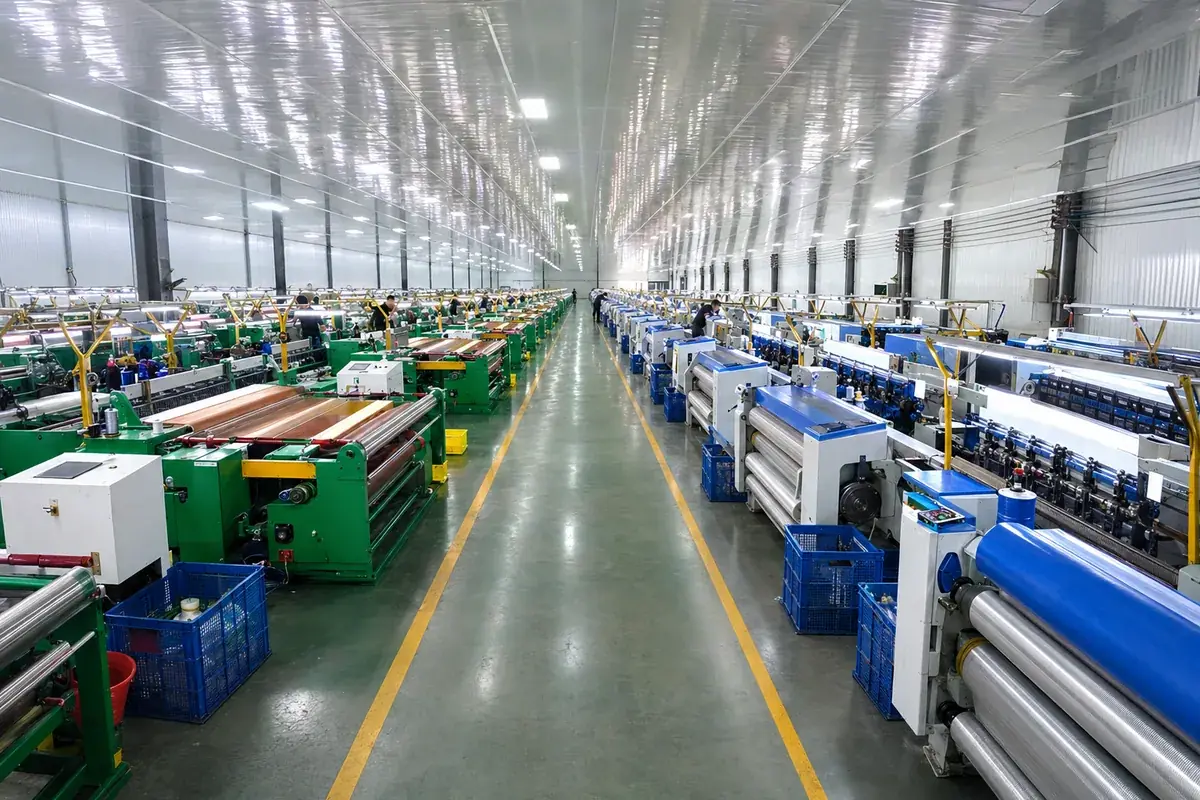
Controlled weaving
Set warp and weft tension for the required mesh count, weave structure and finished width.
Inspection and finishing
Check dimensions and mesh uniformity, then slit, cut, clean or fabricate as specified.
Identification and packing
Label finished goods by specification and prepare packaging for the agreed shipping method.
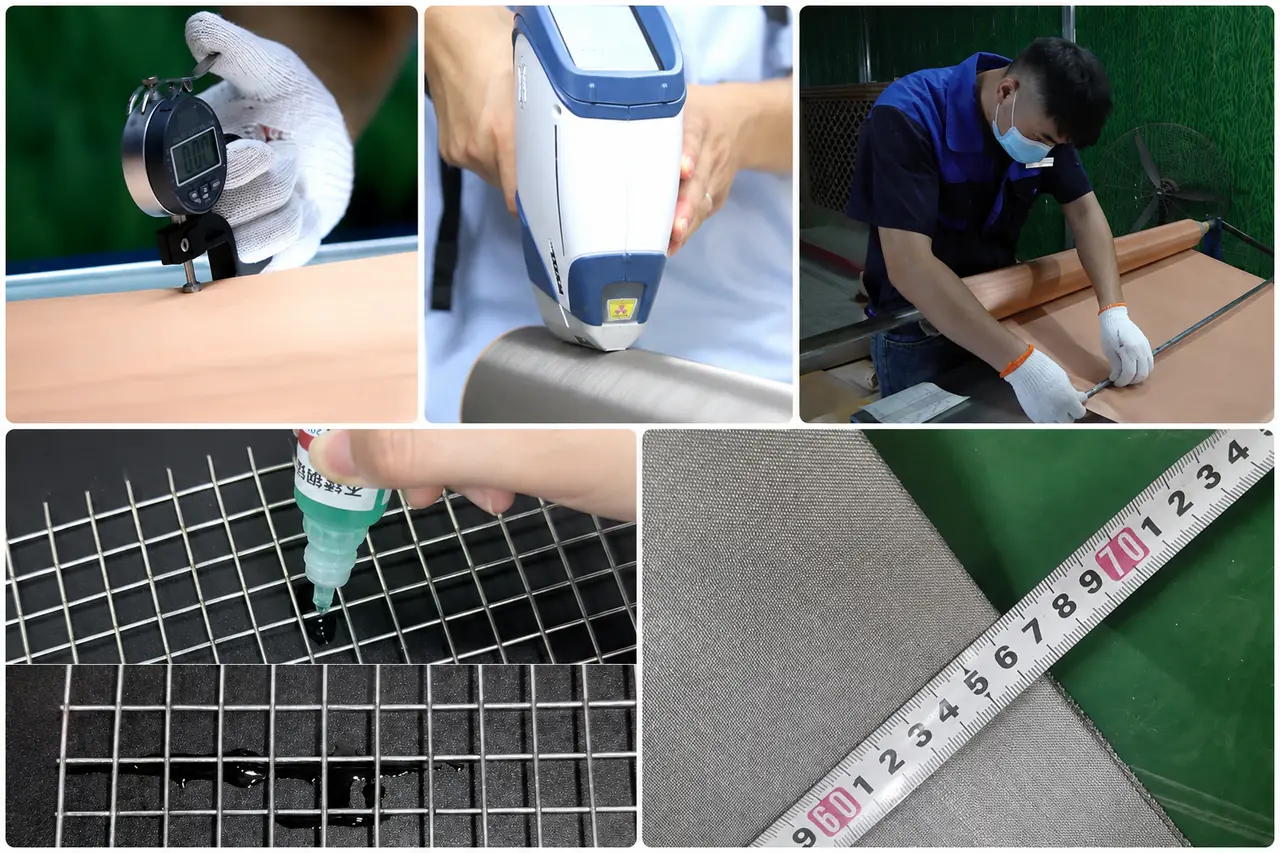
Inspection checkpoints
- Material and specification verification
- Mesh count and aperture inspection
- Wire diameter measurement
- Width and roll-length confirmation
- Surface and weaving-defect review
- Packing and label verification
OEM flexibility
Custom Manufacturing
Woven wire mesh can be supplied to a drawing, process condition or downstream fabrication requirement rather than limited to a catalogue roll size. Feasibility is reviewed from the complete product specification.
- Custom mesh count and wire diameter combinations
- Custom roll width and roll length
- Slit rolls, sheets and cut-to-size pieces
- Discs, tubes, baskets and fabricated filter parts
- Edge treatment and drawing-based production
- Private labeling and export packing requirements
Export preparation
Packing & Export
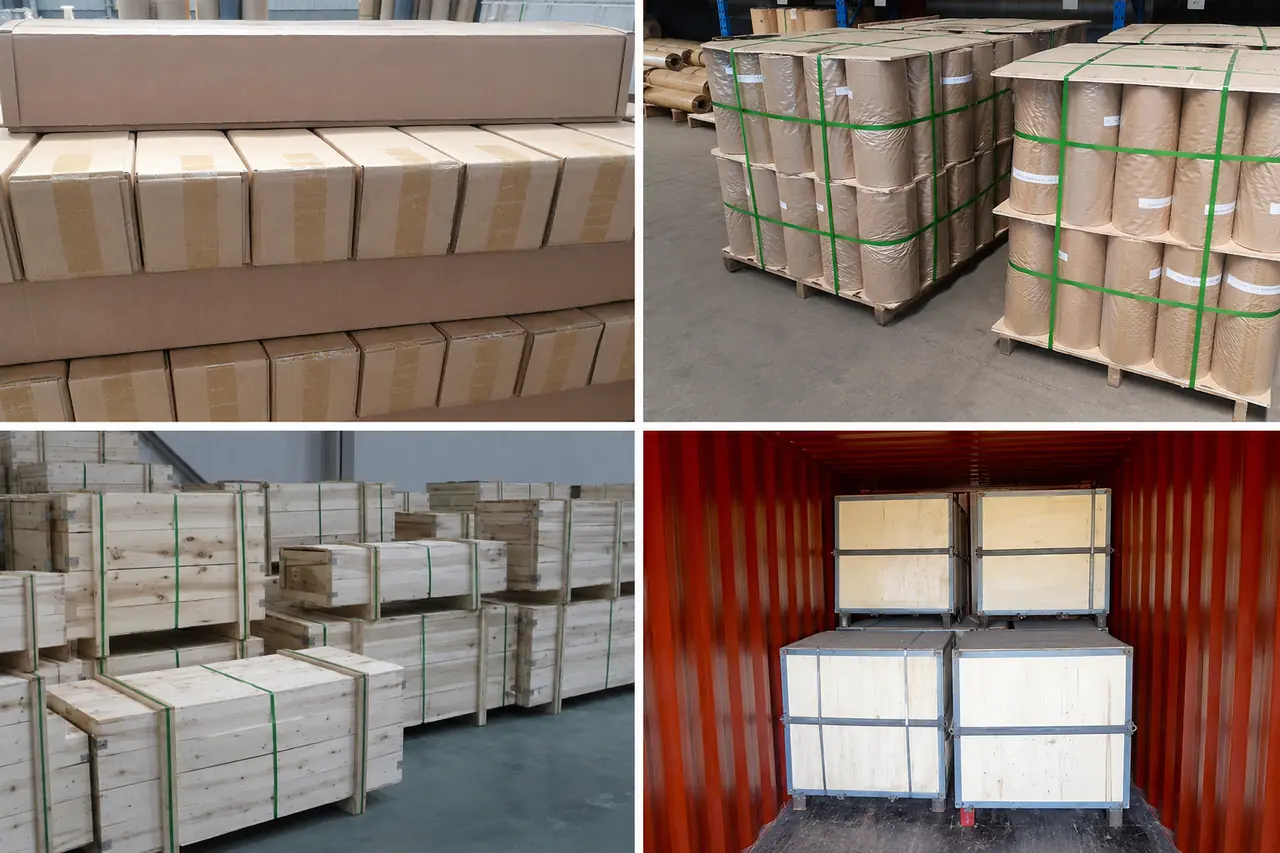
Packing is selected according to mesh fineness, roll dimensions, fabricated form and transport method. Requirements should be confirmed in the purchase specification.
- Moisture-resistant inner wrapping
- Protective paper tubes or cores
- Crates or reinforced export cases
- Specification labels and packing lists
- Custom pallet or handling instructions
Procurement checklist
How to Request & Compare 430 Wire Mesh Quotes
- 1
Match the grade and mesh specification
Compare the same wire grade and standard, weave, mesh count or clear opening, and wire diameter. Include the required aperture tolerance and standards edition.
- 2
Describe the service conditions
Name the material or fluid being screened. Report moisture, salt, cleaning chemicals and any sustained or peak temperatures, along with how the screen will be supported.
- 3
Confirm dimensions and what the price includes
Send roll dimensions or a part drawing, trial and production quantities, destination and delivery date. Compare cutting, edge work, packing and freight on the same basis.
- 4
Agree on inspection and acceptance documents
Specify the required records, such as an EN 10204 3.1 inspection certificate, dimensional inspection reports and heat or lot labels. Confirm availability with the quote.
Buyer questions
430 Stainless Steel Wire Mesh FAQ
Is 430 stainless steel wire mesh magnetic?
Type 430 wire mesh attracts a magnet because it is made from ferritic stainless steel. Check holding force on the finished screen if it will be mounted magnetically, and verify the grade against the lot-traceable material test report.
Can 430 stainless steel wire mesh rust?
Type 430 wire mesh can rust or stain with persistent moisture, salt deposits or aggressive cleaning chemicals. Use it for dry indoor or sheltered screening and review the actual wetting and cleaning cycle before choosing a grade for more corrosive service.
When should I compare 430 with 304 or 316 wire mesh?
Consider 430 for dry sheltered screening with a magnetic response, 304 for general service and 316 where chlorides raise pitting concerns. Compare the grades at the same mesh geometry, temperature, exposure and cleaning conditions.
Does mesh count tell me the clear opening?
For square mesh, calculate the nominal clear opening in millimetres by dividing 25.4 by the mesh count per inch and subtracting the wire diameter in millimetres. A 40-mesh square weave with 0.254 mm wire gives a nominal opening of 0.381 mm.
Can I request OEM or ODM 430 stainless steel mesh?
YueChu Metal quotes OEM cut screens and inserts to a drawing and reviews ODM requests against the intended function. Include the part profile, mounting, service conditions and critical tolerances so the design and fabrication can be assessed.
What are the minimum order and lead time for custom 430 wire mesh?
The quote confirms the minimum quantity and dispatch date for your exact 430 weave, wire size and finished dimensions. Give the trial and production quantities separately and ask whether the requested size can ship from stock or requires a new production run.
How much does 430 stainless steel wire mesh cost?
430 typically has a lower alloy cost than 304 because it contains less nickel, and finished mesh is priced by specification. Compare unit prices at the same weave, wire diameter, roll or part size and quantity, with cutting, packing and freight listed separately.
Can 430 wire mesh be used at elevated temperatures?
The dry-air oxidation reference for Type 430 stainless steel is about 815 °C for continuous exposure and 870 °C for intermittent exposure. Set the finished screen’s operating limit using its wire diameter, atmosphere, load, support and heating and cooling cycles.
Can 430 stainless steel mesh be used in food-contact equipment?
430 mesh is a candidate for dry food screening when the finished screen meets the applicable food-contact and cleanability requirements. For frequent wet cleaning, compare 304, and for salty or chloride-bearing contact, evaluate 316 against the food acidity, temperature, contact time and cleaning chemicals.
What CE documentation should I request for a 430 mesh order?
If CE marking applies to the finished product, request the declaration required by the relevant EU legislation, such as an EU Declaration of Conformity where applicable. Request a separate lot-traceable material test report to verify the wire grade.